
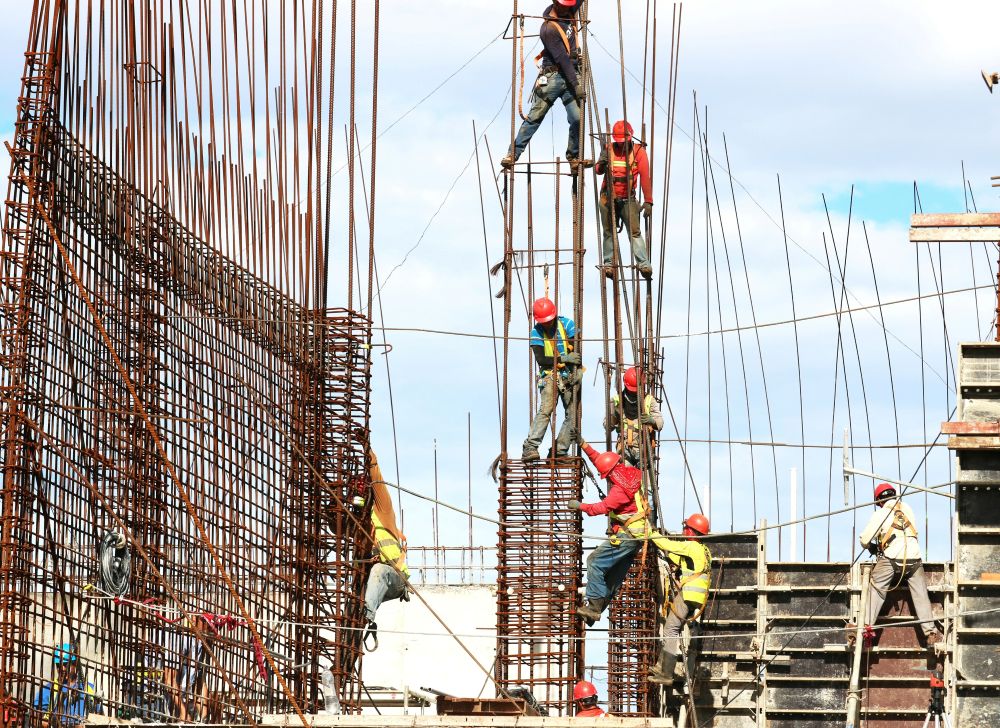
The New York T.E.M.P. Statute is a good attempt to protect construction workers.
This author has previously reported on passage of the Temperature Extreme Mitigation Program (the “T.E.M.P. Act”) by the New York State Legislature.
If signed by the Governor, the Act would have established climatic standards in the workplace. However, the legislation was not signed into law as passed in 2023, and was not passed again by the New York Assembly and New York Senate during the 2024 legislative session which ended in June 2024.
The law previously passed would regulate extreme temperatures, granting protection to workers during both winter and summer months. It provided for accommodations for workers, such as requiring employers to provide one quart of water per hour per employee; ten minutes in the shade for each two hours of work for outdoor employees, and ten minutes in a “cooler breakroom” for indoor employees. That “cooler breakroom” would be required to maintain a temperature of between 75 and 80.5 degrees when the outdoor temperature exceeds 85 degrees. Employers would be required to maintain a “Workplace Heat Stress Plan”, and to ensure that shade is available when the temperature does not exceed 80 degrees.
The Bill provided similar modes of protection during periods of cold weather, including access to areas with adequate warmth. Employers would be required to provide Personal Protective Equipment for cold weather, to include gloves, hats and winter coats. These simple changes can avoid milder accidents that result in NY workers’ comp cases. The Bill also required that vehicles be equipped with heating and air conditioning if employees are to be in the vehicle for periods in excess of one hour.
While extreme temperatures provide a dangerous working environment in and of itself, there are other dangers which construction workers regularly encounter. Some dangers are temperature related, while others are inherent in construction work. Ice on a scaffold, for example, creates a dangerous condition in excess of risks associated with elevated working conditions. A particularly rainy week in the Spring can cause a dangerous condition in addition to what usually exists.
Worker safety is a priority for the New York State Legislature. Despite constant, coordinated attacks by the construction and insurance industries, New York Labor Law §240(1) remains on the books. Known as the “Scaffold Law”, §240(1) offers special protections to construction workers who are required to work at an elevated height, while simultaneously offering protection to workers from objects which fall from an elevated height. The legislative intent is to place the onus of worker protection where it should be – on contractors, and owners of commercial property. Pursuant to §240(1), contractors and commercial property owners are strictly liable for accidents which fall under this law. That means that proof of negligence is not required for §240(1) liability. Nor is a workers’ own negligence a defense to a Labor Law §240(1) case.
The statute specifically exempts owners of one and two family dwellings who do not direct or control the work (this exemption is at times omitted from statements which attack the Scaffold Law). That means that a homeowner who contracts for a second floor to be built is not liable under the law unless he specifically directs or controls the work – and telling the contractor that you want a specific type of siding or insulation to be used is not considered direction or control. Simply stated, workers are not in charge at commercial construction sites. They are not responsible to arrange for safety devices to protect against elevated work hazards. That is why the statute imposes strict liability upon contractors and commercial property owners, and is also why a worker’s own negligence (termed “comparative negligence” in New York) is not a defense.
Lately the insurance industry has sharpened its knives, and has filed civil RICO (“Racketeer Influenced and Corrupt Organizations Act”) suits against medical providers and even law firms representing construction workers. Defendants have attempted to defend §240(1) lawsuits by claiming fraud perpetrated by the injured worker. Fraudulent activity is never acceptable, and should be vigorously defended against, both in civil suits, and in the criminal justice system when warranted. And such behavior is not limited to construction accidents – reports of staged automobile accidents have circulated on the internet. Whether staged accidents are perpetrated by organized criminal gangs or are “one-shot” incidents, such activity casts a pall on all injured accident victims, whether that is the result of a motor vehicle accident, a fall down accident, or construction accident.
Conspicuously absent from the insurance industry’s complaints of staged and fraudulent accidents are results of medical examinations used in personal injury litigation to verify an accident victim’s injuries. Popularly known as an “IME” (Independent Medical Examination), these examinations are conducted by medical professionals paid by the very insurance company which maintains a financial stake in that doctor reporting on negative findings, that is, reporting that the accident victim is not disabled. Such doctors can typically earn fees in the multiple six figures per year by conducting these “independent” medical examinations. In the process accident victims with permanent injuries suffer twice – once as a result of negligent behavior, and a second time by the actions of an insurance company determined to minimize its financial exposure by any means necessary.
The New York T.E.M.P. Statute is a good attempt to protect construction workers. Legislative compromise might be in order by the New York State Legislature and the Governor to determine whether the Statute can be passed and signed into law. At the same time, while fraudulent activity should be vigorously attacked, unfair practices are not limited to only one side of the litigation.
Join the conversation!