
Liability is not always simple in these cases, so working with a lawyer may help you to get the best results for your individual circumstances.
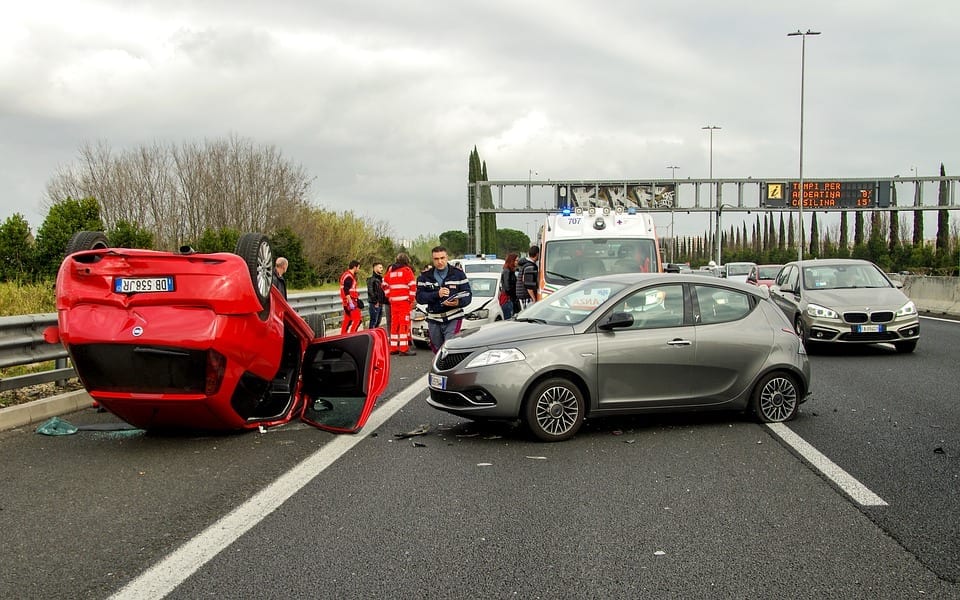
Car accident claims are more straightforward when they involve just two drivers. But what about in a pile-up crash, when there are three or more vehicles involved in an accident? How does liability become assigned in these circumstances?
On California freeways, these accidents unfortunately happen. Especially on the congested city roads that run through Fullerton and Orange County.
The outcome of your case can be benefited by working with a Fullerton car accident attorney and just understanding how fault is determined and how it affects your rights.
Why Pile-Ups Happen in California
Pile-ups are often the consequence of excessive traffic and drivers with no time to react to some unforeseen event on the road.
Common causes are rear-end pileups leading to a chain reaction, distracted driving (texting, using a navigator, or eating while driving), speeding or tailgating in traffic jams, adverse weather conditions, and incompetent lane changes on highways.
Because multiple cars are involved, fault can be borne by multiple drivers — or in some cases, even a government department responsible for road construction or maintenance.
California’s Comparative Negligence Rule
California has a pure comparative negligence doctrine. This means fault may be allocated between more than one driver, and each driver is to pay for his or her proportion of the damages.
For example:
If Driver A is responsible for 60%, Driver B is responsible for 30%, and Driver C is responsible for 10%, they each will be held liable for that percentage of the total damages.
Though you are responsible to some degree, you are nonetheless entitled to receive compensation — but reduced by your fault share.
This arrangement makes pile-up claims very difficult, with insurance firms frequently contesting responsibility to avoid payments.
Who is Responsible for a Multiple Car Accident?
Determining responsibility in a pile-up isn’t as simple as pointing to the first driver who caused the chain reaction. In many cases, liability is shared across several parties.
The question of who is responsible in a pile-up isn’t always as simple as assuming that the first driver caused the accident. There are cases where liability is shared by several parties.
The lead driver can be held responsible if they braked abruptly for no reason or were speeding.
Following drivers can be equally responsible if they were tailgating or distracted and did not maintain a proper stopping distance.
Truck drivers or commercial entities may be held responsible if a tractor-trailer was the cause or contributing cause of the pileup due to improper loading, driver fatigue, or mechanical breakdown.
Government entities may be partly to blame if dangerous road design, poor lighting, or poor signage was a contributing factor in the accident.
Fault is not always clear-cut. California courts and insurers will look closely at the case and make a detailed investigation to determine what happened to cause the collision.
When Multiple Insurance Companies Are Involved
Pile-up accidents often involve several insurers, each trying to protect their own driver from liability. This can lead to delays in claim processing, low settlement offers and finger-pointing between insurance adjusters.
Having a knowledgeable attorney handle communications and negotiations is critical to avoid getting lost in the shuffle.
Final Thoughts
Overall, California’s comparative negligence doctrine makes it so that each driver will be responsible for their portion of the damages during a multi-vehicle accident. Liability is not always simple in these cases, so working with a lawyer may help you to get the best results for your individual circumstances.
Join the conversation!