

After a motor vehicle collision, your body floods with adrenaline and endorphins — natural chemicals that can mask pain and make you feel alert even when something is seriously wrong.
Not every car accident injury makes itself known right away. In fact, many accident victims walk away from the accident scene feeling perfectly fine — only to develop serious symptoms days or even weeks later. According to some medical studies, symptoms of soft tissue injuries and concussions can take 24 to 72 hours to fully appear, while certain internal injuries may go unnoticed for much longer.
These delayed injuries don’t just affect your health — they can dramatically shape your legal options, your ability to file a claim, and your chances of receiving fair compensation. Understanding how the timeline of injury discovery intersects with the claim process is essential for anyone involved in a car accident.
Common Delayed Injuries Following a Car Accident
After a motor vehicle collision, your body floods with adrenaline and endorphins — natural chemicals that can mask pain and make you feel alert even when something is seriously wrong. This is why many car accident injury symptoms don’t surface until the adrenaline wears off.
Here are the most frequently reported delayed injuries following a car accident:
- Whiplash and neck injuries — Stiffness, headaches, and reduced range of motion may not appear for 24–48 hours after a car crash
- Concussions and traumatic brain injuries — Symptoms like confusion, dizziness, and memory problems can emerge gradually over several days
- Soft tissue damage — Sprains, strains, and micro-tears in muscles and ligaments often worsen before they improve
- Internal bleeding — Potentially life-threatening and sometimes asymptomatic in the hours after the collision
- Herniated discs — Back pain and numbness may develop slowly as inflammation builds around the bodily injury
- Psychological injuries — PTSD, anxiety, and depression frequently develop weeks after the accident occurred
Key Takeaway: Just because you feel fine at the accident scene doesn’t mean you are. The absence of immediate pain is not the absence of injury.
Why You Should Seek Medical Attention Immediately After an Auto Accident
Even if you walk away from an auto accident without visible injuries, getting a professional medical evaluation as soon as possible after an accident is one of the most important steps you can take — both for your health and your future claim.
Here’s why early medical documentation matters:
- It creates a medical record linking your injuries to the date of the accident, which becomes critical evidence from the accident
- It establishes a baseline for your condition, making it harder for insurers to argue your injuries were pre-existing
- It protects your injury claim — gaps between the accident and treatment give insurance companies ammunition to challenge your case
Medical professionals can identify injuries that aren’t yet symptomatic through imaging, neurological exams, and other diagnostic tools. A documented medical visit within 72 hours of a collision is one of the strongest pieces of evidence you can have when you later file a claim.
Why should you see a doctor after a car accident even if you feel fine? Because many serious injuries — including concussions, internal bleeding, and soft tissue damage — don’t produce immediate symptoms. A medical evaluation creates the documentation needed to support an injury claim and prevents insurance companies from questioning whether your injuries are accident-related.
How Delayed Injuries Affect the Insurance Claim Process
When injuries appear days or weeks after a collision, the insurance claim process becomes significantly more complicated. Insurance companies are businesses, and their goal is to minimize payouts — delayed injuries give them opportunities to do exactly that.
The core challenge is the gap problem: the longer the time between your accident and your first medical visit, the easier it becomes for an insurance adjuster to argue that your injuries aren’t related to the crash.
How Insurance Companies May Deny Your Claim
Insurance companies often use specific tactics when dealing with delayed injury claims:
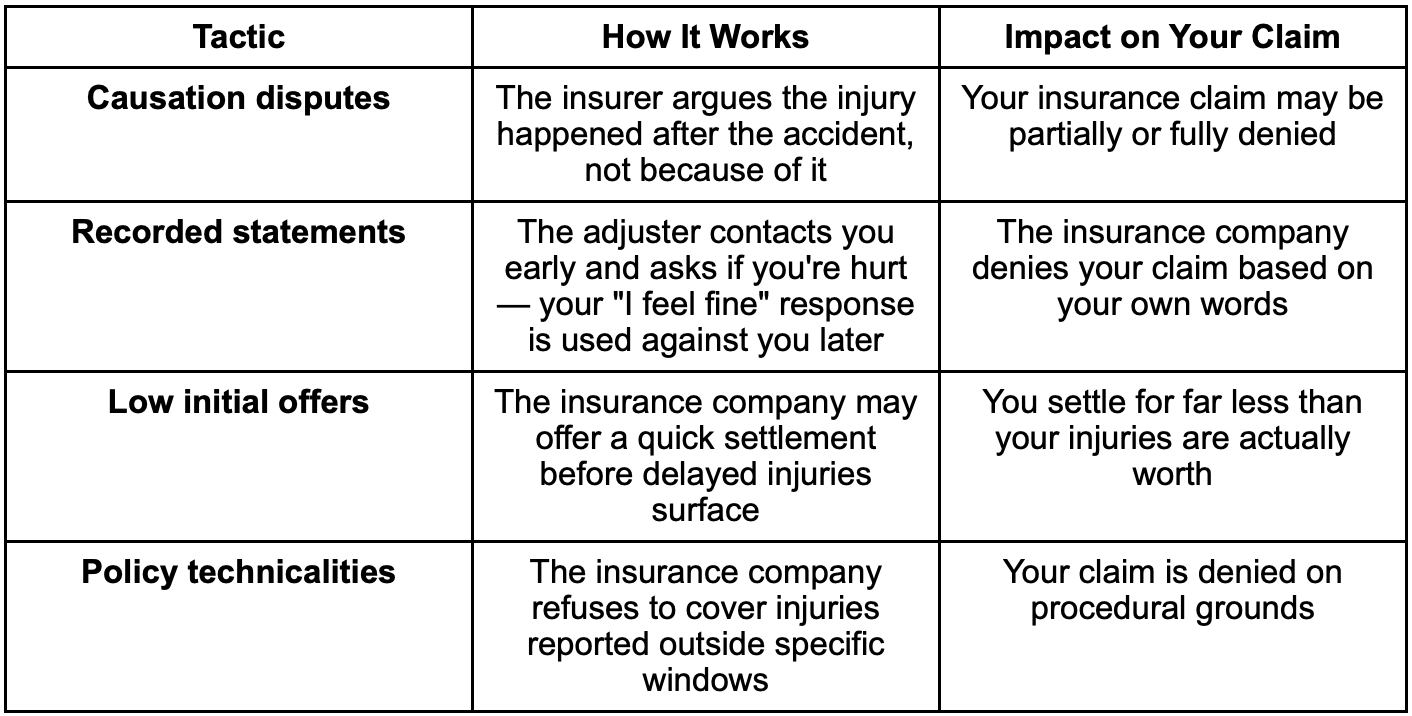
Understanding these tactics is the first step toward protecting yourself. The adjuster working your case is not on your side — they represent the insurer’s financial interests, not yours.
Steps to Protect Your Rights After a Collision
Whether or not you feel injured, the actions you take at the accident scene and in the days that follow can make or break your ability to file a claim later. Here is a step-by-step guide to protect your rights:
Step 1: Report the Accident to the Police
Always report the accident to the police, even if the collision seems minor. A police report creates an official accident report that documents key information about the accident — including the time, location, parties involved, and initial observations about fault.
This report becomes foundational evidence if you later need to file a car accident claim for delayed injuries. Without it, establishing the basic facts of what happened becomes a he-said-she-said situation.
Step 2: Exchange Information With the Other Driver
At the scene, exchange information with every driver involved. This includes:
- Full names and contact information
- Insurance information and policy numbers
- Driver’s license numbers
- Vehicle make, model, and license plate numbers
- The driver’s insurance company name and phone number
Having complete insurance information ensures you can contact your insurance company — and the other driver’s insurance company — when you’re ready to begin the claim process.
Step 3: Contact Your Insurance Company as Soon as Possible
Most insurance policies require that you report an accident promptly. Contact your insurance company as soon as you can after the collision, even before symptoms develop. When you call, the company will ask for basic details about the accident — stick to the facts and avoid speculating about your injuries.
Key points to remember:
- Your car insurance policy likely has reporting deadlines — the insurance company will need notification within a reasonable timeframe
- Report factually: what happened, where, and when — not how you feel
- Don’t accept any settlement or sign any documents at this stage
- Ask for a claim number and document every interaction with the insurance company immediately
You can also file an insurance claim formally at this stage, or wait until you have medical documentation — but notification should happen right away so the insurance to cover your damages isn’t jeopardized by late reporting.
Step 4: Document Everything at the Accident Scene
Strong documentation protects you even when injuries appear later. Gather evidence from the accident including:
- Photos of all vehicle damage, road conditions, traffic signals, and skid marks
- Contact details for any witnesses
- Screenshots of weather conditions and time of day
- Notes about how the accident happened while your memory is fresh
This documentation supports the details of your case and gives your attorney or insurance adjuster a clear picture of what occurred.
Actionable Takeaway: Treat every collision as if it will result in a claim — document thoroughly, report promptly, and see a doctor even if you feel fine.
Filing a Car Accident Claim for Delayed Injuries
Understanding the Claim Process for Bodily Injury
When you’re ready to file a claim, you’ll need to build a case that connects your delayed injuries directly to the collision. A bodily injury claim typically requires:
- Medical records showing diagnosis, treatment plan, and the doctor’s opinion linking injuries to the accident
- The accident report from police documenting the incident
- Evidence of financial losses including medical bills, lost wages, and property damage
- Documentation of ongoing impact such as follow-up treatments, therapy, or inability to work
For property damage claim and car insurance claim components, you’ll need repair estimates, photos of damage to your car, and receipts for related expenses like a rental car or auto repair costs. When you file a car accident claim, being thorough with documentation from the start saves significant time and frustration.
What If the Other Driver Caused the Accident?
Determining fault for the accident directly affects which insurance company pays and how much compensation you can receive. If the other driver caused the accident, you may be able to file a claim against that driver’s insurance company in addition to — or instead of — your own.
Key considerations when fault in an accident is clear:
- The at-fault driver’s liability coverage should pay for your bodily injury and property damage
- If the at-fault driver is uninsured or underinsured, your own policy’s uninsured motorist coverage may apply
- You can pursue legal action directly against the at-fault driver if insurance claim or pursue options through their insurer are inadequate
- Comparative fault rules in your state may reduce your compensation if you share partial responsibility
Getting the other party’s insurer to settle your claim fairly often requires persistence, documentation, and sometimes legal representation.
When to Seek Legal Help From a Car Accident Attorney
How a Personal Injury Lawyer Can Help Your Case
There comes a point in many accident claims where handling things alone is no longer in your best interest. An experienced car accident attorney brings legal expertise that levels the playing field against well-resourced insurance companies.
Here’s what accident attorneys work on for their clients:
- Investigating the accident — Gathering additional evidence from the accident, consulting experts, and building a comprehensive case
- Negotiating with insurers — A car accident lawyer knows the tactics insurers use and how to counter them effectively
- Calculating true damages — A personal injury lawyer accounts for future medical costs, lost earning capacity, and pain and suffering — not just current bills
- Managing the legal process — From filing deadlines to court procedures, a car accident attorney ensures nothing falls through the cracks
A lawyer can help you avoid common mistakes that reduce your compensation, especially when the insurance company denies your claim or makes a lowball offer. Many accident attorneys have handled hundreds of cases similar to yours and understand exactly what a fair settlement looks like.
Firms like Polchinski & Smith LLP, known as Law Cowboys, specialize in representing personal injury and car accident victims across Oklahoma. With extensive experience handling delayed injury cases, truck accidents, and complex insurance disputes, their attorneys work on a contingency basis, meaning you pay nothing unless they win your case. Having a dedicated team that understands how insurance companies often undervalue delayed injury claims can make all the difference in securing the compensation you deserve. If you need any help during an injury, don’t hesitate to reach out to the Law Cowboys legal team.
Exploring Your Legal Options Without Legal Fees Upfront
One of the biggest barriers to seeking legal assistance is the fear of cost. The good news is that many car accident attorneys work on a contingency fee basis — meaning you pay no legal fees unless they win your case.
This structure means:
- No upfront costs — legal help is accessible regardless of your financial situation
- Aligned incentives — your attorney is motivated to maximize your compensation because their fee depends on it
- Risk-free consultation — most firms offer free initial consultations to help you understand your options and assess the strength of your case
Going without legal representation when dealing with delayed injuries and aggressive insurers can cost you far more than an attorney’s fee. An attorney can help you understand your options, guide decisions about your case, and explore your options for maximum recovery.
When should you hire a car accident attorney? If the insurance company denies your claim, disputes fault, offers a settlement that doesn’t cover your losses, or if your injuries are severe or delayed, it’s best to consult with a personal injury lawyer as soon as possible. Most offer free consultations, so there’s no financial risk in getting professional guidance.
How Delayed Injuries Can Impact Your Car Accident Case Long-Term
The long-term consequences of delayed injuries on your car accident case extend well beyond the initial claim process. When injuries aren’t documented promptly, the ripple effects can reduce your compensation significantly and limit your ability to take legal action down the road.
Consider these long-term impacts:
- Statute of limitations risks — Every state imposes deadlines for filing accident claims. If you’re involved in a traffic accident and don’t discover injuries until months later, you may have less time than you think to pursue legal action
- Reduced settlement value — Insurance companies use documentation gaps to argue that injuries are less severe, unrelated, or pre-existing — lowering the value of your claim for damages
- Ongoing medical costs — Delayed diagnoses can lead to longer recovery periods, more extensive treatment, and higher out-of-pocket expenses for things like auto repair, rental car costs, and continued therapy
- Complicated liability disputes — When injuries surface late, proving that a traffic accident caused them requires stronger evidence and often expert testimony
The bottom line: early action protects your long-term interests even when injuries haven’t fully manifested.
Conclusion
Delayed injuries are more common after a collision than most people realize — and they can significantly complicate your ability to secure fair compensation. The best way to protect your rights is to act quickly: seek medical attention, document everything, and don’t wait for symptoms to appear before taking the claim process seriously.
If you’re navigating a delayed injury situation, it’s best to consult with an experienced car accident attorney who can help you understand your options and fight for the compensation you deserve. Whether you’re seeking OKC car accident legal help or guidance anywhere in Oklahoma, your legal options may be broader than you think — but only if you act before critical deadlines pass.
Frequently Asked Questions
How long after a car accident can injuries appear? Injuries like concussions, soft tissue damage, and internal bleeding can take anywhere from 24 hours to several weeks to surface, as adrenaline often masks pain immediately after a collision.
Can I still file a claim if my injuries appeared weeks after the accident? Yes, but early medical documentation linking your injuries to the collision is critical to strengthening your claim.
Will insurance companies pay for delayed injuries? They can be held liable, though they will scrutinize delayed claims heavily, so strong medical records connecting your injuries to the accident are essential.
Do I need a lawyer for a delayed injury claim? It’s not legally required, but having an experienced personal injury lawyer — most of whom work on contingency with no upfront costs — significantly improves your chances of fair compensation.
What’s the statute of limitations for filing a car accident injury claim? Most states allow one to three years from the date of the accident, so consulting a car accident attorney early helps ensure you don’t miss critical filing deadlines.
Join the conversation!