

Each of the factors mentioned thus far are significant, and each can be even more detrimental when the vehicle is traveling at a higher rate of speed.
While some auto accidents occur at low rates of speed and result in a few dents and dings, others are serious. In fact, a bad auto accident can cause broken bones, traumatic brain injuries, internal damage, whiplash, spinal cord injuries, and even fatalities. Such injuries inevitably lead to unpaid time off of work to heal and recover, medical expenses, and potentially end-of-life expenses. Vehicle repairs, rental car expenses, lost wages, and other related costs add to the burden of an auto accident. If you were recently involved in a collision with an SUV, you likely face greater injuries, property damage, and related expenses than you would if your vehicle was struck by a smaller car. These are some of the reasons why SUV accidents can be far more devastating.
A Heavier Vehicle Weight
Vehicle weight plays a key role in the severity of injuries. The average weight of a hatchback, coupe, or sedan is roughly 3,000 pounds. SUVs, on the other hand, weigh anywhere from 3,000 pounds to over 6,000 pounds. Often SUVs carry more passengers and cargo in the rear, which adds to the weight. When this heavy weight strikes something that is much lighter in weight, the impact can be devastating. For this same reason, auto accidents involving an SUV and a pedestrian, cyclist, or motorcyclist often result in significant injuries.
Braking Distance
With greater weight, an SUV will take more time to slow down on the road than a smaller vehicle. Braking distance increases during inclement weather conditions as well as when tire tread is low. Because of this, an SUV is more likely to hit another vehicle, pedestrian, or cyclist at a higher speed than a smaller car would. This momentum creates a force that could result in more extensive injuries and a greater likelihood of vehicular deaths.
SUV Dimensions
Compared to a car, SUVs are typically raised a few inches higher off the ground. In many cases, the nose stands taller than the nose of a car. When a smaller car hits another smaller car, the bumpers connect and act as a buffer. In the event of a side collision, the bumper would hit the other car’s frame. In comparison, a taller SUV generally would strike a smaller car above the car’s bumper. Often, the SUV’s bumper hits the smaller car’s grille. This causes damage to the engine compartment. In many cases, the impact causes the engine compartment to shift backward into the cabin, which is a significant cause of serious injuries in SUV accidents. Likewise, if an SUV strikes the side of a smaller vehicle with a lower stance on the road, the impact is above the car’s crumple zone. As a result, this causes more severe damage and injuries.
A Higher Center of Gravity
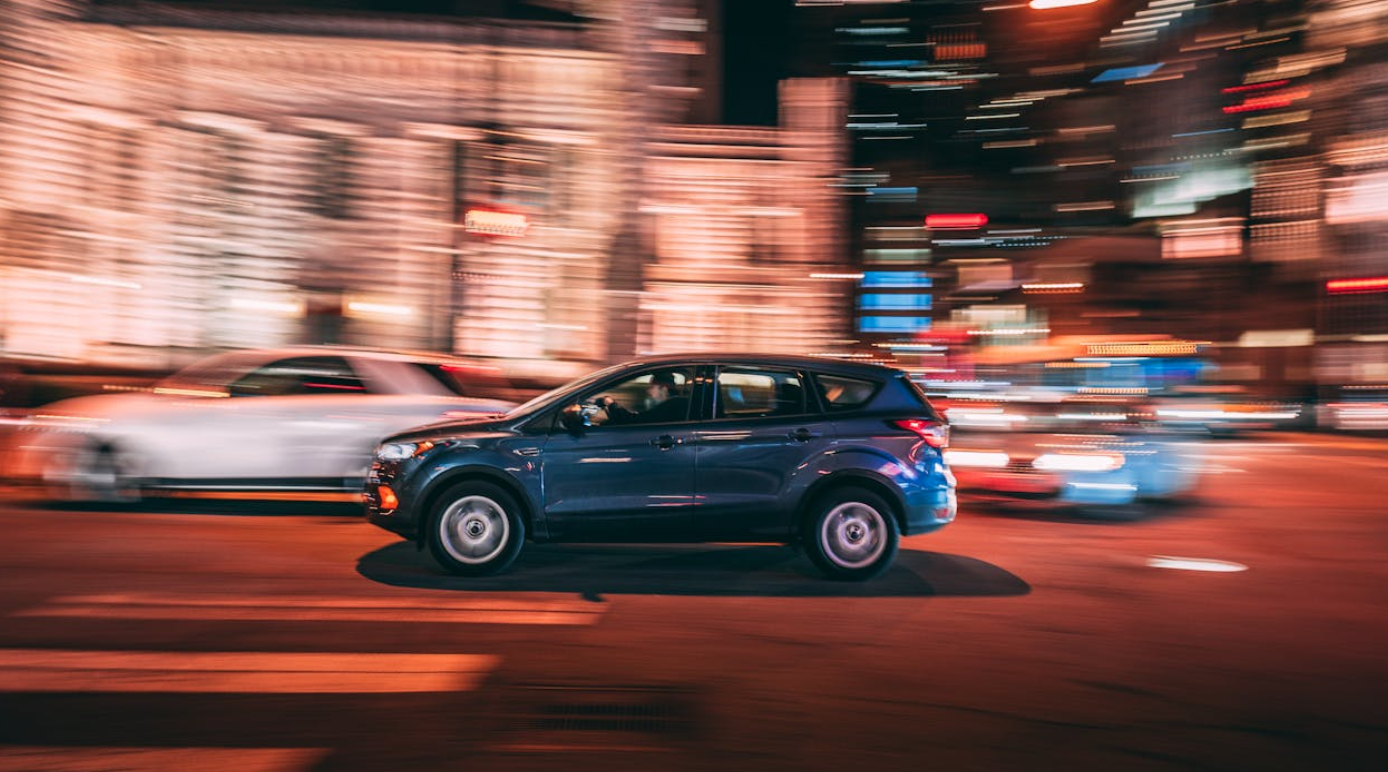
SUVs have a higher center of gravity than smaller vehicles that hug the road. Because of this, there is a greater risk that these vehicles will tip or rollover during a collision. The driver of the SUV loses complete control over the vehicle in this type of situation. In addition, the higher center of gravity makes SUVs less agile. They cannot easily make evasive maneuvers that would minimize the severity of the impact when a collision is imminent. Because of these factors, the SUV’s higher center of gravity is a major reason why a collision with an SUV can be more severe and dangerous.
Blind Spots
While all vehicles have blind spots that pose a risk to other vehicles, pedestrians, and cyclists, the blind spots in an SUV are often larger. This is because SUVs are larger and higher than sedans, coupes, and hatchbacks. In addition, SUVs typically have thicker side pillars. Both of these factors make it much more challenging for a driver of an SUV to see and avoid hitting people and smaller vehicles on the road. If the SUV driver doesn’t see an obstacle on the roadway, he won’t make an attempt to slow down immediately before the collision. This ability to reduce speed even by a small amount in the seconds prior to an accident can dramatically reduce the severity of injuries.
Speeding
Each of the factors mentioned thus far are significant, and each can be even more detrimental when the vehicle is traveling at a higher rate of speed. In an SUV, the driver is elevated above other smaller vehicles on the road. This height can the SUV driver’s perception of speed. Essentially, drivers sitting higher up from the ground may feel safter driving at a higher speed. In addition, many SUVs offer improved sound insulation and may have better suspension systems. As a result, SUV drivers don’t have as much vibration and noise on the road. This can cause distracted drivers to unknowingly travel at a higher speed than they otherwise would. New models of vehicles are often well-equipped with safety technology to minimize the risk of a collision. However, these features may create a false sense of security on the road. In some cases, they are another reason why an SUV driver feels more confident traveling at a higher speed.
An experienced car accident lawyer can analyze your personal injury case carefully. The specific characteristics of the vehicle as well driving conditions and other factors can be used to build a strong case in your favor. With a strong case, you can maximize the compensation that is available to you for accident-related expenses like medical expenses, property damage, lost wages, and more.
Join the conversation!