
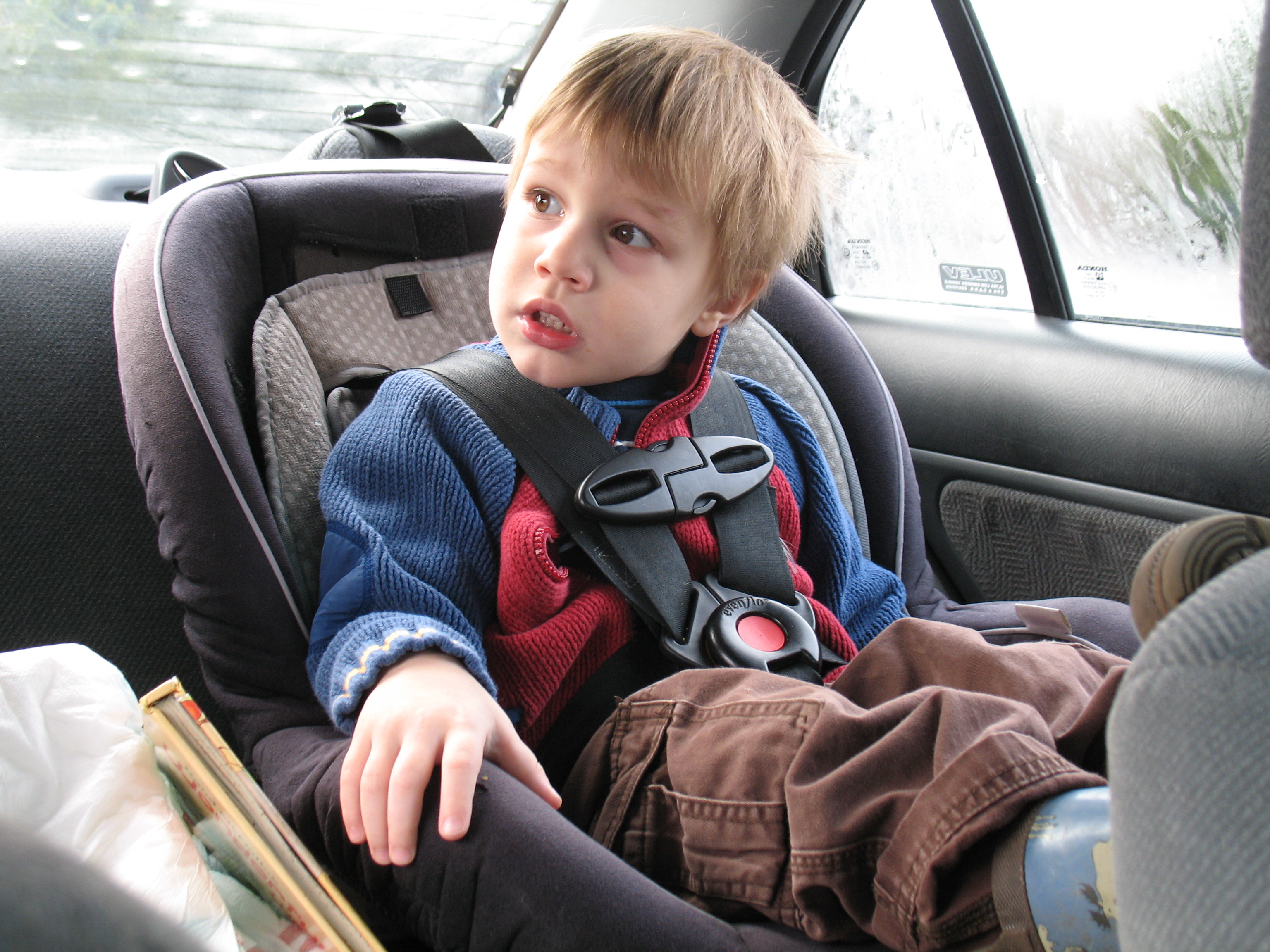
By adhering to these laws and safety guidelines, we can significantly reduce the risk of injuries and fatalities in motor vehicle accidents involving children.
Child safety is often a top priority when traveling in vehicles, and ensuring that children are properly secured is crucial to preventing injuries and fatalities in the event of an accident. To protect young passengers, every state in the United States has specific child seat laws. In this article, we’ll focus on child seat laws in Pennsylvania, highlighting the regulations and guidelines that parents, caregivers, and drivers must follow to keep children safe while on the road.
Understanding Pennsylvania Child Car Seat Laws
Car crashes are the leading cause of death for children aged 2-14 in the United States. Pennsylvania’s child seat laws are designed to safeguard children under a certain age and size by requiring them to ride in appropriate child restraint systems. These laws are set and enforced to reduce the risk of injury or death in the event of a collision, as children are more vulnerable to severe injuries due to their smaller size and developing bodies. Studies have shown that children are 75% less likely to die or sustain serious injury in a car accident when they are in a rear-facing car seat.
Pennsylvania car seat laws are based on the age and size of a child. Currently, they require children under the age of 2 to be secured in a rear-facing car seat. Children must remain in a rear-facing car seat until they outgrow the seats as indicated by the manufacturer. Typically, this occurs if the child has reached 36 inches and 30 to 35 pounds, but every car seat has specific manufacturer recommendations. In fact, the American Academy of Pediatrics and the National Highway Traffic Safety Administration recommend that children stay in rear-facing car seats even beyond age 2 until they have reached the top height or weight limit allowed by the car seat’s manufacturer. (You can check your car seat label for the weight and height limits of your child’s seat.)
PA Car Seat Requirements By Age
- Infants and Toddlers (Birth to 2 years of age)- Children under the age of 2 must be secured in a rear-facing child safety seat.
Children sitting in car seats; image courtesy of Joymaster via Wikimedia Commons, https://commons.wikimedia.org
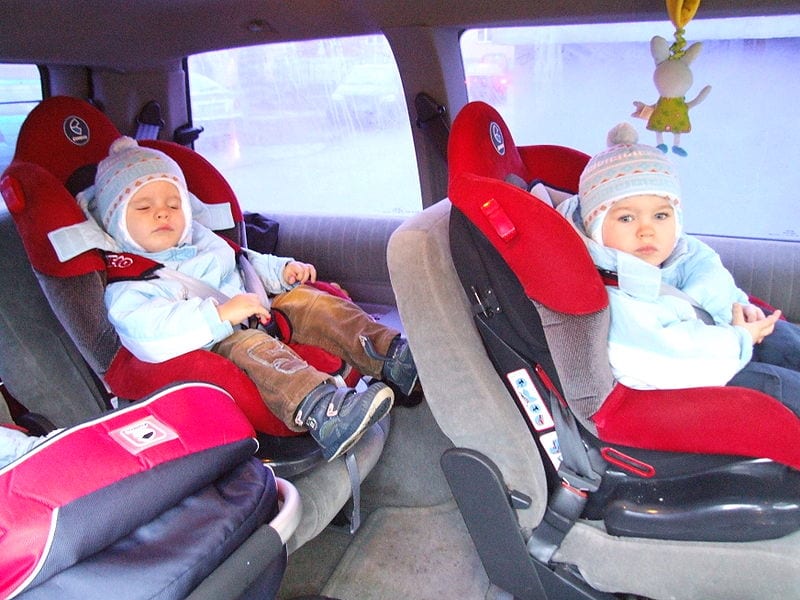
Note: The American Academy of Pediatrics (AAP) strongly recommends continuing to use a rear-facing seat until a child reaches the maximum weight and height allowed by the manufacturer of the car seat.
- Young Children (2 to 4 years old)- Children aged 2 to 4 must ride in a front-facing child safety seat with a harness once they outgrow their seat’s maximum rear-facing height and weight limits. This type of restraint provides additional protection and ensures the child’s proper positioning.
- Children (4 to 8 years old)- Children from 4 to 8 years of age are required to use a booster seat. The booster seat ensures that the vehicle’s seat belt fits correctly across the child’s chest and lap, providing adequate protection during a collision. There are exceptions to this based on height and weight. If a child is more than 80 pounds or is 4 feet 9 inches or taller, they are not required to use a booster seat and may simply use a seat belt. The purpose of a booster seat is to allow the child to properly fit an adult seat belt (the belt sitting across the pelvis and ribcage), allowing the seat belt to properly spread the force of the impact over the strongest parts of the skeleton in the event of an accident.
- Older Children (ages 8 to 18)- Pennsylvania law requires that all passengers under the age of 18 wear a seatbelt. Children who have outgrown their booster seat must use the vehicle’s seat belt system.
Law enforcement officers take these regulations seriously, and failure to comply with Pennsylvania’s child seat laws can result in fines and penalties. While fines may vary, it’s important to remember that the cost of non-compliance pales in comparison to the potential consequences of not properly securing a child.
When Can Kids Sit in the Front Seat in PA?
The Pennsylvania Department of Transportation recommends that children not sit in the front seat until age 13, although sitting children of any age in the back seat is always a safer option.
Proper Car Seat Installation
Ensure that car seats and boosters are correctly installed according to the car seat manufacturer’s instructions and your specific vehicle’s manual. Improper installation can significantly reduce the seat’s effectiveness and safety.
Need a hand? The Children’s Hospital of Philadelphia offers Car Seat Checks! A trained technician will check that the child safety seat is properly installed. To register and find out the locations of the car seat check go to CHOP’s Car Seat Safety for Kids website. You can also check with your local fire station, many offer complimentary car seat installation checks too, and some will even install the seats for you.
It is estimated that 46% of car seats in the United States are installed incorrectly, according to NHTSA. A car seat that is incorrectly installed will not provide optimal protection in a crash and can put your child’s safety at risk.
Child Seat Tips
- Whenever possible, place child safety seats in the back seat of the vehicle, as the back seat provides the safest location for children during a crash.
- It is advisable to purchase new car seats rather than using second-hand ones. Seats that have been in an accident or have reached their expiration date may not provide adequate protection in the event of a crash.
- Check your car seats for cracks in plastic or frayed straps. If damage is found, replace the seat immediately.
- In an accident? Replace your car seats! Even a minor accident can affect the integrity of a child safety seat.
- If you need to replace your car seat due to an accident, check your insurance policy. Many insurance companies will cover car seat replacement in the event of an accident.
Always Follow Your State’s Car Seat Laws
Pennsylvania’s child seat laws are the minimum requirements established to safeguard the most vulnerable passengers during vehicle travel… children. Following these regulations diligently is essential to protect young lives and prevent injuries or death. As parents, caregivers, and drivers, it is our responsibility to prioritize the safety of our children and ensure they are appropriately secured in child restraint systems until they are old enough and big enough to use the vehicle’s seat belts alone.
By adhering to these laws and safety guidelines, we can significantly reduce the risk of injuries and fatalities in motor vehicle accidents involving children.
If your child was injured in a car accident in Pennsylvania, contact the car accident lawyers at The Pearce Law Firm, Personal Injury and Car Accident Lawyers Philadelphia.
Join the conversation!