

The PI is not a decision-maker. They collect facts, document them with dates and times, and hand them to the attorney for presentation to the judge.
Custody disputes often come down to what can be proven, not what a parent insists is true. When the allegations involve unsafe caregiving or broken visitation orders, judges weigh documented evidence over spoken claims.
A licensed private investigator can collect that evidence lawfully and present it in a form the court will accept. For South Carolina families, knowing when to bring one in saves time, money, and missed opportunities.
What Role Does a Private Investigator Play in Family Court?
A private investigator gathers the documented proof a family lawyer can introduce at custody hearings. In Columbia, Stillinger Investigations, Inc. provides the surveillance, records work, and background checks that count as admissible evidence.
The work falls into three areas. It includes surveillance of visitation periods, records that verify employment or criminal history, and witness interviews that produce sworn statements. Every output must hold up at trial, not just satisfy a worried parent.
The PI is not a decision-maker. They collect facts, document them with dates and times, and hand them to the attorney for presentation to the judge. The court decides what the facts mean for custody.
When Should a Parent or Attorney Hire a PI?
The right moment is when a claim affects custody or visitation and the parent lacks admissible proof. A few common triggers stand out.
- Suspected substance abuse during parenting time. Observed impairment at pickup is useful, but judges want timed, dated records that show a pattern.
- Visitation order violations. Late arrivals, skipped handoffs, or unauthorized overnight guests carry weight when a PI logs dates and times.
- Unsafe caregiving or dangerous exposure. Leaving a child with a convicted abuser or in a risky home is hard to prove without independent observation.
- Hidden income or assets. When support depends on declared income, a records search can surface rental properties, side businesses, or undisclosed accounts.
- Relocation concerns. If a parent plans to move a child out of state, background work helps the court judge the proposed new environment.
What Can a PI Legally Collect in South Carolina?
South Carolina licenses private investigators under state law and limits what they can do before crossing into illegal territory. Only licensed professionals may legally perform investigative work for pay.

SC Code Title 40, Chapter 18 (the PI statute) requires every investigator to hold a SLED-issued license. It also mandates a three-year experience minimum, a ten-thousand-dollar bond, and a written client contract. Unlicensed investigative work is a criminal offense in the state.
Licensed investigators may photograph or record activity in public spaces, interview willing witnesses, and pull public records. They cannot trespass on private property, install GPS trackers on vehicles they do not own, or wiretap phones. Following strict surveillance methods keeps the evidence admissible and the case intact.
Courts throw out evidence gathered through illegal methods. That rule protects the parent who hires an investigator as much as it protects the parent being observed. Proper licensing is the first filter for whether the evidence will matter.
How Does a Judge Weigh PI Evidence?
Not every piece of PI work carries the same weight. Judges apply standard rules of evidence to anything an investigator submits.
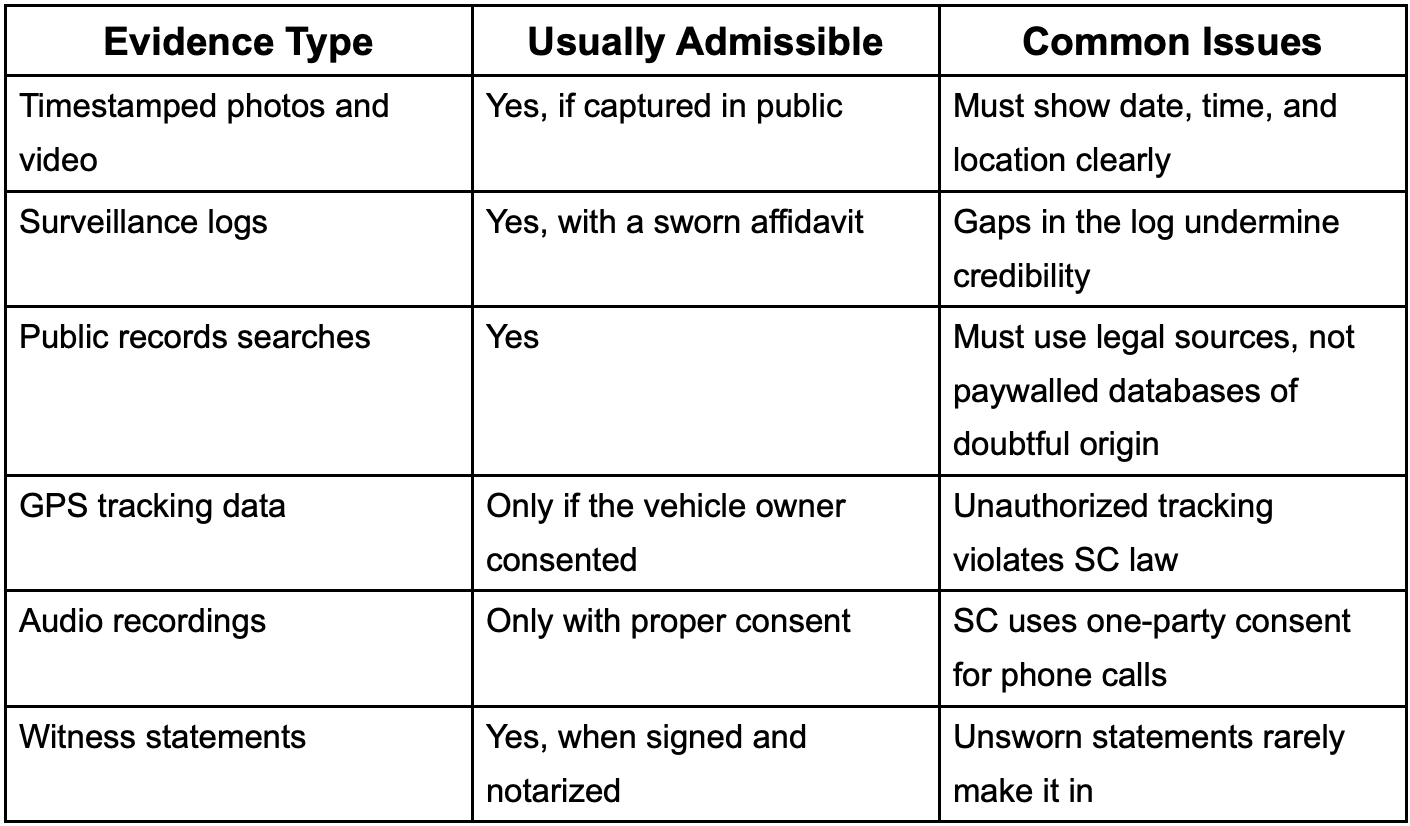
A judge will also weigh the investigator’s credentials. A SLED-licensed PI with years of court testimony carries more authority than an unlicensed operator with thin paperwork.
What Should a Parent Ask a PI Before Hiring?
Hiring the right investigator matters as much as the findings they produce. A short list of questions separates a serious firm from a bad fit.
Ask about SLED licensing first. Every paid SC investigator must hold an active license, and the SLED number should be easy to verify. Next, ask about court testimony experience, since most custody investigations end up before a family court judge.
Ask how the investigator documents their work. A solid firm provides timestamped photos, detailed logs, and sworn affidavits. Those outputs meet the bar set by the state custody code and stand up on cross-examination.
Discuss pricing and turnaround before signing anything. Hourly rates vary, but a written estimate and a clear scope prevent billing disputes later. Watch out for anyone who guarantees specific findings, since that tells you the results may not be honest.
What to Take Away
- Family courts weigh documented proof over spoken claims, and a licensed PI fills the gap.
- Hire one when substance abuse, visitation violations, hidden income, or unsafe caregiving is in play.
- South Carolina requires every paid investigator to hold an active SLED license under Title 40, Chapter 18.
- Evidence must be collected lawfully and documented properly, or a judge can exclude it.
- Ask every candidate about licensing, court testimony experience, and documentation methods before signing.
The Bottom Line in a Custody Dispute
Proving a parenting claim in family court takes more than conviction. It takes evidence that holds up under a judge’s scrutiny and an opposing attorney’s challenges. A qualified investigator puts that evidence on the record in a form the system recognizes.
FAQs About Private Investigators in Custody Cases
Is it legal to hire a private investigator in a custody case in South Carolina?
Yes. South Carolina law permits parents and their attorneys to hire licensed investigators for custody matters. The investigator must hold an active SLED license and follow state rules on surveillance and evidence.
How much does a custody-related investigation cost?
Costs vary by scope. Surveillance typically runs between seventy-five and one hundred fifty dollars per hour, with records searches billed separately. A written estimate and a defined scope keep surprises out of the final bill.
Can a PI record my ex-spouse without their consent?
Only in limited ways. South Carolina follows one-party consent for phone calls, and public video surveillance is legal without consent. Recording private conversations or trespassing to plant cameras is not permitted.
Will a judge really consider a PI’s evidence?
Yes, when the evidence meets standard admissibility rules. Timestamped footage, sworn affidavits, and verified public records are weighed seriously. Vague reports or improperly gathered material carry little weight.
Join the conversation!