
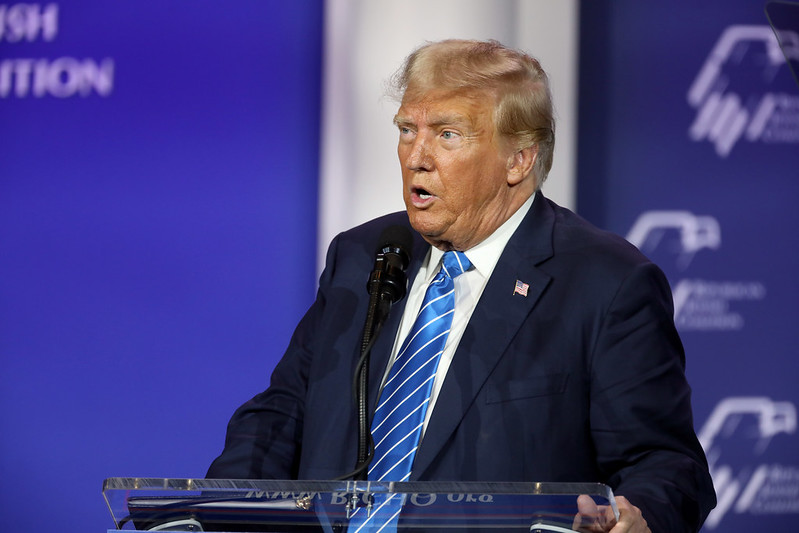
In the meantime, the judge found that the “Presidential and Eleventh Amendment immunity defenses” raised by the Justice Department, representing Trump and his library foundation, must be resolved before any headway can be made toward discovery.
A Florida-based federal judge has rejected plaintiffs’ request to initiate “limited discovery” in a lawsuit against the Donald J. Trump Presidential Library Foundation Inc., instead issuing a limited injunction that will remain in place until the court resolves questions related to “immunity” and standing “which, if successful, would dispose of the entire case.”
According to The New York Times, U.S. District Judge Rodolfo A. Ruiz II, himself a Trump appointee, acknowledged in the ruling that denying plaintiffs an opportunity to engage in discovery is “generally disfavored.” Ruiz nonetheless agreed to issue an injunction, finding that there is little point burdening the administration with discovery when its arguments “may prove to be successful.”
In the meantime, the judge found that the “Presidential and Eleventh Amendment immunity defenses” raised by the Justice Department, representing Trump and his library foundation, must be resolved before any headway can be made toward discovery.
“Defendants advance immunity defenses, and Plaintiffs’ bases for standing are clearly contested in Defendants’ Motions to Dismiss,” wrote Ruiz.
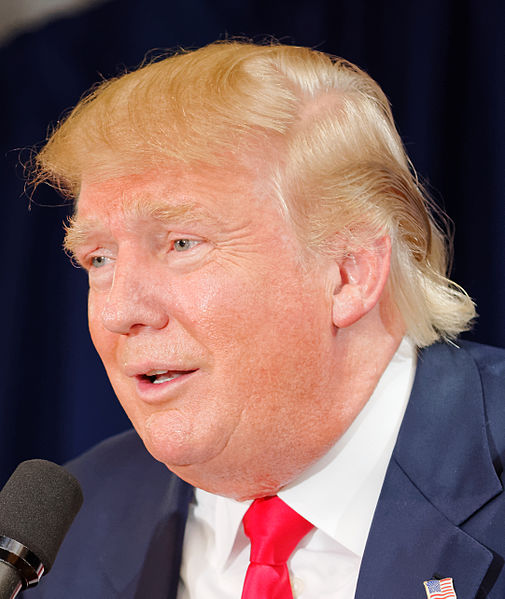
Yahoo! News notes that the lawsuit was filed on behalf of nonprofit Dunn’s Overtown Farms in May; court documents name student Carmen Salcedo as a co-plaintiff.
Together, Salcedo and Dunn’s say that the president has already identified a parcel of land on the premises of Miami-Dade College—currently a parking lot—but believe it is “most likely going to be a hotel” instead of the promised library.
The lawsuit further alleges that the Florida Republicans’ gift of approximately 2.63 acres of land, complete with “waterfront views” and worth an estimated $300 million, likely violates the Emolument Clause of the U.S. Constitution, despite being issued to the Trump Library Foundation rather than the president personally.
Attorneys for the plaintiffs observe that Eric Trump is one of the three named trustees of the Trump Library Foundation, potentially in contradiction of a constitutional provision that prohibits presidents from “receiving emoluments directly or constructively, through persons such as his immediate family members or corporate entities that he controls formally or informally.”
In response, the Justice Department said that the legal standards raised by the lawsuit are “ambitiously novel” and “illogical.” The Trump administration, for instance, claimed that two recent former presidents—Barack Obama and Joe Biden—owned “U.S. Treasury notes and bills during their tenure” and accrued interest from investments made to entities “from the United States” while still in office.
Though the plaintiffs have since characterized the government’s move toward an immunity dense as a “self-serving” sign of “panic,” Ruiz disagreed.
“[A]t this juncture, case-dipositive challenges persist that may prove successful,” Ruiz said.
Sources
Federal Judge Poised to Dismiss Lawsuit Challenging Trump’s Library
Join the conversation!