
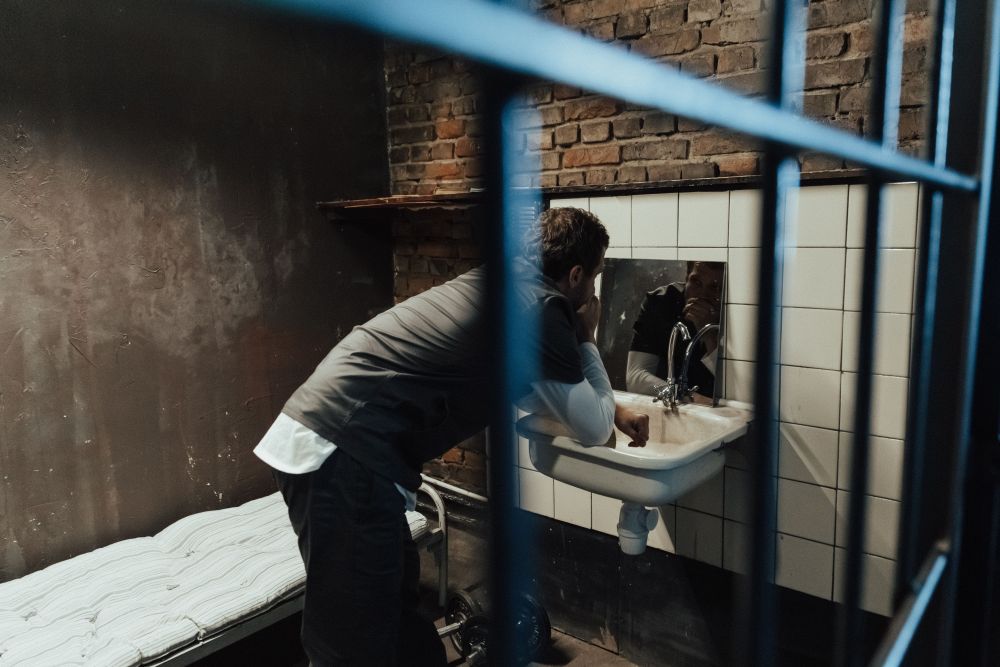
Arizona seller receives prison sentence as company forfeits millions and closes.
An Arizona man has been sentenced to four months in federal prison after admitting to selling chemicals that produce effects similar to anabolic steroids. His company must also close permanently and surrender $1.8 million following a federal case involving the sale and import of substances that have not received approval for human use. The SARMs seller, Jeffrey McIndoo, a Phoenix resident who owned JeffMac Investments LLC, operated the company under the name SARMS Pharm LLC. Federal authorities said the company sold selective androgen receptor modulators (SARMs) despite federal restrictions on their sale for human consumption. The chemicals have gained attention among people seeking to increase muscle size, improve physical performance, or change their body composition.
The sentence was announced by the U.S. Department of Justice (DOJ), following earlier guilty pleas from McIndoo and his company. McIndoo admitted to being a SARMs seller and placing an unapproved substance into interstate trade, while SARMS Pharm admitted to taking part in a plan to bring SARMs into the United States illegally from China. Federal prosecutors said the operation generated at least $3.5 million in gross profits between 2017 and 2022. Under the terms of its guilty plea, the company agreed to give up $1.8 million from the money it had retained through those sales. The financial penalty was accompanied by a court order requiring the company to stop operating.
U.S. District Judge Sharad H. Desai, who presided over the case in Arizona, imposed a four-month prison term on McIndoo and ordered him to pay a $1,000 fine. The judge also approved the company’s closure and the loss of the $1.8 million connected to its unlawful activities.
SARMs are chemicals that act on receptors in the body involved in muscle and bone growth. Although their effects can resemble those of anabolic steroids, they are not the same substances. Some have been studied for possible treatment of muscle loss and other conditions, but none have been approved by the U.S. Food and Drug Administration (FDA) for human use. The chemicals are sometimes promoted online as alternatives to traditional steroids, particularly among people involved in bodybuilding and fitness training. However, federal authorities have warned that these substances can carry serious risks. Buying the chemical from a SARMs seller can cause possible problems including liver damage, heart-related complications, and changes in hormone levels. The full range of long-term effects remains uncertain.
One concern surrounding the sale of SARMs is that consumers may not fully understand what they are purchasing. Products marketed for research purposes can still reach individuals who intend to consume them. Labels and online descriptions do not necessarily establish that the chemicals have been tested or found suitable for personal use.
Federal law places restrictions on the sale and distribution of substances that qualify as unapproved medications. Companies cannot avoid those requirements simply by selling chemicals through websites or obtaining them from overseas suppliers. Importing substances through unlawful means can also result in separate federal charges.
Assistant Attorney General Brett A. Shumate, who oversees the DOJ’s Civil Division, said the defendants bypassed federal protections by bringing unapproved SARMs into the country and selling them. He stated that the sentence reflected the government’s willingness to pursue individuals and companies that profit from such conduct. The case was handled by the FDA’s Office of Criminal Investigations, which examines suspected offenses involving products regulated by the agency. Managing Attorney David Sullivan and Assistant Director Patrick Runkle, both with the DOJ’s Enforcement and Affirmative Litigation Branch, prosecuted the matter.
Sources:
Illicit SARMS Dealer Sentenced and His Company Ordered to Cease Operations and Forfeit $1.8M
Arizona supplements seller sentenced, company ordered to forfeit $1.8 million and shut down
Join the conversation!