
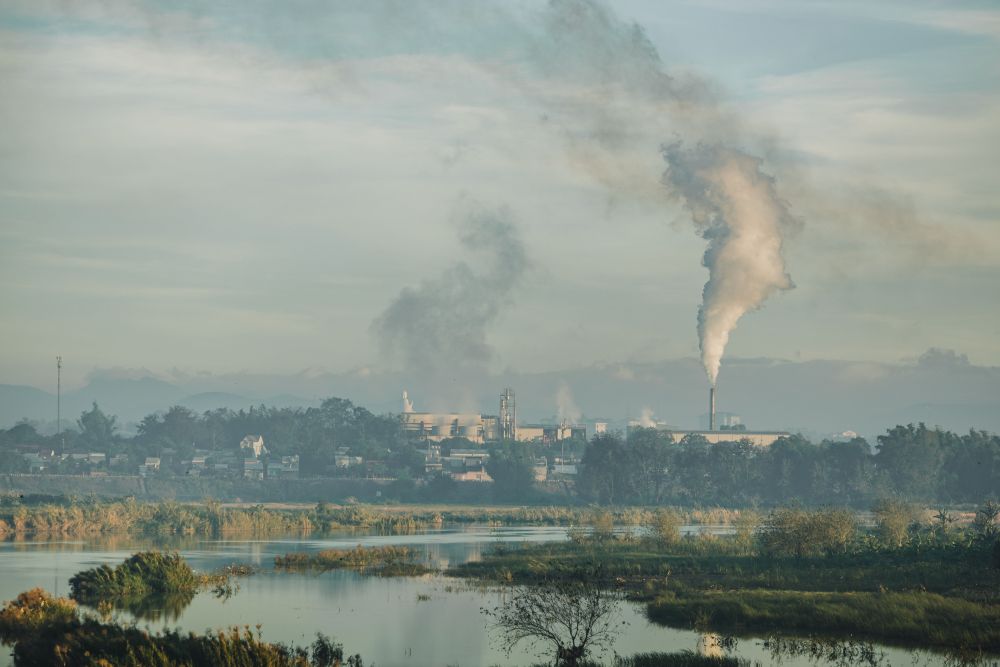
Federal agency seeks dismissal of the NAACP’s pollution case against xAI.
The U.S. Department of Justice (DOJ) is asking a federal court in Mississippi to throw out a lawsuit accusing Elon Musk’s artificial intelligence company, xAI, of violating federal air pollution laws. The move has led to a heated debate over environmental protections, corporate power and the government’s role in enforcing the law. The lawsuit was filed earlier this year by the NAACP, which claims xAI has been operating dozens of natural gas turbines without the permits required under the Clean Air Act. The generators supply electricity to the company’s massive Colossus 2 data center near the Mississippi and Tennessee border, where xAI develops and runs its Grok artificial intelligence system.
In a court filing submitted Monday, the DOJ argued that shutting down or limiting the turbines could hurt national security. Government lawyers said AI systems developed by xAI support military operations, so cutting power to the facility could interfere with those efforts. Its filing also stated that the executive branch should have the final say on enforcing federal environmental laws and should be able to stop lawsuits brought by private citizens or advocacy groups when it believes those cases conflict with federal interests.

This is a highly unusual approach. Citizen lawsuits have been part of the Clean Air Act since it was passed in 1970, allowing individuals and organizations to sue companies or government agencies they believe are breaking pollution laws. Supporters say the provision exists as a safeguard when regulators fail to act.
Lawyers representing the NAACP argued that the Justice Department’s filing goes beyond protecting xAI and could weaken one of the main tools that communities use to protect themselves against the devastating effects of environmental pollution. They said the law contains no exception allowing companies to avoid air quality rules because of national security concerns.
The NAACP originally filed its lawsuit against Musk’s company back in April, alleging that xAI operates 57 gas-powered turbines at the Mississippi site without the pollution controls normally required under federal law. The group claims emissions from the facility primarily affect nearby Black communities, according to the filing, and expose residents to pollutants including nitrogen oxides, fine particles and formaldehyde. In fact, according to the lawsuit, the turbines make the data center one of the nation’s largest industrial sources of air pollution. The organization is asking the court to order xAI to stop operating the turbines and to impose financial penalties that could reach more than $100,000 per day for each alleged violation.
xAI has argued that the turbines are temporary and therefore exempt from stricter permit rules. The Mississippi Department of Environmental Quality previously determined that state permits were not required for the equipment. The case is being heard in the Northern District of Mississippi, within the Fifth Circuit Court of Appeals, one of the nation’s most conservative courts at the federal level. Experts expect the legal fight to continue for years, and for it to possibly end up before the U.S. Supreme Court.
This issue extends far beyond a courtroom, too. Artificial intelligence systems require excessive amounts of electricity, leading companies to build new power sources and expand existing facilities. As these systems continue to pop up in many areas across the U.S., communities have increasingly raised concerns about air pollution, water use and the strain these projects place on local resources. The decision made in the NAACP case could influence how environmental laws are enforced in the United States for years to come.
Sources:
D.O.J. Seeks to Halt Pollution Lawsuit Against Elon Musk’s Data Center
Justice Department backs XAI in NAACP lawsuit over data center pollution
Trump administration backs Musk’s xAI in NAACP data center lawsuit
Join the conversation!