

Understanding the statute of limitations is the first step toward protecting your legal rights after a car accident in Illinois.
In the chaotic aftermath of a car accident, victims are often overwhelmed with immediate concerns: medical treatment, vehicle repairs, and notifying insurance companies. However, a less visible but equally critical deadline is already ticking. In Illinois, the right to seek compensation for injuries is governed by a strict legal timeline known as the statute of limitations. Failing to act within this period can permanently bar an individual from financial recovery, regardless of the severity of their injuries or the clarity of the other party’s fault. With tens of thousands of injury-causing crashes occurring annually across the state, understanding this deadline is not just a legal formality—it is a crucial component of protecting one’s rights.
Understanding Illinois’s Statute of Limitations for Car Accidents
The legal deadlines for filing a lawsuit after a car accident in Illinois are precise and differ based on the type of claim being pursued. The most critical distinction is between claims for personal injuries and those for property damage. Adhering to these timelines is not optional; it is a fundamental requirement for seeking justice through the court system. Each deadline is codified in state law and strictly enforced by Illinois courts.
The Critical Two-Year Deadline for Personal Injury Claims
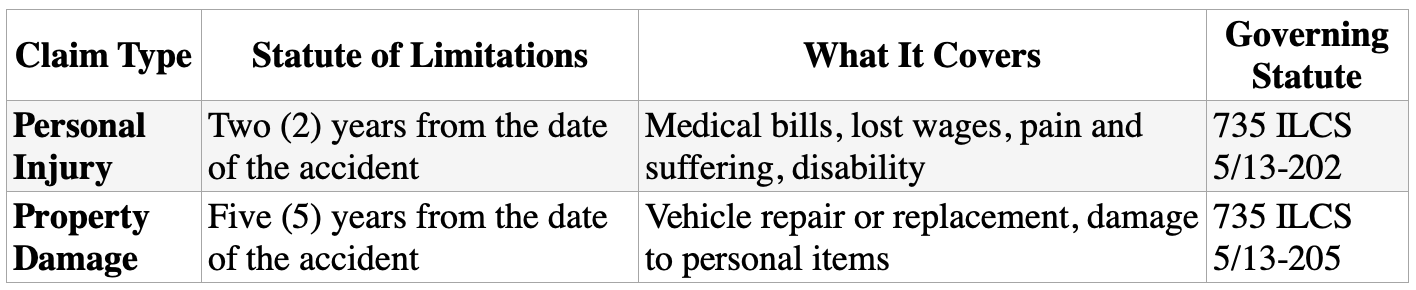
Under Illinois law, specifically 735 ILCS 5/13-202, an individual who has been injured in a car accident generally has two years from the date of the incident to file a lawsuit. This two-year window applies to all claims seeking compensation for personal injuries, which can include:
- Medical expenses (past and future)
- Lost wages and diminished earning capacity
- Pain and suffering
- Emotional distress
- Disability and disfigurement
This deadline is strictly enforced by the courts. If a lawsuit is filed even one day after the two-year anniversary of the accident, the court will almost certainly dismiss the case, and the victim will lose their right to pursue compensation from the at-fault party.
A Different Window for Property Damage Claims
While the timeline for injury claims is stringent, Illinois provides a more generous window for claims related to property damage. According to state law, victims have five years from the date of the accident to file a lawsuit seeking compensation for damage to their vehicle or other personal property. This longer period acknowledges that property-related disputes can sometimes take longer to resolve, but it is crucial not to confuse this deadline with the much shorter one for personal injuries.
Comparison of Illinois Filing Deadlines
The Legal Consequences of Missing the Filing Deadline
The consequences of failing to file a lawsuit within the statute of limitations are severe and irreversible. The court will dismiss the case on procedural grounds, preventing a judge or jury from ever hearing the merits of the claim. The defendant and their insurance company will no longer have any legal obligation to pay for the victim’s damages. This makes adhering to the deadline an absolute necessity for anyone seeking justice and financial recovery after a car accident.
Tolling the Clock: Key Exceptions to the Illinois Two-Year Rule
While the two-year deadline is firm, Illinois law recognizes certain circumstances where it would be unjust to hold a victim to this timeline. In these specific situations, the statute of limitations may be tolled, or paused, until the condition is resolved.
- Cases Involving Minors: If the accident victim is under the age of 18 at the time of the crash, the two-year clock does not begin to run until their 18th birthday. This means a minor victim has until their 20th birthday to file a personal injury lawsuit. This exception ensures that a child’s right to legal action is not compromised before they reach the age of majority.
- Legal Disability: If an individual is under a legal disability at the time of the accident—meaning they are unable to manage their own affairs due to a mental or physical condition—the statute of limitations is paused. The two-year period begins only after the disability has been removed.
- The Discovery Rule: In rare cases where an injury is not immediately apparent, the discovery rule may apply. This rule states that the statute of limitations clock does not start until the person knows or reasonably should have known that they were injured and that the injury was wrongfully caused. While less common in typical car accident cases, it can be relevant in situations involving latent injuries.
- Defendant Leaves the State: If the at-fault party leaves the state of Illinois after the accident, the period of their absence may not be counted as part of the two-year time limit.
It is critical to note that these exceptions are complex and fact-specific. Relying on an exception without consulting an attorney is extremely risky.
Beyond the Deadline: The Practical Urgency of Filing Your Claim
Even with a two-year legal window, waiting to take action is a significant strategic mistake. The strength of a personal injury case often depends on the quality and availability of evidence, which degrades over time. In a city like Aurora, which sees thousands of car crashes annually, and is located in a county with over 10,000 yearly crashes, the need for prompt investigation is paramount.
Preserving Critical Evidence
Key evidence needed to prove fault and damages can disappear quickly. Surveillance footage from nearby businesses is often erased on a 30-day cycle. Skid marks on the road fade, and the vehicles involved may be repaired or salvaged, destroying crucial data from event data recorders (black boxes). A prompt investigation allows for the preservation of this evidence through legal requests and expert analysis before it is lost forever.
Securing Accurate Witness Testimony
Witnesses are essential for corroborating the events of an accident. However, memories fade and details become blurred with time. Contact information can become outdated, making witnesses difficult to locate months or years later. Securing signed statements or depositions from witnesses while the incident is still fresh in their minds is vital to building a compelling case. The ongoing issue of crashes related to violations of Scott’s Law in Illinois, as seen in multiple incidents involving state police vehicles, further underscores the need for clear, immediate accounts of what happened on the road.
The Role of a Diligent Legal Team in Managing Deadlines
Navigating the complexities of evidence preservation, witness interviews, and strict legal deadlines while recovering from an injury is a daunting task. This is where the value of an experienced legal team becomes clear. Proficient Aurora Illinois car accident attorneys not only understand the statute of limitations but also manage the entire pre-litigation process with diligence. They take immediate steps to issue spoliation letters to preserve evidence, dispatch investigators to the scene, and collect all necessary documentation.
For the thousands of clients they have successfully helped, firms like 844 See Mike have proven that proactive case management is essential. By taking swift action, they ensure that no critical deadline is missed and that the strongest possible case is built from day one, helping clients avoid costly statute of limitations issues and maximizing their potential for a full financial recovery.
Navigating Your Next Steps After an Illinois Car Accident
Understanding the statute of limitations is the first step toward protecting your legal rights after a car accident in Illinois. The key takeaway is that time is not on your side. The two-year deadline for personal injury claims is absolute, and the practical window for building a strong case is even shorter. The actions victims take in the days and weeks following an incident are crucial. Documenting everything, seeking medical attention, and consulting with a legal professional promptly are not just recommendations—they are essential actions for anyone seeking to secure fair compensation and hold negligent parties accountable.
Join the conversation!