
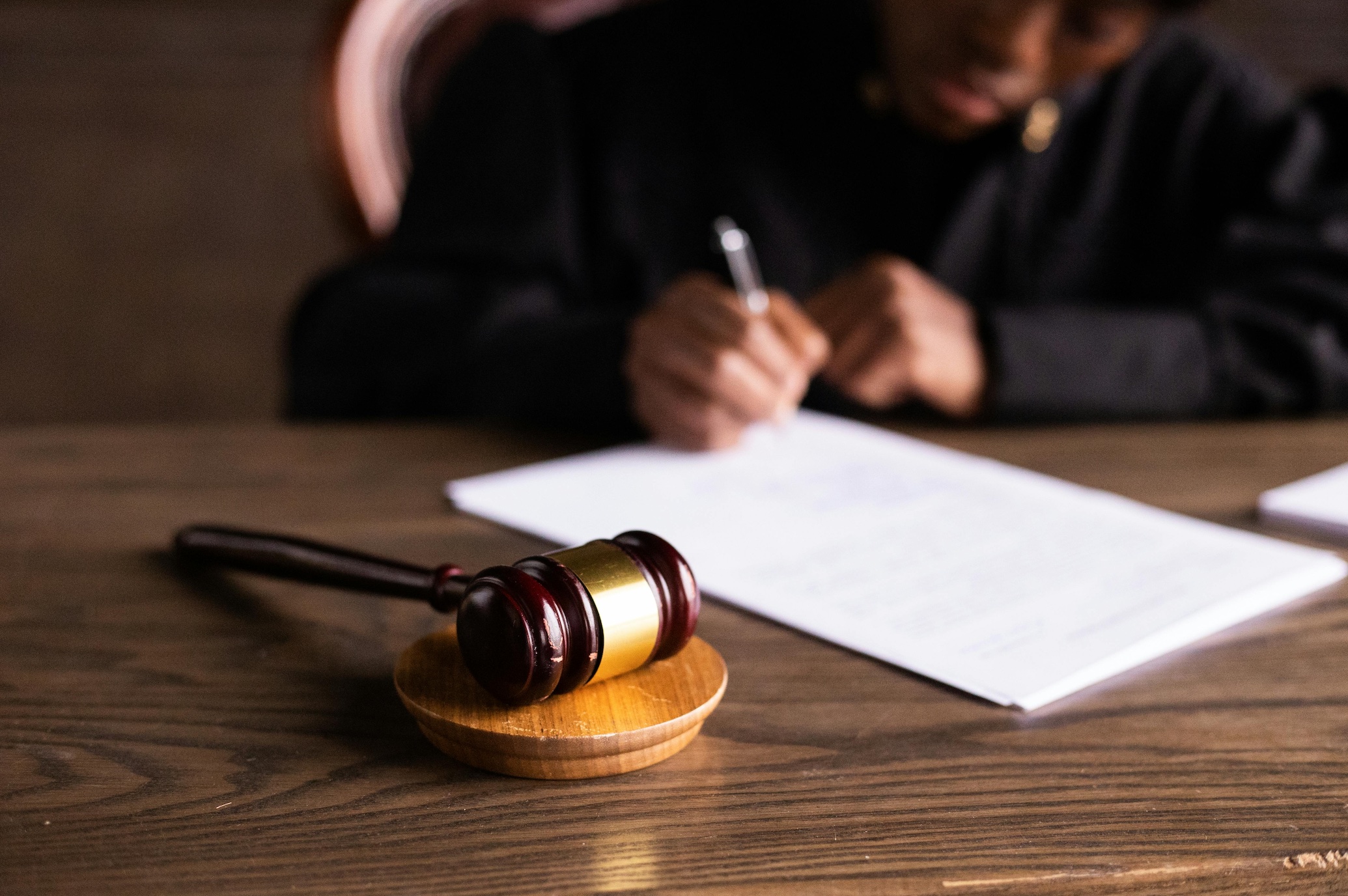
The message is chillingly clear: We know where you live, and we can reach your family.
When a judge takes the bench, everyone in the courtroom rises. It is a small ritual, but it carries real weight. That moment of deference is not just courtesy. It is an acknowledgment that the rule of law stands above any individual, any party, and any political moment. That principle is now under fire.
In 2020, a gunman came to the home of U.S. District Judge Esther Salas. The bullet meant for her killed her only son, Daniel Anderl, on his 20th birthday. The attacker was an attorney, enraged by one of her rulings.
Five years later, the threats have not slowed; they have multiplied. According to the U.S. Marshals Service, 564 threats against federal judges were logged in 2025 alone, surpassing the total for all of 2024. In 2026, that number is already at 197 and climbing. Judges across the country have received pizzas ordered in Daniel Anderl’s name, delivered to their chambers, their homes, and even their children’s homes. The message is chillingly clear: We know where you live, and we can reach your family.
Americans are also feeling the impact. A Marist poll conducted in January 2026 found that 78% of U.S. citizens believe there is a serious threat to democracy, including 61% of Republicans.
I could not stay on the sidelines. The threats were real, the pattern was unmistakable, and silence from the legal community was making it worse. I founded Speak Up for Justice, a national, nonpartisan movement uniting judges, lawyers, and concerned citizens to defend judicial independence and the rule of law.
Lessons from Abroad: How Attacks on Courts Dismantle Democracy
Over the past year, I’ve convened judges and legal scholars from countries where judicial independence didn’t just erode, it collapsed.
In places like Venezuela and Poland, courts were systematically stripped of power. In South Africa, judges fought to preserve independence amid the brutal politics of apartheid and transition. Their message to us is consistent and stark: what is happening in America today fits a familiar pattern. Attacks on the judiciary are never isolated events; they are early warnings of deeper democratic breakdown.
Judge Eleazar Javier Saldivia of Venezuela was forced into exile for refusing to bow to political pressure and for upholding the law in his country. Judge Dorota Zabludowska witnessed Poland’s judiciary being dismantled through sustained political campaigns and institutional takeover. Justice Richard Goldstone of South Africa has long emphasized that losing judicial independence means losing the very foundation of democracy itself.
These are not hypotheticals. These judges lived it. They tell us that the warning signs appear early, with each attack on the courts initially downplayed or ignored. But in every case, these attacks have been the first step in dismantling democracy, and by the time the full picture emerges, the damage is irreversible.
Under Siege: The Growing Dangers Facing U.S. Judges
Across the country, judges are targets of violent threats and harassment. The examples below illustrate the alarming reality they face daily:
- Senior U.S. District Judge John C. Coughenour faced a swatting incident and a mailbox bomb threat after ruling on birthright citizenship.
- Chief U.S. District Judge John McConnell received multiple threatening voicemails after a ruling, including six credible death threats. In one, a caller said they were going to come for him and wished he would be assassinated.
- Chief Justice Monica Márquez and all six of her colleagues received threats after the court’s December 2023 ruling on presidential ballot eligibility. Chief Justice Márquez and her family endured spoofing, swatting, doxxing, and relentless intimidation.
- Dixie County Judge Jennifer Johnson in Florida spent months fearing for her life, as a deepfake video of her murder was circulating online. It took more than five months for law enforcement to act.
- County Court Judge Carroll Kelly endured cyberattacks, stalking, and threats from a trained sniper, with law enforcement posted at her home around the clock.
- “Wanted” posters with judges’ faces have appeared in federal buildings. Home addresses, including those of judges’ family members, have been published online.
While federal judges receive security support from the U.S. Marshals Service, those resources are limited, and the volume of threats against them is rising.
Meanwhile, state judges — who handle roughly 95% of all cases in America — face the same dangers without the protections federal judges receive. No lifetime appointment, no U.S. Marshals detail, and in many jurisdictions, home addresses are public record. There is no standardized system for tracking threats, and the judges handling criminal cases, family law disputes, civil litigation, and probate matters — courts that impact most Americans — are the least protected.
Lawyers Have a Duty to Defend Judges and the Rule of Law
Most people hear “The first thing we do, let’s kill all the lawyers” and laugh. They shouldn’t. Spoken by a character plotting to overthrow the government in Henry VI, Part 2, it’s a reminder that those who defend the rule of law are often the first targets when democracy is under threat.
The legal community has largely been quiet while this has happened. Threats get dismissed as political noise. The bar stays silent because the targeted judge was appointed by a certain administration or issued an unpopular ruling. That silence has a cost. Every time a threat goes unanswered, the threshold for the next one rises.

Challenging judicial decisions is a core function of our legal system. Appealing rulings, publishing academic critiques, and covering controversial cases are all important aspects of this process. The danger arises, however, when legitimate criticism crosses the line into intimidation, and when the legal community’s silence allows that line to blur.
How the Legal Community Can Speak Up to Defend the Courts
Bar associations can pass resolutions, issue public statements, and actively advocate for stronger judicial security at the state level. The Countering Threats and Attacks on Our Judges Act — which would create a State Judicial Threat Intelligence and Resource Center to provide technical assistance, threat monitoring, training, and security assessments for state and local judges — deserves the profession’s vocal support.
Law schools can treat judicial independence as the live issue it is rather than a settled historical condition. Individual practitioners can draw the line publicly and consistently, regardless of who appointed the judge or how the ruling landed.
Lawyers understand better than anyone what is lost when courts cannot function independently. That knowledge carries an obligation. Not to any particular cause or ideology, but to the system itself. Most lawyers will never argue before a federal appellate court. But every attorney has a client whose outcome depends on a judge making a fair and impartial decision. The profession has been quiet for too long. That is the one thing that needs to change.
The judges from Poland, Venezuela, and South Africa who have joined our forums are not speaking hypothetically. They watched their courts fall. They tell us the warning signs were visible early, that each escalation was dismissed as isolated, and that by the time the full picture emerged, it was too late to reverse.
We are not there yet. But the window for action does not stay open indefinitely.
Join the conversation!