

By understanding your rights, meeting critical deadlines, and thoroughly documenting your claim, you significantly increase your chances of securing the benefits and justice you deserve.
Workplace injuries disrupt lives—physically, emotionally, and financially. If you’ve suffered an on-the-job injury in Southern California, knowing how to file a workers’ compensation claim is crucial to securing medical care and wage replacement. This guide offers step-by-step instructions, practical tips, and expert insights to help you protect your rights and navigate the legal process with confidence.
Introduction to Workers’ Compensation
Workers’ compensation is a no-fault insurance system designed to protect employees who experience work-related injuries or illnesses. It provides medical care, wage-loss benefits, and, in some cases, vocational rehabilitation or death benefits to eligible workers and their families.
Who is Eligible?
Most employees in California, including part-time and full-time workers, are covered if their employer carries workers’ compensation insurance.
- Independent contractors, volunteers, and certain agricultural workers may not be eligible.
Types of Injuries and Illnesses Covered
- Sudden injuries (e.g., fractures, burns, sprains).
- Repetitive motion injuries (e.g., carpal tunnel syndrome).
- Occupational diseases (e.g., respiratory illnesses, hearing loss).
- Mental health conditions caused by workplace stress or trauma.
Reporting a Workplace Injury
Timely reporting is the first—and often most critical—step in the claims process. Notify your employer in writing as soon as possible, ideally within 30 days of the incident. Failing to report within 120 days may jeopardize your claim. Use the company’s official report of occupational injury or disease form. Employers must provide you with a workers’ compensation claim form within one working day of learning about your injury. You are responsible for accurately completing the employee section of the form and returning it promptly.
Using the Workers Compensation Automation Integration System (WCAIS)
California’s WCAIS streamlines claim submission and communication. Ask your employer if their insurance carrier uses WCAIS for electronic document filing and status updates. If you need legal support or have questions about your rights, a trusted workers compensation attorney Riverside CA can provide guidance—often with a free initial consultation.
Filing a Workers’ Compensation Claim
Filing a claim correctly protects your right to benefits and sets the process in motion. Fill out the employee section of the claim form provided by your employer. Include detailed information: date, time, location, and nature of the injury. Attach any supporting documentation or witness statements. Return the form to your employer (keep a copy for your records). Your employer must forward the completed form to their insurance company within one working day. Your employer’s insurance carrier has 14 days to notify you of your claim status. If you do not return the completed claim form, you risk losing your right to benefits. Always request a copy of the completed claim form. After filing, the insurance carrier may request additional documentation or a medical evaluation. You should receive written notice of claim approval, denial, or a request for more information.
Gathering and Documenting Evidence for Your Claim
A strong claim relies on thorough documentation.
Checklist for Workers’ Compensation Claim Evidence:
- Incident report and claim form copy.
- Medical records and treatment notes.
- Witness statements, if applicable.
- Photos of the injury or accident scene.
- Pay stubs for wage-loss verification.
- Communication records with your employer and insurer.
Understanding Your Workers’ Compensation Benefits
Workers’ compensation provides several types of benefits, depending on your circumstances.
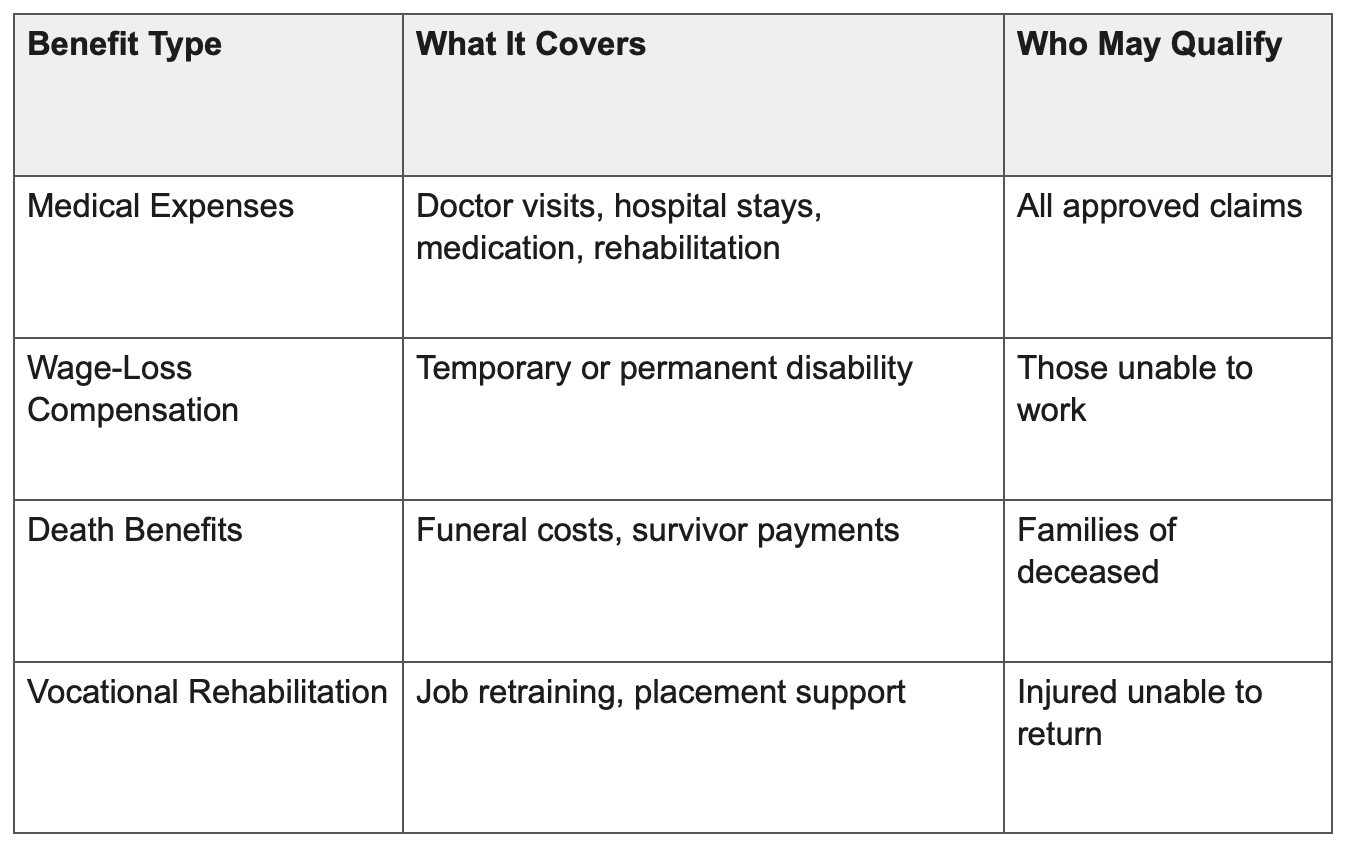
Medical Benefits cover all reasonable and necessary treatment for work-related injuries, including surgeries, medications, and physical therapy. If your injury causes you to miss work, you may receive Wage-Loss Compensation as temporary or permanent disability payments based on your average weekly earnings. If a work-related injury leads to death, certain family members may be entitled to Death Benefits and funeral expenses. If you cannot return to your previous position, you may qualify for Vocational Rehabilitation Benefits for retraining or placement assistance to help you re-enter the workforce.
Appeals Process and Legal Assistance
Detailed Appeals Process
- Review the denial notice for deadlines (typically 20–30 days to file an appeal).
- File a written appeal with the state’s workers’ compensation board.
- Attend a hearing, where you may present new evidence or testimony.
- The judge issues a written decision. If denied again, you may pursue further appeals to higher courts.
When to Consult a Lawyer
- If your injury is serious, permanent, or involves significant wage loss.
- If your claim is denied or benefits are delayed.
- For cases involving workplace discrimination or retaliation.
To discuss discrimination or wrongful termination related to your injury, contact a work discrimination claims attorney Riverside.
Claim Petition and Hearing Process
If your initial claim is denied or disputed, you have the right to file a claim petition. To file a claim petition, submit it with the state’s workers’ compensation appeals board, and provide specific details of your injury and why you believe you are entitled to benefits. When preparing for a hearing, gather all evidence, including medical reports and witness statements, and prepare to explain your injury, treatment, and work restrictions. The Department of Labor & Industry oversees hearings, reviews evidence, and issues decisions. You may represent yourself or seek legal counsel.
Managing and Checking Your Claim Status
Staying proactive ensures your claim progresses smoothly. To check your claim status, contact your employer’s insurance carrier or use WCAIS if available, and request written confirmation of your claim status within 14 days. When responding to denials or disputes, review the denial letter for specific reasons, gather additional evidence or medical opinions, and consult a legal professional if you believe the denial is unjust. When communicating with employers and insurance carriers, keep all communications polite and professional, document every conversation or correspondence, and respond promptly to requests for information.
Resources for Legal Support
- Bilingual support for Spanish-speaking clients.
- Free consultations and no fees unless your case is won.
Third-Party Claims and Additional Legal Remedies
Sometimes, a party other than your employer (such as equipment manufacturers or subcontractors) may be responsible for your injury. In these cases, you may have a third-party claim in addition to your workers’ compensation case. This can provide compensation for pain, suffering, and other losses not covered by standard benefits.
For pregnancy-related workplace injuries or discrimination, you may also need the support of a pregnancy discrimination lawyer California to ensure all your rights are protected.
Conclusion
Navigating the complexities of workers’ compensation and workplace discrimination requires diligence and accurate information. By understanding your rights, meeting critical deadlines, and thoroughly documenting your claim, you significantly increase your chances of securing the benefits and justice you deserve. Remember that legal professionals are available to help manage disputes, appeals, and any related discrimination issues, ensuring your focus remains on your recovery and future stability.
Join the conversation!