
Living in the digital age becomes smoother when you understand your rights and take simple steps to protect your information.
Have you ever asked yourself how you can stay safe online while still enjoying everything the internet offers?
Many people think about this today because so much of our daily life runs through phones, apps, and websites.
With the right understanding, anyone can stay confident and comfortable while using digital platforms in simple and secure ways.
Understanding Your Online Rights in a Simple Way
When people hear the term “digital rights,” they often imagine something technical or complicated. But in simple terms, digital rights are just your everyday rights carried into online spaces.
Just like you feel safe in your home, you can also feel safe on the internet when you know what you are allowed to do and how your information should be treated. These rights help you enjoy the internet with clarity and comfort, without any confusion about how your personal data is used or shared.
In many cases, people also find it helpful to know that support exists when issues come up, especially when someone wants to correct something about their online presence.
For example, If you discover false or damaging information published about you online, understanding your rights is the first step toward removing defamatory content legally and effectively.
This simple awareness gives people confidence and peace of mind.
Why Online Rights Matter for Everyone
Today, almost every person uses a phone or computer every day. People chat with friends, learn new skills, work online, shop online, and connect with others in many creative ways.
Because of this, it is important to understand how to keep your information safe. When you know your rights, you feel more relaxed and can use digital platforms with comfort.
Online rights help you:
- Keep your personal information safe
- Stay in control of your online identity
- Communicate with confidence
- Enjoy digital services without any confusion
- Build trust in online communities
Staying Safe Through Simple Online Habits
Most people want to feel comfortable while using the internet, and this becomes easy with a few simple habits. These habits do not require any technical skill.
They only require small, mindful steps that fit naturally into your daily routine. When these steps become part of your life, your online experience becomes smoother and more positive.
Everyday Practices That Support Online Safety
Here are some simple actions that many people use:
- Using strong passwords
- Updating passwords once in a while
- Keeping personal information private
- Being careful with unknown messages
- Saving important screenshots or records
- Knowing which websites ask for what information
- Reading settings slowly before agreeing
These small steps help you stay comfortable and aware while enjoying your online routine.
Your Rights Around Personal Information
Personal information includes your name, phone number, photos, and small details like your birthday or contact profile. You have the right to know how this information is used online.
You can choose what to share and what to keep private. Most digital platforms also allow you to review or change your information whenever you want. This gives you more control over your online identity.
How Control Over Your Information Helps You
- You feel confident sharing only what you want
- You can adjust privacy settings anytime
- You can request corrections when the information is not accurate
- You can select who can see your content
- You can manage your digital presence with clarity
This sense of control makes the online experience relaxed and balanced.
Understanding Safe Communication Online
People connect with friends, family, and colleagues using social platforms, messaging apps, and email. These tools help build warm connections, even at long distances.
Safe communication means being aware of how your messages travel and who can see them. Most platforms today offer settings that let you choose visibility and privacy.
Ways to Communicate Comfortably Online
- Share personal thoughts only with trusted people
- Keep sensitive topics to private chats
- Avoid clicking unknown links
- Save important chats for reference
- Be thoughtful about what you post publicly
- Use private groups for personal discussions
These simple habits support a secure and pleasant communication experience.
A Simple Table Explaining Key Digital Rights
Below is an easy table summarizing important rights in the digital age:
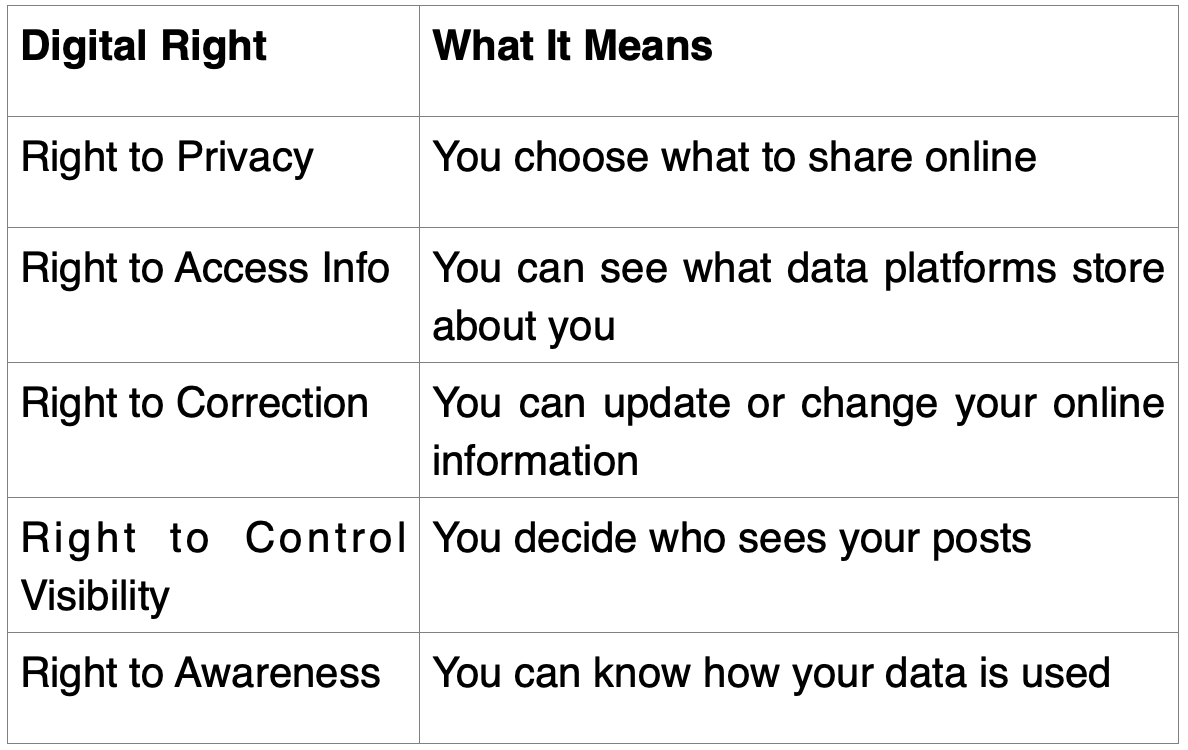
These rights help you feel at ease while using online tools.
Protecting Your Online Identity With Awareness
Your online identity reflects how you appear on the internet. It includes your name, photos, and the way you interact with others. By understanding your rights, you can control how others see you online.
Many people use simple steps like reviewing privacy settings or checking profile visibility once in a while. These efforts help maintain a positive and comfortable online presence.
Steps to Support Your Online Identity
- Keep your personal profiles updated
- Review privacy settings regularly
- Choose strong passwords
- Use two-step verification where available
- Share only essential information
- Think before posting personal details
Each step keeps your online space healthy and balanced.
Respect and Positivity While Interacting Online
When people bring empathy and kindness into digital conversations, online interactions feel smoother and more meaningful. Respectful communication also supports strong digital communities. Speaking gently, replying with patience, and appreciating different viewpoints help create pleasant online spaces.
How Positive Online Interactions Help
- Builds trust in digital circles
- Creates friendly connections
- Helps people express themselves freely
- Encourages calm communication
- Supports healthy digital communities
This type of communication makes online spaces feel supportive and welcoming for everyone.
Knowing Your Choices Helps You Stay Confident
One of the most comforting aspects of online rights is that they give people choices. For example, you can choose who sees your posts, who can contact you, and what type of content you share.
You can also request updates to your information whenever needed. These choices allow you to enjoy the internet with self-assurance.
Examples of Digital Choices You Have
- Choosing your privacy level
- Selecting your audience
- Using private mode when browsing
- Customising notification settings
- Managing online accounts easily
These small choices give you confidence while navigating online spaces.
Learning the Value of Digital Awareness
Awareness is one of the most important elements of online protection. It means being familiar with how platforms work and understanding what information they request. With simple awareness, you can avoid unnecessary confusion and stay in control of what you do online.
Easy Ways to Build Digital Awareness
- Read settings slowly before accepting
- Understand which apps need permissions
- Explore basic privacy menus
- Stay informed through simple tutorials
- Ask friends or family for help if needed
Awareness helps you use digital tools with comfort and clarity.
Conclusion
Living in the digital age becomes smoother when you understand your rights and take simple steps to protect your information. With the support of positive habits, respectful communication, and awareness of privacy choices, you can enjoy the online space confidently and peacefully. When empathy, clarity, and understanding guide your digital actions, your online life stays balanced, comfortable, and secure.
Join the conversation!