

Knowing what you can and can’t say and do as a landlord keeps you out of many landlord tenant disputes.
Rental property law in South Carolina applies before a lease is signed, throughout the tenancy, and after move-out. Decisions made during advertising, screening, lease drafting, maintenance, deposit accounting, and eviction can affect later disputes. A lifecycle approach helps landlords follow consistent procedures while giving tenants clearer information about their rights and responsibilities.
Why Rental Property Law Should Be Viewed as a Lifecycle
Each stage of a tenancy is connected. An unclear advertisement can create fair housing risk, an incomplete lease can cause disagreement over fees or maintenance, and weak move-in records can complicate a security-deposit dispute. Treating these stages as one legal process encourages both parties to document expectations early and address problems before they escalate.
Proactivity Over Reactivity
Waiting until rent is unpaid, repairs are delayed, or a deposit is disputed is usually more difficult than establishing lawful procedures in advance. Landlords should use consistent forms, written policies, reliable records, and current notices. Tenants should read the lease, keep copies of communications, report problems promptly, and provide required information in writing. These habits do not eliminate every conflict, but they make the facts and each party’s obligations easier to establish.
Protecting Your Investment (And Your Sanity)
Legal compliance protects the property and the people who live there. A landlord who understands required maintenance, access, notice, screening, and deposit procedures is less likely to create avoidable liability. A tenant who understands payment, upkeep, notice, and documentation duties is better able to protect the tenancy and raise concerns effectively. The goal is a predictable rental relationship, not simply a stronger position after a dispute begins.
Understanding the Legal Framework for South Carolina Rentals
The South Carolina Residential Landlord and Tenant Act, found in Title 27, Chapter 40 of the South Carolina Code, governs most residential rental agreements for dwelling units in the state. It establishes duties and remedies for landlords and tenants, although listed arrangements such as certain institutional, hotel, employment-related, and agricultural occupancies are excluded. Local housing codes and federal laws may also apply.
Key Provisions of the SCRLTA
The Act recognizes both oral and written rental agreements, but a written lease provides a clearer record of the parties’ terms. It addresses security deposits, required disclosures, property condition, access, tenant conduct, lease violations, and remedies. It also prohibits lease terms that waive a tenant’s statutory rights, authorize confession of judgment, or improperly release or indemnify the landlord from legal liability. At or before the tenancy begins, the landlord or authorized leasing agent must disclose in writing the name and address of an owner or an authorized agent who can receive notices and legal process.
Local Ordinances and Their Impact
State law is not always the only source of rental obligations. Municipal or county housing, safety, zoning, registration, and property-maintenance rules may supplement state law. Fair housing protections may also vary by jurisdiction. Before advertising or leasing a property, confirm the rules with the government responsible for the property’s location rather than relying on a form prepared for another city or county.
Building a Legally Sound Rental Business
Operating one rental unit or many requires repeatable procedures. Policies should reflect the lease, the South Carolina Act, fair housing law, consumer-reporting law, and any applicable local requirements. A procedure that conflicts with governing law is not protected merely because it is written or applied routinely.
Establishing Clear Policies and Procedures
Written procedures can cover applications, rent collection, maintenance requests, inspections, accommodation requests, lease violations, and move-out accounting. The South Carolina Act allows landlords to adopt rules about use and occupancy only when the rules serve a proper purpose, are reasonably related to that purpose, are explicit, apply fairly, do not evade landlord duties, and are properly disclosed. A later rule that substantially changes the tenant’s bargain may be ineffective if the tenant timely objects as the Act permits.
The Importance of Documentation
Keep accurate copies of the lease, payment records, applications, notices, communications, repair requests, invoices, inspection reports, photographs, and move-in and move-out records. Documentation should be factual, dated, and stored securely. It can show whether required notice was given, whether a repair was addressed, or whether a deduction reflects tenant-caused damage rather than ordinary wear. Tenants should keep their own copies because a court will evaluate evidence from both sides.
Drafting Leases That Prevent Confusion and Disputes
A lease should explain the parties’ agreement without attempting to override nonwaivable law. Generic templates may omit South Carolina duties or include unenforceable provisions. Even when an oral rental agreement may be legally recognized, a written agreement reduces uncertainty about rent, term, services, fees, and responsibilities.
Essential Clauses for South Carolina Leases
State the tenancy dates, rent amount, due date, payment method, late charges, deposit terms, occupancy limits, utility arrangements, pet rules, maintenance allocation, access procedures, renewal or termination terms, and remedies for breach. Identify whether a payment is refundable security or a nonrefundable fee.
South Carolina law treats late charges as part of rent and permits courts to refuse or limit unconscionable lease provisions, so charges should be stated precisely and reviewed for enforceability. The lease should also contain the required owner-or-agent disclosure and should not waive rights protected by the South Carolina Act.
Avoiding Ambiguity and Redundancy
Use property-specific language and remove clauses that conflict or repeat the same rule differently. Define important terms, distinguish fees from deposits, and state who must provide particular services. Review forms when statutes, regulations, or local rules change. A South Carolina attorney, such as Matejka Law, should review provisions involving unusual fees, liability allocation, early termination, or specialized housing programs.
Screening Applicants Consistently and Lawfully
Screening can evaluate whether an applicant is likely to pay rent and follow legitimate lease requirements, but it must comply with fair housing and consumer-reporting law. Use written criteria connected to the tenancy and apply them consistently unless a lawful, documented reason supports different treatment, such as a disability-related reasonable accommodation.
Developing Fair and Consistent Screening Criteria
Set criteria before accepting applications. Relevant factors may include verifiable income, rental history, credit information, and other documented tenancy risks. Avoid arbitrary exceptions, shifting standards, or different levels of assistance based on a protected characteristic. Record the criteria used and the reason for each decision without collecting unnecessary personal information.
What You Can and Cannot Ask
The federal Fair Housing Act prohibits housing discrimination because of race, color, religion, sex, national origin, familial status, or disability. Questions should seek information needed to evaluate lawful tenancy criteria, not protected characteristics. Disability-related information requires particular care: a housing provider may need limited information to evaluate an accommodation when the disability or need is not apparent, but should not demand broad medical records unrelated to the request.
The Role of Background and Credit Checks
The federal Fair Credit Reporting Act permits a landlord to obtain a consumer report for a legitimate housing purpose. Before obtaining it, the landlord must make required certifications to the reporting company. If report information contributes to denial, a higher deposit, a co-signer requirement, higher rent, or another unfavorable decision, the applicant or tenant must receive an adverse-action notice identifying the reporting company and explaining the right to obtain and dispute the report.
When no longer needed, reports and related information must be securely disposed of. Criminal-history criteria should be documented, tied to legitimate tenancy concerns, and applied without prohibited discrimination.
How Fair Housing Rules Affect Everyday Management Decisions
Fair housing duties extend beyond screening. They affect advertising, property showings, lease terms, rules, services, repairs, enforcement, renewals, and termination. Consistent procedures help, but a neutral policy may still require an individual accommodation for a person with a disability.
Understanding Protected Classes
The Fair Housing Act protects race, color, religion, sex, national origin, familial status, and disability. South Carolina and local law may provide additional or overlapping protections. Confirm current law for the property’s location and apply the same availability information, terms, services, and enforcement standards without prohibited discrimination.
Avoiding Discrimination in Advertising and Communication
Advertisements should describe the property, not the preferred type of occupant. Phrases suggesting that a home is intended only for adults, professionals, particular religions, or people without disabilities can create fair housing concerns. Provide prospective and current tenants with consistent information, and document objective reasons for changes in terms or enforcement.
Reasonable Accommodations and Modifications
A reasonable accommodation changes a rule, policy, practice, or service when necessary for a person with a disability to use and enjoy housing. An animal-related request should be evaluated under the Fair Housing Act. HUD’s May 22, 2026 FHEO guidance ordinarily limits reasonable-cause findings for pet-policy waivers to trained animals, but does not limit private court actions.
Each request still requires review under applicable law. A reasonable modification is a disability-related physical change. Under the Fair Housing Act, tenants generally pay; under Section 504, federally assisted providers generally pay unless that would impose an undue burden or fundamentally alter the program.
Handling Security Deposits, Fees, and Tenant Funds
Deposits are a frequent source of conflict, so the lease and records should distinguish refundable security from rent and nonrefundable charges. The South Carolina Act defines a security deposit as money held in trust to secure lease performance. It does not state the one-and-a-half-month statewide cap sometimes reported in secondary summaries.
South Carolina’s Security Deposit Limits and Requirements
South Carolina Code section 27-40-410 governs return and deductions but does not set a general statewide maximum deposit. A landlord with more than four adjoining units who uses different deposit-calculation standards must disclose those standards as the statute requires.
South Carolina Code section 40-57-136 imposes separate real estate trust-account duties on licensed brokers-in-charge and property managers-in-charge for security deposits, pet deposits, and advance rent; an owner managing the owner’s own property should not assume every licensing rule applies in the same way.
Itemizing Deductions and Timely Returns
A landlord may deduct accrued rent and damages caused by the tenant’s noncompliance, then must send a written itemization and any amount due within 30 days after termination of the tenancy, delivery of possession, and the tenant’s demand, whichever is later. The tenant must provide a forwarding or new address in writing.
If no address is provided, the statute limits the tenant’s damages when the landlord lacks notice of the tenant’s whereabouts and mails the notice and payment to the last known address. Wrongful withholding can result in three times the amount withheld plus reasonable attorney’s fees.
Understanding Other Fees and Charges
State every application fee, late charge, pet fee, and other charge clearly, including when it is earned and whether it is refundable. Do not describe a refundable deposit as a nonrefundable fee or use unclear labels to avoid deposit-accounting duties. Because South Carolina courts may decline to enforce an unconscionable lease term, unusual or substantial charges should be reviewed for a clear contractual and legal basis.
Managing Repairs, Inspections, Complaints, and Property Access
A safe, habitable property and lawful access practices are central duties during the tenancy. Written reporting procedures help landlords respond promptly and help tenants prove when notice was given.
Landlord’s Responsibility for Maintenance and Repairs
South Carolina Code section 27-40-440 requires landlords to comply with applicable health and safety codes, make reasonably necessary repairs, keep the premises fit and habitable, maintain covered systems and supplied appliances, and provide required essential services.
Fourteen days is not a universal repair deadline. It is part of a tenant’s termination remedy for certain material breaches after written notice. Essential-service failures use a different rule: after notice, the landlord must have a reasonable time to act, and the Act provides specified tenant remedies.
Tenant’s Role in Property Upkeep
Tenants must keep their areas reasonably safe and clean, dispose of waste properly, use systems and appliances reasonably, avoid deliberate or negligent damage, and follow enforceable lease rules. A tenant should report defects promptly and should not assume the Act generally permits hiring a contractor and deducting repair costs from rent; its essential-services provision expressly limits repair-and-deduct treatment.
Proper Notice for Entry
South Carolina Code section 27-40-530 generally requires at least 24 hours’ notice and entry at reasonable times. Exceptions include emergencies, certain regularly scheduled services disclosed conspicuously in the lease, and services requested by the tenant during stated hours. A tenant may not unreasonably withhold lawful access, but a landlord may not abuse access or use repeated entries to harass. Either party may seek statutory remedies for abuse of access.
Responding to Lease Violations Without Escalating the Conflict
A response should match the type of breach and the notice required by the lease and statute. Informal communication may resolve a minor issue, but it does not replace a legally required notice.
Clear Communication and Written Notices
A notice should identify the conduct, relevant lease provision, required cure, deadline, and consequence of noncompliance. Keep proof of delivery. For many remediable non-rent breaches, South Carolina Code section 27-40-710 uses a written 14-day notice-and-cure process. Nonpayment follows a separate five-day rule, subject to the Act’s provisions allowing conspicuous lease language or a prior notice to satisfy the landlord’s additional notice obligation.
Offers of Cures and Remedies
When the statute permits a cure, the landlord should not file for possession before the cure period expires. If the tenant begins a remedy that cannot reasonably be completed within 14 days and pursues it in good faith, the Act may prevent termination for that breach. Serious, repeated, health-and-safety, or illegal-activity violations can involve different rules, so the landlord should confirm the applicable procedure before acting.
When a Rental Dispute Becomes an Eviction or Legal Matter
Unresolved disputes may require mediation, legal advice, or court action. Neither party should treat threats, lock changes, utility interruption, or removal of belongings as a substitute for lawful process.
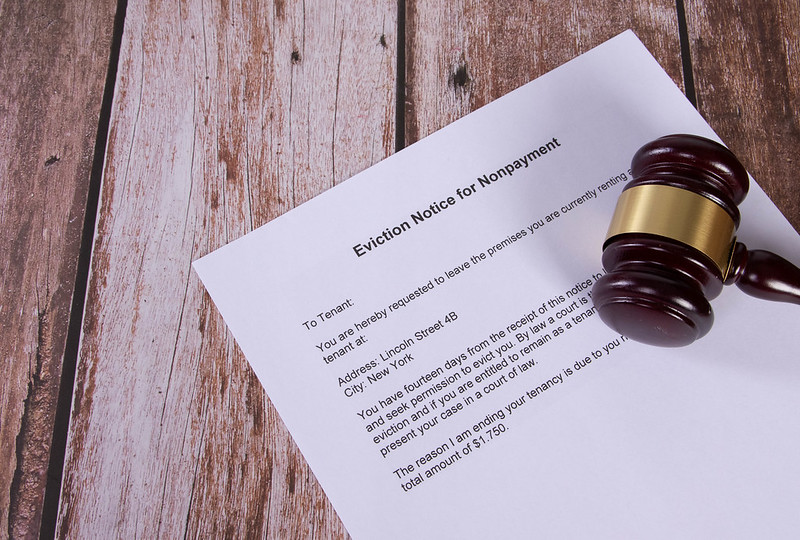
The Legal Process for Eviction in South Carolina
South Carolina commonly calls eviction “ejectment.” After any required prefiling notice, the landlord files in magistrate’s court and the tenant is served with a rule to vacate or show cause. The tenant generally has 10 days after service to respond. If the tenant does not respond, or the court enters judgment for the landlord, the court may issue a warrant of ejectment for execution by an authorized officer.
A landlord may not remove the tenant personally, change locks, or deliberately interrupt essential services to force departure. South Carolina Code section 27-40-660 provides that an unlawfully excluded tenant may recover possession or terminate and may seek three months’ rent or twice actual damages, whichever is greater, plus reasonable attorney’s fees.
Utilizing Mediation and Alternative Dispute Resolution
Mediation can help the parties resolve payment plans, repair disputes, move-out terms, or deposit disagreements without a full trial. Participation and availability depend on the court, contract, provider, and circumstances. Any settlement should be written, specific, lawful, and signed, and neither party should waive rights without understanding the effect.
Protecting Your Interests in Court Proceedings
Bring the lease, payment ledger, notices, proof of service, communications, photographs, inspection records, repair documents, and deposit accounting. Tenants who raise defenses in an ejectment case may be required to pay rent as directed while the case proceeds. Court procedure is deadline-driven, so either party should consider South Carolina legal counsel when the facts, housing program, requested accommodation, counterclaims, or financial exposure are significant.
Frequently Asked Questions
Does South Carolina limit how much a landlord may charge as a security deposit?
The South Carolina Residential Landlord and Tenant Act does not set a general statewide maximum security deposit. Landlords with more than four adjoining units who use different deposit-calculation standards must disclose those standards as required by law.
How long does a South Carolina landlord have to return a security deposit?
A landlord generally must send a written itemization of deductions and any remaining deposit within 30 days after the tenancy ends, possession is returned, and the tenant makes a demand, using whichever applicable event occurs later. The tenant must provide a forwarding or new address in writing.
How much notice must a South Carolina landlord give before entering a rental unit?
South Carolina law generally requires at least 24 hours’ notice and entry at reasonable times. Exceptions may apply for emergencies, certain scheduled services disclosed in the lease, and services requested by the tenant.
What notice is required before a South Carolina eviction?
The required notice depends on the violation. Many remediable non-rent breaches use a written 14-day notice-and-cure process, while nonpayment generally follows a separate five-day rule. After any required notice, the landlord must use the court process rather than changing locks or removing the tenant personally.
What must a landlord do when using a credit or background report?
A landlord must obtain the report for a legitimate housing purpose and make required certifications to the reporting company. When report information contributes to an unfavorable decision, the applicant or tenant must receive an adverse-action notice. Reports and related information must also be securely disposed of when they are no longer needed.
Join the conversation!