
There are a few confirmed changes that everyone should be aware of if they plan on getting a Schengen visa in the future, once the system goes online.
It’s been a few years since the European Union announced the guaranteed digitization of not only Schengen visas but the entire application process itself.
As we get closer to the expected launch (beginning in 2028 with a transitional period, it’s expected to be fully operational by 2030), people are wondering: Does this mean digital Schengen visa requirements are changing too?
Other than price increases, like the bump up that happened June of last year, changes to the core Schengen visa requirements aren’t common (paying the application fee is a requirement).
With the physical in-passport visa transforming into a digital one, does this mean the requirements will be different?
The current state
Currently, Schengen visas have a number of requirements that applicants must meet, and it’s everything from having the right travel document to proof of funds, accommodation, and more.
If an applicant can meet all of the requirements, they then have to attend an in-person interview where a visa officer will review their application.
Now, the visa officer isn’t making any decisions about the final outcome of the application. Instead, they’re looking at whether or not the applicant meets the minimum requirements to apply.
If the application meets the requirements, the visa officer will submit it, along with the applicant’s biometrics (fingerprints that will be taken at the appointment).
Today, all Schengen visa applicants have to submit their physical passports when they submit their application in person.
If an application is approved and the visa is granted, applicants will receive their passport back by mail (sometimes by pick-up), and it will be pasted on a page inside.
If it’s application is denied, they will receive your passport back, but there will be no visa inside.
Schengen visas live inside passports, pasted onto one of the pages for stamps. That’s changing.
What is coming
Taking the process online is going to change a lot.
Applicants will still need to meet all of the Schengen visa requirements in order to apply (we will talk about what those are exactly a little bit later in the article).
However, instead of attending an in-person interview to have their application reviewed and submitted, applicants will submit their applications online, through a secure portal created and managed by the European Union.
Once accessible, applicants will create an account on the official EU Visa Application Platform (EU VAP) and upload all of the required documents.
An in-person appointment will only be required if it is an applicant’s first time applying for a Schengen visa, or if they haven’t submitted biometrics (fingerprints) within the past 5 years.
If an appointment for biometrics is required, applicants will be prompted during the online application process and will be able to schedule one. This appointment won’t be an interview or anything like that; it will simply be for collecting fingerprints/photographs when required.
Once the application is complete (biometrics included), the applicant will submit it online for processing.
This means that applicants will no longer have to submit their physical passports for a Schengen visa application. It also means that Schengen visas, if approved, will be fully digital.
But when it comes to the required documents themselves? According to Insurte Insurance, a global travel insurance provider specializing in Schengen visa insurance, They aren’t changing.
Required documents
Anyone who has ever applied for a Schengen visa before knows that there are quite a few documents that need to be submitted.
To apply for a Schengen visa, applicants must provide the following:
A valid passport. Today, they must submit the physical original. In the coming years, they’ll be able to submit a digital copy.
Must have been issued within the last 10 years.
Must have 3+ months of remaining validity beyond the intended stay in Europe.
Must have at least 2 pages left for stamps.
Valid travel insurance.
The policy must be Schengen compliant. That means it:
Covers at least €30,000 in emergency medical expenses.
Includes repatriation and hospitalization.
Covers the traveler for the entire duration of their visa/stay.
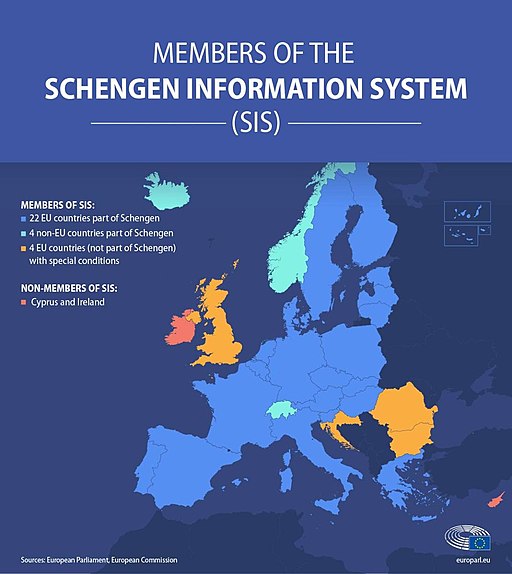
Covers them across all 29 members of the Schengen Zone.
Recent passport-sized photos that meet Schengen visa requirements.
A flight itinerary. Applicants need to show their airline tickets to and from the Zone.
Accommodations. Visa-hopefuls must show hotel bookings for their stay. If staying with a friend or family member, there is specific documentation that must be provided.
Proof of sufficient funds. Travelers need to show that they can sustain themselves financially during their trip. This criterion is often met through bank statements.
A completed application form.
Biometrics (fingerprints) collected at a consulate or authorized external partner.
Proof of Schengen visa application fee payment
Applicants must apply for the country that will be their first point of entry (this is only relevant if they’re going to more than one Schengen country).
Even when Schengen visas go digital, the requirements will be the same. However, instead of collecting physical documents and copies, travelers will be able to upload them digitally onto the secure application portal.
What is changing
There are a few confirmed changes that everyone should be aware of if they plan on getting a Schengen visa in the future, once the system goes online.
In most cases, applicants will no longer need to submit their original, physical passports.
Applications will be filled out online, and the required documents will be uploaded onto the official EU Visa Application Platform.
There will no longer be an in-person interview for Schengen visa applicants. However, biometrics still must be collected in person for first-time applicants or if it’s been more than 5 years since the last submission.
Approved visas will not be inside passports. Instead, they will be digital.
Requirements otherwise remain the same.
That said, while the above changes have been confirmed, it doesn’t mean there won’t be more changes to come.
This is why it’s so important to check official sites like the European Union or the Embassy for the planned destination. This is where the most recent and up-to-date entry requirements can be found.
Join the conversation!