
Good informed consent protects providers as much as patients.
Cosmetic injections have a reputation as lunch-break procedures. A patient books online, fills out a tablet form in the waiting room, and walks out twenty minutes later with smoother skin or fuller lips. That speed is part of the appeal, but it also compresses the one conversation the law treats as essential before any medical procedure. When that conversation gets skipped or rushed, patients lose the chance to weigh risks they didn’t know existed.
Informed consent is a legal and ethical duty that predates the modern med spa by decades, and it applies to a syringe of filler as fully as it applies to a facelift. Patients who understand what that duty covers are better positioned to ask the right questions before treatment. They’re also better positioned to recognize when something went wrong afterward. Here’s what the duty requires, which risks belong in the discussion, and how consent failures turn into legal claims.
Injectables Are Medical Procedures With Medical Risks
The scale of the injectables market is easy to underestimate. The American Society of Plastic Surgeons’ 2024 Procedural Statistics Report counted 9,883,711 neuromodulator injections and 5,331,426 hyaluronic acid filler procedures performed by its members, making them the two most common minimally invasive cosmetic treatments in the country. The society’s 2025 report, released in September 2026, found that those two categories made up 80% of all minimally invasive procedures its members performed. Those figures only reflect board-certified plastic surgeons, so true national volume, including med spas, dermatology offices, and other settings, is higher still.
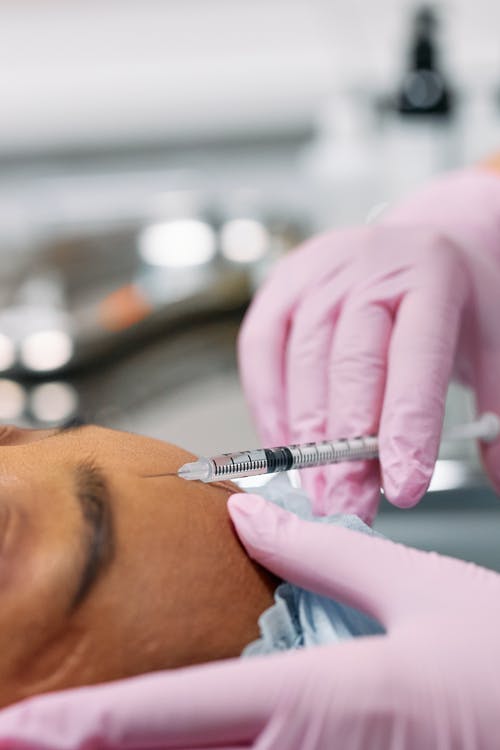
Federal regulators don’t treat these products casually. The FDA’s guidance on dermal fillers says filler injection should be approached as a medical procedure, and it identifies unintentional injection into a blood vessel as the most concerning risk. When filler blocks a vessel, the agency notes, complications can include tissue death, vision abnormalities including blindness, and stroke. The FDA also instructs providers to thoroughly inform each patient of the risks of the procedure and the specific product before injecting.
Vision loss is rare, but it’s no longer a theoretical footnote. A 2024 review published in the Aesthetic Surgery Journal identified 365 new published cases of partial or complete vision loss after filler injection between September 2018 and March 2023, on top of 146 cases the same research group had catalogued in earlier reviews. Hyaluronic acid, the most widely used filler type, was involved in 79.6% of the new cases. Among cases that reported visual outcomes, 68.2% of patients had no recovery of vision.
What the Law Requires Providers to Disclose
The modern doctrine of informed consent took shape in Canterbury v. Spence, a 1972 federal appeals court decision in Washington, D.C., that tied a doctor’s disclosure duty to what patients need to know to make a decision. Professional ethics standards point the same way. The AMA’s Code of Medical Ethics directs physicians to explain the nature and purpose of a recommended intervention, along with the burdens, risks, and expected benefits of all options, including forgoing treatment entirely. It also calls for the consent conversation and the patient’s decision to be documented in the medical record.
States don’t all measure disclosure the same way. A 2016 viewpoint published in JAMA noted that roughly half of U.S. states have adopted a reasonable patient standard, which asks what information an objective patient would consider material to the decision. Most of the remaining states use a physician-based standard, which asks what a reasonably prudent provider would have disclosed under similar circumstances. Maryland, for example, adopted a materiality test in its 1977 Sard v. Hardy decision, so a patient there can argue a risk mattered even if many practitioners routinely leave it out.
For elective cosmetic work, the materiality question carries extra weight. There’s no medical necessity pushing a patient toward treatment, so a reasonable person is more likely to decline when told about a serious risk. A patient who’d accept a small chance of stroke to treat a blocked artery might reasonably refuse the same chance to soften a smile line. That dynamic often shapes how elective-procedure cases are argued.
The Risks That Belong in the Consent Conversation
Dermal Fillers
A thorough filler consent covers the common, the uncommon, and the rare. The FDA lists bruising, redness, swelling, pain, and itching as common effects, while nodules, granulomas, infection, and allergic reactions fall into the less common category. Vascular occlusion, tissue death, blindness, and stroke sit at the rare but severe end, and patients should hear how the provider would recognize and respond to them in the chair. A practice’s emergency plan, including whether it keeps hyaluronidase on hand to dissolve hyaluronic acid filler, directly affects outcomes when something goes wrong.
Neuromodulators
Botulinum toxin products carry an FDA boxed warning, the agency’s most prominent label warning, about the possibility of the toxin spreading beyond the injection site. At cosmetic doses, serious spread is uncommon, but symptoms like trouble swallowing or breathing would require emergency care. More routine risks include headache, bruising, and temporary eyelid or brow drooping when product affects nearby muscles. A good consent conversation covers both ends of that spectrum and explains how long results and side effects typically last.
Who’s Injecting and What’s in the Syringe
Material information isn’t limited to pharmacology. The injector’s identity and license, the level of physician supervision, and the source of the product all bear on risk. In September 2026, a Massachusetts med spa owner was sentenced to 46 months in federal prison after prosecutors said she performed about 2,700 injection procedures with counterfeit Botox and fillers imported from China and Brazil, despite not being licensed to inject. Her clients believed they were receiving authentic, FDA-approved products, which means none of them consented to what was actually injected.
Alternatives Are Part of Consent, Too
The duty to disclose alternatives gets less attention than the duty to disclose risks, but it’s just as central to the AMA’s framework. In cosmetic medicine, alternatives are often numerous. A patient bothered by fullness under the chin might be a candidate for deoxycholic acid injections, cryolipolysis, or liposuction, and each path carries a different risk profile, recovery period, and cost. Volume loss in the face can be addressed with hyaluronic acid filler, collagen-stimulating injectables, or surgical fat transfer.
That’s one reason consent conversations tend to be more complete when a single practice can speak to every option. When a board-certified surgeon oversees physician-supervised non-surgical medical spa treatments alongside surgical procedures, the provider can compare injectables, lasers, and body-contouring devices against surgery with less pressure to steer patients toward a single service. A provider who only offers filler has an obvious incentive to present filler as the answer. Patients should ask what else could address their concern, including doing nothing, and notice whether the provider can answer in specifics.
How Consent Failures Become Legal Claims
A lack-of-informed-consent claim is usually brought as a form of medical negligence, so it rests on the same duty, breach, causation, and provable damages framework that governs other malpractice cases. The patient generally has to show that the provider failed to disclose a material risk or alternative, that the undisclosed risk actually occurred, and that a reasonable person in the patient’s position would’ve declined treatment if properly informed. Expert testimony often decides what a competent disclosure should have included. A bad outcome alone doesn’t prove the consent was inadequate, since a properly disclosed risk can still happen.
Records frequently decide these cases. A signed form shows that a patient agreed to something, but it doesn’t always show what was explained, what questions were asked, or how long the conversation lasted. Attorneys reviewing a claim compare the form against clinic notes, product records, and before-and-after photos, and consent documentation gaps that surface in litigation can move a case in either direction. A generic form signed minutes before treatment, with no procedure-specific risks listed, can give an injured patient’s attorney a lot to work with.

Some failures go beyond negligence. When a patient consents to one product and receives another, as in counterfeit cases, or consents to treatment by a physician and is injected by an unlicensed staff member, claims for battery and fraud may enter the picture. Those theories don’t always require the same expert proof as a negligence claim. They can also change how filing deadlines and damage limits apply, which is why the facts of the consent process matter so much.
Questions Worth Asking Before Treatment
Patients don’t need legal training to protect themselves. Before any injection, it’s reasonable to ask who’ll perform the treatment and what license they hold, which physician supervises the practice, and what specific product will be used. It’s also reasonable to ask for the manufacturer’s patient labeling, which the FDA recommends reading and discussing before filler treatment. Finally, patients should ask what the practice does if a vascular complication happens during or after the appointment.
The consent form itself deserves time, too. A form handed over in the treatment room, with the provider waiting, isn’t the setting for careful reading, so asking for a copy at the consultation makes sense. If a risk on the form wasn’t mentioned in conversation, that’s worth raising before treatment rather than after. Keeping copies of the form, aftercare instructions, and any product stickers placed in the chart creates a record that’s useful no matter how the treatment turns out.
Consent Protects Both Sides of the Syringe
Good informed consent protects providers as much as patients. A practice that documents a real conversation about risks, alternatives, and expected results is far better positioned if a complication occurs, and its patients are less likely to feel blindsided. With ASPS members alone performing more than 15 million neuromodulator and filler procedures in 2024, these conversations happen millions of times a year. The quality of each one shapes whether a complication ends with a follow-up visit, a complaint to a licensing board, or a lawsuit.
Join the conversation!