
“The 120-day deadline imposed by the president led directly to the failure of [the National Center for Education Statistics] to engage meaningfully with the institutions during the notice-and-comment process to address the multitude of problems presented by the new requirements,” Saylor wrote in his decision.
Late last week, a federal judge blocked the Trump administration from collecting data that could be used to show the effects of racial bias, if any, in university admissions.
According to The Guardian, the ruling was issued Friday by U.S. District Court Judge F. Dennis Saylor IV. In his decision, the Boston-based judge granted a request for a preliminary injunction in a lawsuit filed by a coalition of 17 Democratic state attorneys general. The decision will only apply to public universities in the states that elected to file suit.
Saylor found that, while the federal government likely has the authority to demand race-related admissions statistics, it submitted its request in a “rushed and chaotic” manner, leaving schools with little time or opportunity to respond.
“The 120-day deadline imposed by the president led directly to the failure of [the National Center for Education Statistics] to engage meaningfully with the institutions during the notice-and-comment process to address the multitude of problems presented by the new requirements,” Saylor wrote in his decision.
The Guardian notes that Donald Trump ordered the National Center for Education Statistics to begin compiling race- and admissions-related data in August after he shared concerns that colleges and universities are using applicants’ personal statements, along with other information, as proxies for race.
The Trump administration’s stance against discrimination—particularly alleged instances of discrimination against white students and U.S. citizens—was emboldened by a 2023 Supreme Court ruling, in which the justices ruled against the use of affirmative action in admissions but said that colleges are entitled to consider how race may have shaped applicants’ life circumstances.
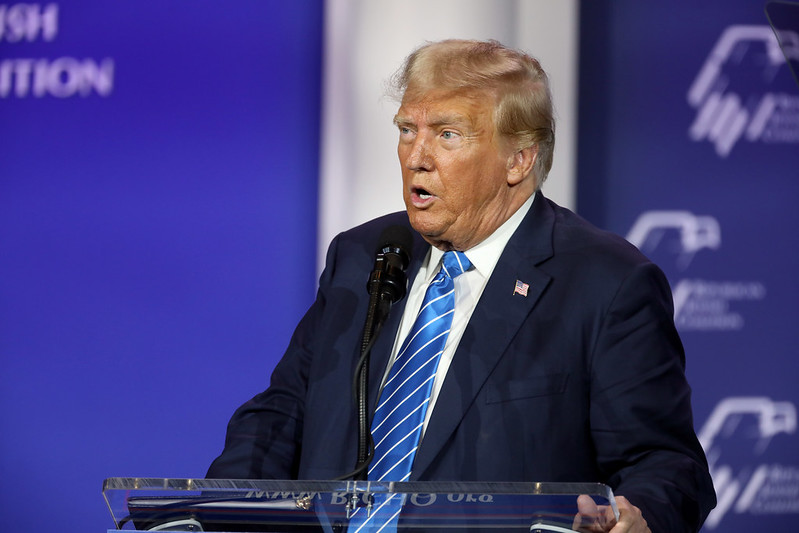
The attorneys general behind the current lawsuit, however, say that the sudden request for massive amounts of racial data could threaten students’ privacy and, given the Trump administration’s proclivity for ill-considered legal action, lead to baseless investigations of colleges and universities.
“The data has been sought in such a hasty and irresponsible way that it will create problems for universities,” said Michelle Pascucci, an attorney representing the states.
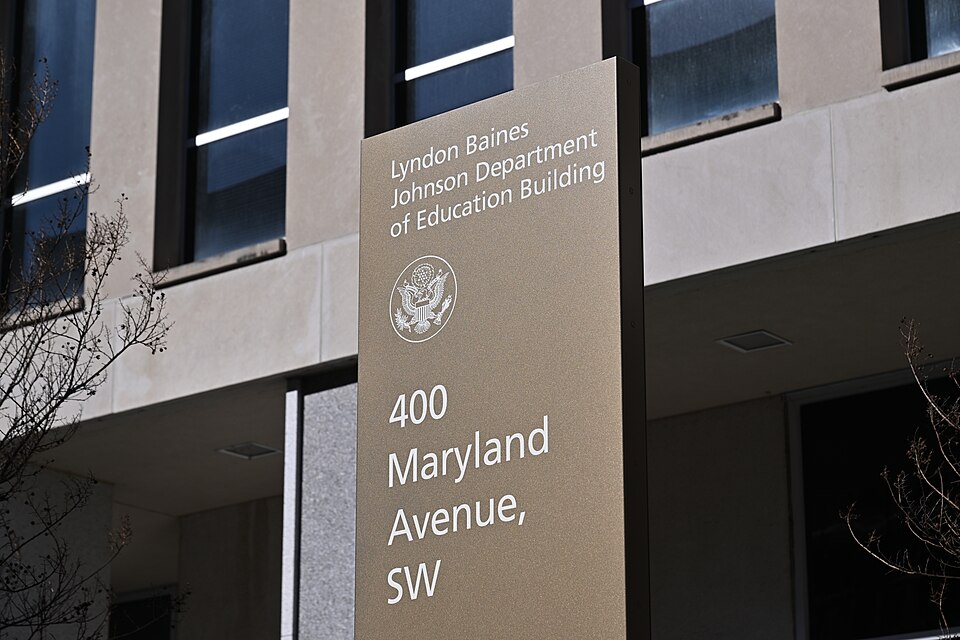
The U.S. Department of Education, now led by former WWE chief executive Linda McMahon, has defended the administration’s request, saying that the American public deserves transparency on how universities spend public funds.
In his decision, Saylor said that the Trump administration has provided little information about how it plans to secure data collected from the defendant states. Saylor further noted that, while the National Center for Education Statistics has been tasked with collecting the data, the agency only has three employees; most of its staff was laid off by DOGE shortly after Trump took office last winter.
“This is not merely a technical issue,” said Saylor, who observed that the government was “conspicuously silent” in explaining how the data will be used once the National Center for Education Statistics is shut down. The process, he said, “cannot be turned over to states and local communities; they have no authority […] to conduct such surveys.”
“Nor, for that matter, does any federal agency other than NCES,” wrote Saylor.
Once the Center no longer exists, the survey “vanishes—along with the authority both to ‘collect’ data and to ‘analyze’ data collected from prior surveys,” Saylor said. “Whether and where that data will continue exist, and who will have access to it, is entirely unclear.”
Saylor rejected the states’ argument that the government shouldn’t seek race-related admissions information, but granted the injunction on the grounds that the administration simply didn’t follow established procedure in demanding the data.
The Trump administration “discarded that process here solely in order to try to meet the 120-day deadline,” he said.
Sources
Federal judge halts White House effort to collect university data on applicants’ race
Judge blocks Trump’s college admissions data push in 17 states
Judge Pauses Trump Demand for Student Race Data in 17 States
Join the conversation!