

Understanding each step helps reduce errors and ensures compliance with international legal requirements.
International travel, business, employment, and immigration processes involve more than just standard identification documents. They need legally verified documentation that is recognized across borders. An FBI background check apostille is one such requirement that applicants are asked to submit. This involves a federally authenticated document that confirms an individual’s official background summary and will be used across international grounds.
This process involves several steps and has to meet strict compliance with official requirements. Even small inaccuracies can cause delays, so having a better understanding of each stage can make the entire process smoother.
What Is an FBI Background Check Apostille?
An FBI background check is an official summary of your personal background record that is issued by the Federal Bureau of Investigation.
On the other hand, an apostille works as a legal authentication or a certification verifying the authenticity of the FBI background check document for use in other countries that are members of the Hague Apostille Convention.
To explain in simpler terms:
- The FBI report is mainly a detailed summary of your background record
- An apostille works as proof of your report, making it internationally legitimate
From a legal perspective, these two aspects work together, ensuring that a U.S.-issued federal document is recognized by foreign governments.
When Do You Need It?
International authorities typically ask for an FBI background check apostille that works as a verified proof of your background records as part of their official process. It involves identity, residency, or eligibility across international jurisdictions.
You will need an FBI background check apostille during:
- Employment abroad
- International business opportunities
- Student visas
- Immigration or residency applications
- International marriage
- Adoption processes
Failing to provide this authenticated documentation can lead to delays with the application or even rejections. This is why several applicants turn to FBI background check apostille services to ensure their documents are ready for use in international countries.
Understanding the Federal Apostille Process for FBI Documents
It is important to meet compliance with official requirements and reduce the risk of delays or rejection during international document verification. For this, it will help to understand what each step entails across the apostille process.
Step 1: Request Your FBI Background Check
The first step in the apostille process is to obtain your FBI Identity History Summary (IHS). Here, the applicant has to submit accurate personal details and fingerprints for generating an officially legitimate record for the authentication process.
How to apply
- Visit the official website of the FBI
- Submit your application by mail or online
- Pay a processing fee that is usually around $18
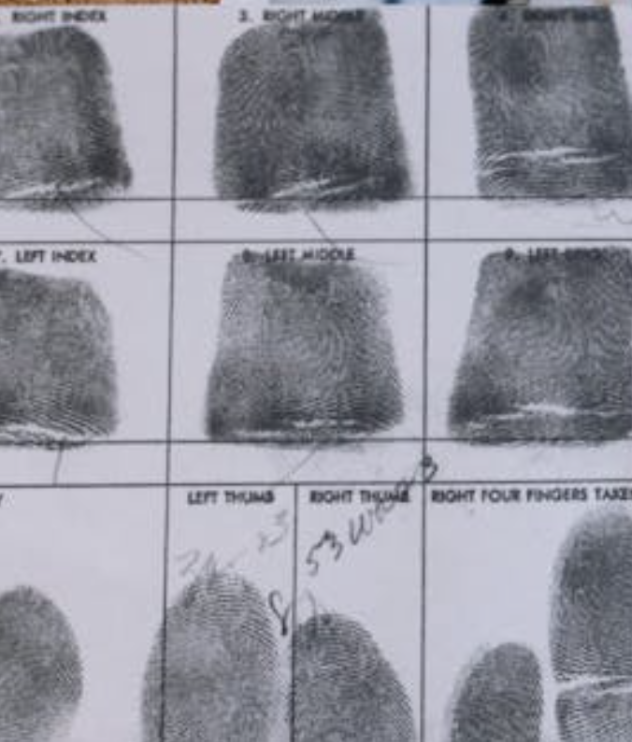
Fingerprint card; image by cottonbro studio, via Pexels.com. Cropped for use.
What you’ll need
- Personal details, including your name, date of birth, etc.
- Fingerprints (mandatory)
Fingerprint options
Applicants can get fingerprinting done through local law enforcement agencies, FBI-approved channelers, or fingerprinting providers.
Processing time
Electronic submissions are often made through third-party services. Typically, it is completed within 2-3 business days. On the other hand, mail-in requests take around a couple of weeks due to delivery timelines or manual handling.
It is extremely important to maintain accuracy in this stage to avoid delays or even rejections later.
Step 2: Download or Receive Your Report
After the document gets processed, the FBI will issue your Identity History Summary. Applicants should get this document directly from the FBI because to receive an apostille certification, only official federal records are eligible.
- If you apply online, you will receive a PDF copy via email
- Or a hard copy by mail
Any issues in this stage can lead to delaying the apostille process, impacting the overall timeline. On legal grounds, using any altered or unofficial version of this document will not validate your apostille request. So, ensuring the legitimacy of your document is the key before you proceed further.
Step 3: Prepare Your Documents for Apostille
Preparing your document with precision ensures that your FBI background checks meet every condition needed for official authentication. It involves verifying the document’s completeness, clarity, and compliance with the requirements of the destination country.
Before submission, ensure:
- Your FBI report is accurate and complete
- No damage or alteration to the document
- You know the needs of the destination country
Important to Note: You will never need a notarization for an FBI background check apostille. Adequate preparation will reduce the risk of rejection of your document.
Step 4: Submit to the U.S. Department of State
An FBI background check apostille should be issued federally. This mainly comes under the U.S. Department of State and not any individual state authorities.
Submission options:
- By mail
- Through a registered apostille service
What to include
- FBI background check
- Completed Form DS-4194
- Applicable fee
- Return mailing envelope
Understanding the difference between state and federal authority is important. Submitting your document to the wrong office may lead to delays or rejection of the application.
Step 5: Wait for Processing
Post submission, the document gets verified before the apostille is issued. Processing times rely mainly on submission volume and methods.
Processing times:
- Standard: 2–6 weeks
- Expedited: a few days
Furthermore, applicants should account for these timelines when they plan for international travel, business, employment, or legal procedures.
Step 6: Receive Your Apostille Document
Once processing is done, your FBI background check is returned to you with an apostille certificate attached. This legally confirms your document for use in countries accepting apostilles.
You will receive:
- Apostille certificate attached
- Official seal and signature
The process is complete once you receive your final document. Ensure you review the final document carefully upon receipt to confirm all details are correct. Ensure to recheck your final document once you receive it to confirm that all accurate details are mentioned.
Considering Assistance for the Apostille Process
When obtaining an apostille, there are certain steps that need to be completed carefully, specifically when managing documentation and submission requirements. In such instances, it is important to choose a reliable service to apostille your FBI background check to ensure your documents align with international legal standards.
Applicants may choose assistance during:
- Reviewing documents for completeness and accuracy
- Ensuring proper submission to the right federal authority
- Managing mailing, courier, or return delivery requirements
- Keeping a track of timelines and processing updates
Final Thoughts
Obtaining an FBI background check apostille involves a clearly defined federal process that requires accuracy and attention to detail. Understanding each step helps reduce errors and ensures compliance with international legal requirements.
Approaching the process with proper preparation and awareness of federal jurisdiction. It can make a significant difference in achieving timely and successful document authentication.
Join the conversation!