

After years of being the person directly responsible for every detail of a case, the transition to a leadership role that involves delegation and oversight can be jarring.
The launch of a new law firm is a monumental achievement, born from years of legal expertise and entrepreneurial ambition. Yet, surviving and thriving in a competitive landscape is an entirely different challenge. With the U.S. legal services market comprising over 430,000 firms as of 2023, according to data from Statista, the pressure to perform from day one is immense. The skills that make a great lawyer—meticulous case analysis, persuasive argumentation, and client advocacy—do not automatically translate into successful business management. The first few years are a critical period where operational missteps, financial naivety, or a lack of strategic direction can quickly derail even the most promising practices. Understanding how to successfully manage a law firm during the first few years requires a deliberate shift from a practitioner’s mindset to that of a CEO, focusing on sustainability, scalability, and strategy.
Solidify Financial Discipline Beyond Startup Capital
The initial excitement around figuring out how to start a law firm often centers on securing funding and opening the doors. However, true financial stability comes from the disciplined management of day-to-day cash flow. Many new firms fail not from a lack of clients, but from an inability to manage the gap between performing work and receiving payment. It is crucial to establish and adhere to a strict operational budget that accounts for both fixed costs, like rent and salaries, and variable costs, such as marketing and case-specific expenses.
Implementing robust billing and collection protocols from the outset is non-negotiable. This means clear engagement letters that specify payment terms, timely invoicing, and a systematic process for following up on overdue accounts. Waiting 90 or 120 days for payment can cripple a young firm’s ability to meet its own obligations. Effective financial management involves obsessively monitoring cash flow projections, maintaining a cash reserve for unexpected downturns, and understanding that profitability on paper does not pay the bills. This financial rigor is the foundation for long-term success.
“Profitability is not an accident; it is the result of strategic planning and relentless execution.”
Build a Scalable Operational Framework
In the early stages, it is tempting to manage operations through a patchwork of spreadsheets, email chains, and manual processes. This approach quickly becomes a bottleneck, leading to administrative chaos, missed deadlines, and client dissatisfaction. The key to how to successfully manage a law firm during the first few years lies in building an operational framework that can scale with your growth. This means investing in the right technology and defining standardized processes before you are overwhelmed.
A well-integrated technology stack is not a luxury; it is a necessity for efficiency and professionalism. This core infrastructure should include several key components:
- Case Management Software: A centralized hub to track case progress, deadlines, documents, and client communication, ensuring nothing falls through the cracks.
- Document Management System (DMS): A secure and organized system for storing, retrieving, and collaborating on legal documents, far superior to a simple shared drive.
- Billing and Accounting Software: Automates invoicing, tracks payments, and provides clear insights into the firm’s financial health.
- Client Relationship Management (CRM) Tool: Manages intake processes, tracks potential leads, and helps nurture client relationships for future business.
By establishing these systems early, you create repeatable workflows that ensure consistent service quality and free up valuable attorney time to focus on billable work rather than administrative tasks.
Pursue Strategic Client Acquisition, Not Desperate Engagements
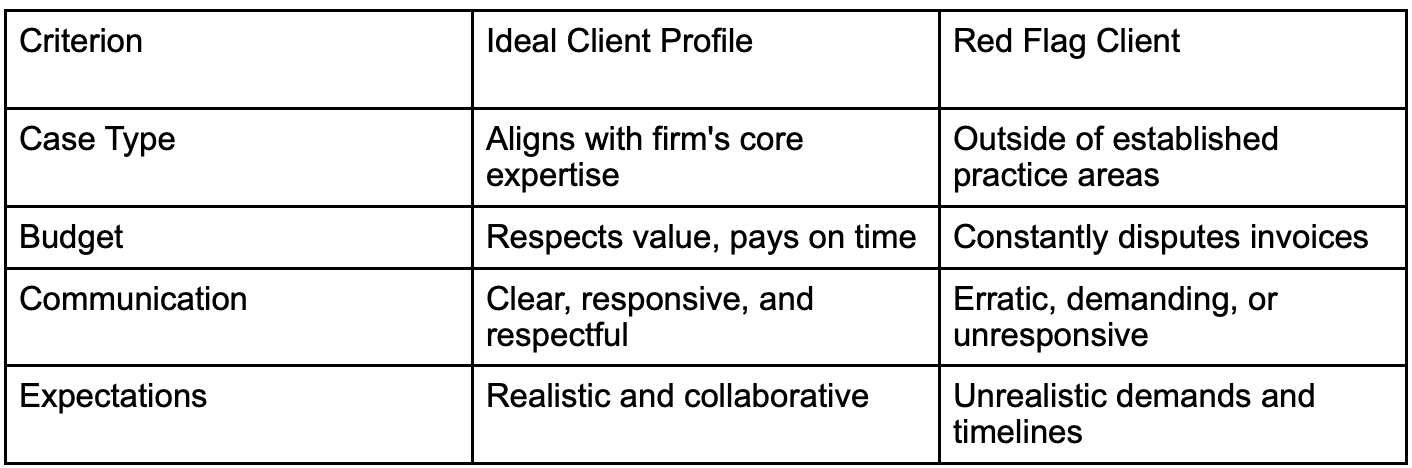
The pressure to generate revenue can lead new law firms into a dangerous trap: accepting any client with a checkbook. While this may provide a short-term cash infusion, it can cause significant long-term damage. Working outside your core expertise, dealing with difficult personalities, or taking on clients who cannot pay your standard rates erodes morale, tarnishes your brand, and leads to inefficient work. A cornerstone of effective management is defining your Ideal Client Profile (ICP) and strategically targeting your marketing efforts to attract them.
An ICP outlines the specific characteristics of the clients you are best equipped to serve. This includes their industry, the nature of their legal needs, their budget, and even their communication style. By focusing on this niche, you build a reputation as a specialist, which allows you to command higher rates and work more efficiently. Resisting the urge to be a generalist and instead cultivating a pipeline of ideal clients leads to more profitable, enjoyable, and sustainable work.
Cultivate a Resilient Firm Culture from Day One
Firm culture is often dismissed as a “soft” topic, but in the high-stress environment of a new law practice, it is a powerful strategic asset. Culture is the sum of your firm’s shared values, communication norms, and work habits. A positive, supportive culture attracts and retains top talent, fosters collaboration, and directly impacts the quality of service delivered to clients. Conversely, a toxic culture defined by burnout, internal competition, and a lack of transparency leads to high turnover and inconsistent performance.
Building a resilient culture starts with the founding partners. It involves intentionally defining the firm’s core values and then consistently demonstrating them through action. This means establishing clear expectations for work-life balance, creating channels for open and constructive feedback, and recognizing and rewarding contributions beyond just billable hours. A healthy culture doesn’t happen by accident; it is consciously designed and nurtured. It is the invisible force that will carry your firm through the inevitable challenges of its formative years.
Master the Transition from Practitioner to Leader
For many founding partners, the most difficult challenge is letting go. After years of being the person directly responsible for every detail of a case, the transition to a leadership role that involves delegation and oversight can be jarring. However, a founder who insists on micromanaging every task becomes the ultimate bottleneck to growth. The secret of how to successfully manage a law firm during the first few years is learning to transition from being the firm’s best lawyer to being its most effective leader.
This evolution requires developing a new skill set. It means trusting the team you have hired, empowering them with responsibility, and providing them with the resources and autonomy to succeed. Effective delegation is not abdication; it is about setting clear objectives, defining success metrics, and then stepping back to let your team execute. Your role shifts to strategic planning, business development, and mentoring your staff. By focusing on building a high-performing team, you multiply your impact and create a firm that is capable of thriving beyond the efforts of a single individual.
Join the conversation!