
Screenshot everything immediately if you were a passenger — the trip screen, driver identity, route, and receipt. App records are the backbone of the coverage-phase question.
Few Texas cities run on app-based driving the way San Marcos does. With roughly 40,000 Texas State University students — many without cars — layered onto one of the fastest-growing corridors in the country, the city’s streets carry a constant rotation of Uber and Lyft runs to and from the Square, DoorDash and Favor deliveries to student housing, and Amazon and gig couriers threading through neighborhoods built decades before delivery apps existed.
When one of those vehicles causes a crash, the injured person quickly discovers that a gig-economy wreck is not a normal car accident. The central question — whose insurance pays, and how much of it exists — depends on what the driver’s app showed at the moment of impact. Texas codified the answer for rideshare, and the statute draws lines most drivers and passengers have never heard of.
Texas Law Sets Rideshare Coverage by App Status
Under Chapter 1954 of the Texas Insurance Code, enacted as part of the state’s 2015 transportation network company legislation, required insurance coverage steps up through three phases:
App off. The driver is a private motorist. Only their personal auto policy applies — and Texas personal policies frequently carry minimum limits.
App on, waiting for a ride request. The statute requires at least $50,000 per person and $100,000 per incident in bodily injury liability coverage, plus $25,000 for property damage. This middle phase is where coverage disputes concentrate, because the required limits are modest and because Section 1954.151 expressly permits personal auto insurers to exclude coverage while a driver is logged into a TNC network — meaning the personal policy the driver thinks they have may not apply at all.
Prearranged ride accepted or passenger aboard. Coverage jumps to a total aggregate limit of $1 million for death, bodily injury, and property damage per incident.
The practical consequence: two seconds of app status can swing available coverage by an order of magnitude. Establishing exactly what phase the driver was in — through trip records, app data, and formal discovery to the TNC — is often the single most valuable piece of work in these cases. Legal Reader has covered how the coverage periods determine which policy pays in a rideshare crash; the Texas statute gives that framework binding force here, with specific dollar floors an injured claimant can hold the companies to.
Delivery Apps Are a Different — and Often Worse — Story
Chapter 1954 governs transportation network companies carrying passengers. Food and package delivery platforms are not uniformly covered by the same statutory scheme, and their insurance structures vary by company: some provide excess liability coverage only during an active delivery, some coverage is contingent on the driver’s personal policy denying the claim first, and coverage between deliveries can be thin or absent. Meanwhile, the driver’s own personal policy often contains a business-use or delivery exclusion the driver never read.
The result is a coverage gap that lands on the injured person. Someone hit by a delivery driver in San Marcos may face an at-fault driver with an excluded personal policy, a platform pointing to its terms of service, and an “independent contractor” defense against holding the company itself responsible. These cases are winnable, but they’re document fights: delivery logs, app status records, and platform insurance policies all have to be obtained and read closely — and quickly.
The San Marcos Wrinkles
Passengers are in the strongest position. A rider injured during an Uber or Lyft trip is covered by the $1 million policy regardless of who caused the crash — including crashes caused by an uninsured third driver, via the TNC’s uninsured/underinsured motorist coverage. Students hurt as rideshare passengers often have far more coverage available than they assume.
Students hit as pedestrians or cyclists. San Marcos has heavy foot and bike traffic around campus and downtown. A pedestrian struck by a gig driver has a claim against whatever coverage phase applied — and potentially against their own family’s auto policy UM/UIM coverage, which typically follows a student away at school.
The corridor volume problem. Hays County recorded 3,602 crashes in 2024 per TxDOT’s county crash data, with 28 people killed and 154 suspected serious injuries — numbers driven by I-35’s mix of freight, commuters, and one of the youngest driving populations in Texas. Gig vehicles are disproportionately present in that mix because driving for apps is a dominant student side income.
Fault fights don’t disappear. Texas’s modified comparative fault rule applies to gig crashes like any other: more than 50% responsibility bars recovery, and any lesser percentage reduces it. TNC insurers investigate aggressively, and app data cuts both ways — a delivery driver’s speed and phone interaction records can establish negligence, or an injured claimant’s own phone records can be used against them.
What to Do After a Gig-Vehicle Crash
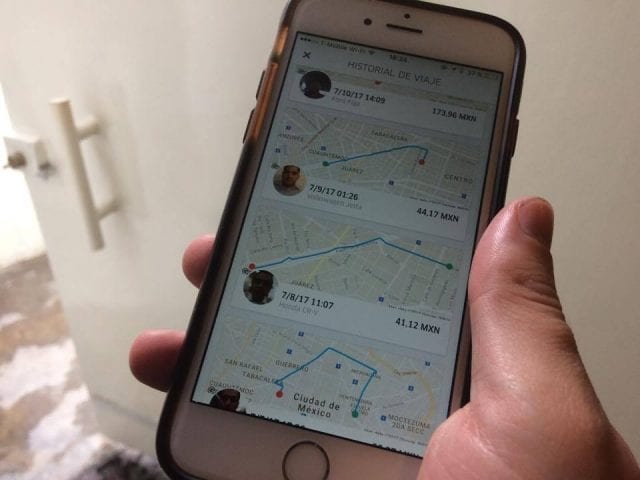
- Screenshot everything immediately if you were a passenger — the trip screen, driver identity, route, and receipt. App records are the backbone of the coverage-phase question.
- Report through the app (passengers) but decline recorded statements from any insurer until you’ve had legal advice — the TNC’s carrier is not on your side.
- Get medical care the same day. Coverage fights take months; causation problems from delayed treatment last the whole case.
- Move fast on the driver-status question. Platform data is produced through formal channels, and preservation requests should go out early.
Because these claims run through multiple insurance systems simultaneously — statutory TNC coverage, personal policies with exclusions, platform excess policies, and UM/UIM — mapping every available source is where an experienced car accident lawyer in San Marcos earns their contingency fee. Firms like Husain Law + Associates review gig-economy crash cases in free consultations, with attorney’s fees owed only out of a recovery. Every case is different and no result can be guaranteed, but in a coverage-phase dispute, the difference between the right analysis and no analysis is frequently the difference between the $1 million policy and a minimum-limits personal policy that may not even apply.
Frequently Asked Questions
I was hit by an Uber driver who didn’t have a passenger. Which coverage applies? It depends on whether the driver was logged into the app. Logged in and waiting: the statutory $50,000/$100,000/$25,000 minimums apply. Logged out: only their personal policy — and if they were logged in, their personal insurer may deny under a TNC exclusion. The app status records answer the question, which is why obtaining them early matters.
Does my personal car insurance cover me if I drive for DoorDash or Favor in San Marcos? Often not during deliveries — many personal policies exclude business or delivery use. Drivers should ask their insurer about a rideshare/delivery endorsement before relying on personal coverage. If you were injured by a delivery driver, that same exclusion is why identifying the platform’s coverage becomes critical.
I was a passenger in a Lyft that crashed. Do I sue my driver? Usually you’re making an insurance claim rather than suing your driver personally — the $1 million policy covers passengers during the ride, and if another driver caused it, their liability coverage is primary with the TNC’s UM/UIM behind it. An attorney can sequence the claims correctly.
How long do I have to bring a claim? Texas generally allows two years from the crash date. But app data, trip records, and platform documentation should be preserved within weeks, not years — the legal deadline and the practical evidence deadline are very different things.
Join the conversation!