
The fallout from a firearms charge in a restrictive state is so intense that complying with the law before entering that state is far less demanding than mounting a defense after a criminal matter has started.
About 42 percent of American households reported keeping a firearm at home in 2025, according to Gallup polling and many of those owners eventually have to decide how to move a gun from the house to the truck or the trunk. Whether that is legal depends on a stack of rules: federal law, state law, and sometimes a local ordinance that only applies inside city limits. What is permitted in one state can be a felony one state over, and a rule that holds statewide can still be blocked on a specific piece of property.
In North Carolina, for example, RAND Corporation researchers estimate that roughly 37 percent of households have a gun at home.
One thing about responsible gun ownership is knowing how to transport a firearm legally. You may be wondering whether you can keep a gun in your car in North Carolina or other states. In North Carolina, transporting a handgun without a concealed carry permit is legal as long as the firearm is in plain view or locked in the trunk. Avoid hiding it in areas accessible to passengers.
Federal Gun Laws
Federal law sets minimum requirements that states have to meet, but it does not stop states from adding extra restrictions. According to the federal rules, it is generally lawful moving a firearm across state lines which is under 18 U. S. C. Section 926A, described as the federal transport protection.
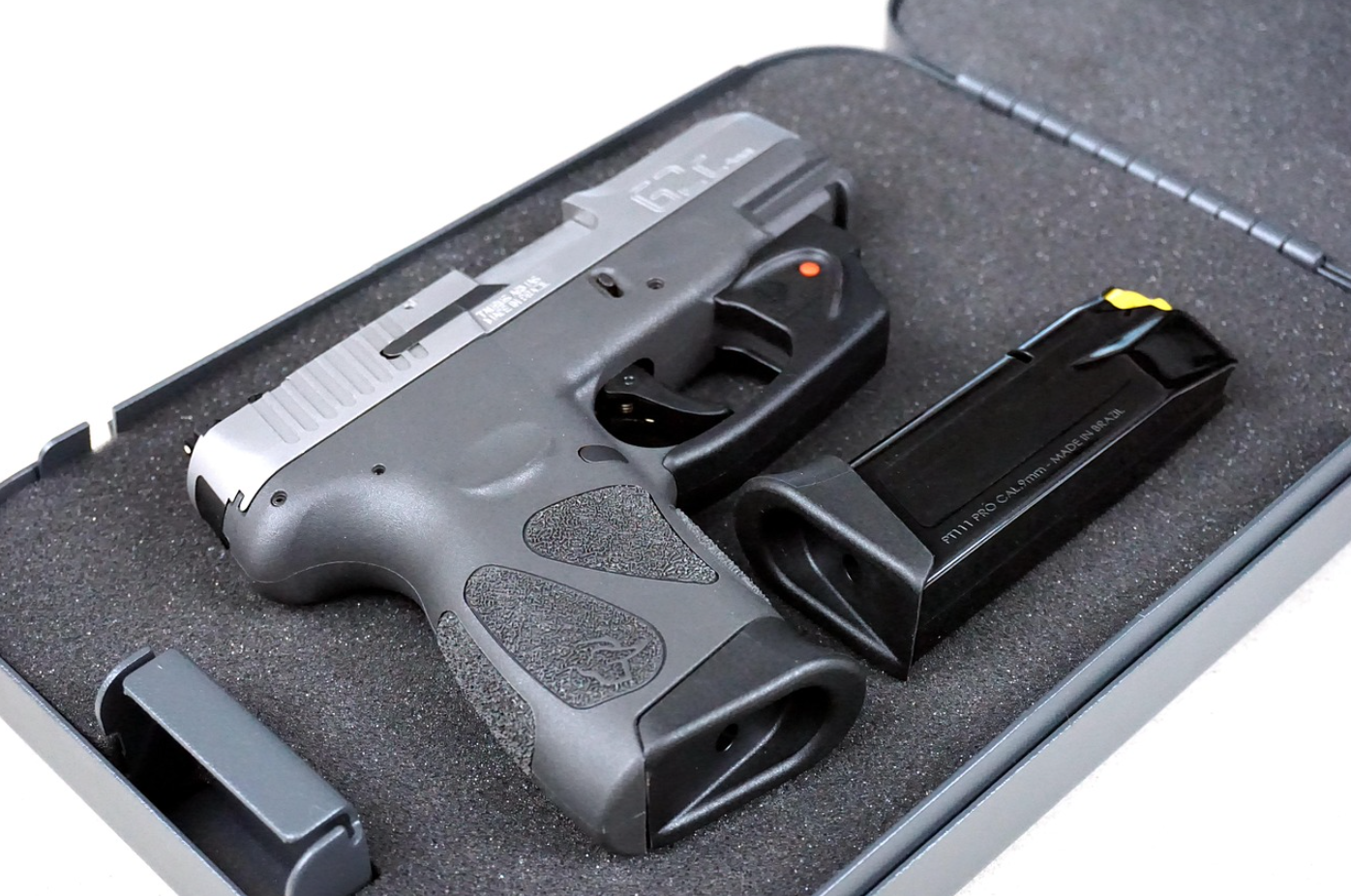
The protection works when the person can legally possess the firearms, as in both the state where the destination begins and destination ends. The firearm and any ammunition must be stored in a locked container and must be unloaded, it should not be readily accessible from the passenger compartment. It protects and covers interstate travel and can serve as a defense for lawful gun owners passing through states with tighter rules. This does not guarantee immunity from arrest or detention.
Federal law also imposes independent restrictions that apply across the country, regardless of state law. A person prohibited from possessing a firearm under federal law may not lawfully possess or carry one in a vehicle, no matter what the state’s own law suggests.
According to the Law Office of Amy L. Bingham’s website, in some states like Oregon, if you are charged with a gun crime and you are successfully convicted of armed robbery, concealed carry crimes, the unlawful use of a weapon, murder, or assault with a firearm, you will most likely face the loss of your gun rights.
The Three State Law Categories: Permitless, Permit Required, Restrictive
States break down into three broad categories for vehicle carry, while the details inside each one can be quite different. The first category covers states with constitutional carry or permitless carry rules, meaning people who are legally allowed to have a firearm can keep it in the vehicle loaded and concealed without needing a permit.
By 2025, more than half of the states have put some kind of permitless carry into place. In those places, there is no license required for vehicle carry, as long as the person is otherwise legally allowed to own and possess a firearm.
The second group consists of states where you need a concealed carry permit if you want to bring a loaded, concealed firearm inside a vehicle. Once you do not have a permit, the firearm must be stored and unloaded in accordance with the state law. In some places it requires the firearm to be secured in a locked container, in others it must be placed in the trunk, and some prohibit it from being kept within the reach of the driver.
In 2021, Texas was previously part of this category, but its laws changed with the adoption of permitless carry. California, by contrast, continues to require a concealed carry permit for most instances of carrying a loaded firearm in a vehicle. Without a permit, the firearm must remain unloaded and secured in a locked container.

The third category includes states with very strict vehicle carry rules, so you can only transport a firearm in a limited number of situations or places, even if you have a permit or think it applies. Listed among the most restrictive vehicle-carry jurisdictions in the country are New Jersey, New York, Massachusetts, and Hawaii. In New York, restrictions on carrying a firearm in a vehicle remain heavily regulated and continue to be challenged in court. The legal landscape in these states is changing rapidly and should be reviewed on a state-by-state basis today.
Loaded vs. Unloaded: Why the Distinction Matters
The legal gap between a loaded and an unloaded firearm inside a vehicle can be pretty significant across most states that require permits. A loaded firearm is typically handled like a concealed weapon when it is within reach of the driver or any passenger, so concealed carry permit rules get triggered. An unloaded firearm kept apart from the ammunition is frequently treated differently, meaning transport may be allowed without a license in certain circumstances, assuming the storage conditions are followed closely.
What counts as “loaded” is also a legal question; it is one that kind of depends on the state. Some jurisdictions treat a firearm as loaded when a round is in the chamber. Others treat it as loaded as soon as the magazine is inserted, even if no round is seated in the chamber. Still others look to whether the weapon is reachable and promptly usable. A firearm that is unloaded according to one state’s rule may be considered loaded under another state’s approach.
A driver traveling across state lines with a firearm in a vehicle who follows the departure state’s idea of “unloaded” for the way it is stored may end up, without realizing it, breaking the destination state’s law.
Crossing State Lines: The Multi-State Compliance Problem
Crossing state lines with a firearm creates a compliance challenge, since the legal rules change at each state border. The protection won’t apply if the person stops for longer than needed for meals or lodging or if they take a detour away from a direct route.
Reciprocity agreements between states tend to acknowledge each other’s concealed carry permits for some scenarios, but reciprocity is not always consistent, and it does not override how a state handles vehicle carry rules for non-residents. The permit holder cannot carry in jurisdictions without reciprocity.
Special Locations Where Vehicle Carry Is Prohibited
In places where rules for carrying a vehicle are more relaxed, there can still be specific locations that completely forbid it, which can slightly override the usual state carry rights. The Federal Gun-Free School Zones Act applies within 1,000 feet of a school, regardless of what the state says, and there are only tight exceptions where permitted carry is allowed in particular circumstances. State capitol buildings, voting locations, and some government structures commonly block firearms in vehicles that are parked on the property.
Private property owners can, in many places, put up a notice that their property is off limits for firearms, but what that posting does legally depends on the state. Getting clear on how posted prohibitions work in the specific state you are dealing with is one piece of vehicle carry compliance that too often gets missed by permit holders, who tend to concentrate mostly on the carry license itself.
Consequences of Non-Compliance
Firearms violations in a vehicle can land anywhere between a misdemeanor charge with fines and a felony case with multi-year prison exposure; it really depends on the jurisdiction and the exact kind of violation. Someone found guilty of a firearms felony becomes a federal prohibited possessor, which means they permanently lose the ability to own or possess a firearm, basically under federal law, with no exceptions.
And beyond that conviction, it can ripple into employment, professional licensing, and immigration status for non-citizens, and in many states, it leads to forfeiture of whatever concealed carry permit was already in place.
The fallout from a firearms charge in a restrictive state is so intense that complying with the law before entering that state is far less demanding than mounting a defense after a criminal matter has started.
Join the conversation!