

If something feels unclear, it is reasonable to ask for clarification until you feel comfortable. If you need more support, it is also okay to request it,
Seeking abortion care is deeply personal. You may be trying to make a decision carefully while also wanting privacy, safety, and clear answers you can trust. The good news is that abortion care is very safe when provided through evidence-based methods by qualified medical professionals.
You deserve information that is respectful, judgment-free, and centered on your well-being. This guide is here to help you understand what safe, professional care looks like, what your options may include, and what you can expect before, during, and after an appointment.
Starting With Reliable Information
It can help to begin with a simple timeline. If you know the first day of your last period, that information often helps estimate how far along a pregnancy may be. A clinician can confirm gestational age and recommend the right type of visit, which may include an ultrasound or lab tests, depending on your history and symptoms.
If a pregnancy test is positive, it is normal to want the next steps to feel clear and steady. A supportive clinic will confirm the pregnancy and help determine timing, because gestational age can affect which options are available. This visit is also where you can share what matters most to you, such as privacy, a shorter timeline, more pain control, or having a support person involved.
Clinicians may ask about symptoms like one-sided pelvic pain, dizziness, or shoulder pain. Those questions are meant to rule out rare concerns such as ectopic pregnancy, which requires urgent evaluation and different care. If you have severe pain, fainting, or heavy bleeding, urgent medical care is important.
Many people worry about saying the wrong thing. In reality, sharing what you know helps your clinician protect your health.
Understanding Your Care Options
In early pregnancy, many people can choose between medication abortion and an in-clinic procedure.
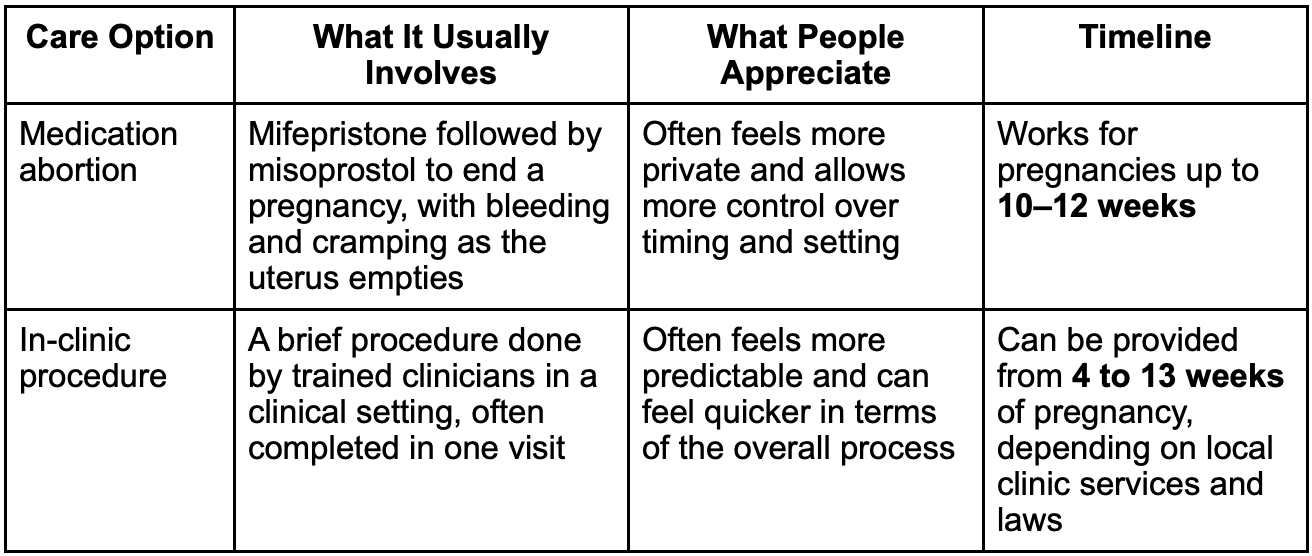
The American College of Obstetricians and Gynecologists (ACOG) provides evidence-based guidance for medication abortion through 70 days of gestation, and a clinician can review whether it fits your medical history and situation.
When choosing between these options, it’s important to get clear counseling on what to expect, how pain can be managed, and how completion is confirmed. If you are unsure which option fits best, it often helps to ask what the timeline would look like for each approach and how support is provided after you leave.
How to Choose a Professional Clinic
When searching for an abortion clinic, many people look first at availability. Safety is also paramount. A professional clinic is transparent about who provides care, what services are offered, what the costs are, and how to reach the team if something feels concerning later. It should be clear whether clinicians are licensed and what medical standards guide their care.
It can be reassuring to know what respectful communication looks like. A quality clinic welcomes questions without judgment, explains options in plain language, and makes space for your own decision-making.
You should never feel rushed into a choice or pressured to continue visits you do not need. If something on a website feels confusing, it is reasonable to call and ask what a typical visit includes and how follow-up works.
WHO describes quality care as nonjudgmental and designed to prevent delays that can add stress. You deserve care that is straightforward, respectful, and never conditional on proving anything about your decision.
What to Expect During and After Care
People often feel more at ease when they know what is typical. With medication abortion, cramping and bleeding are expected as the uterus empties. Some people also experience nausea, chills, diarrhea, or fatigue.
With an in-clinic procedure, cramping is common during and after, and bleeding may continue lightly for several days. A supportive clinic explains what sensations are common, what pain relief options exist, and what recovery usually looks like for your specific situation.
Aftercare should feel like continued support, not a handoff. It is reasonable to expect written instructions that cover comfort measures, activity, and contraception options if desired.
Many people appreciate having a clear plan for checking in, whether that is self-assessment guidance, a message through a secure portal, or a scheduled follow-up. You deserve to leave care with clarity, reassurance, and a way to reach a clinician if anything feels uncertain.
Planning for Support, Privacy, and Logistics
Support can be practical and emotional, and you get to choose what you need. Some people feel steadier with a trusted friend or family member nearby. Others prefer privacy and quiet. Either is valid. If you want someone with you, clinics can explain their visitor policies and whether a support person can participate by phone if needed.
It can also help to plan for the details that reduce stress later. This might include arranging transportation, allowing time to rest, and choosing a day when you don’t have to rush back into responsibilities. If cost is a concern, ask about payment options and assistance resources beforehand.
A Compassionate Path to Safe Care
Safe, professional abortion care should feel respectful at every stage, from the first question to the last follow-up. You deserve clinicians who explain options clearly, protect your privacy, and take your concerns seriously. It is normal to want certainty and reassurance, especially when the experience feels time-sensitive or emotionally complex.
If something feels unclear, it is reasonable to ask for clarification until you feel comfortable. If you need more support, it is also okay to request it, whether that means pain management options, written instructions, or a check-in plan that fits your life.
With accurate information and compassionate medical care, you can move through this experience feeling more grounded and confident in your next steps.
Join the conversation!