
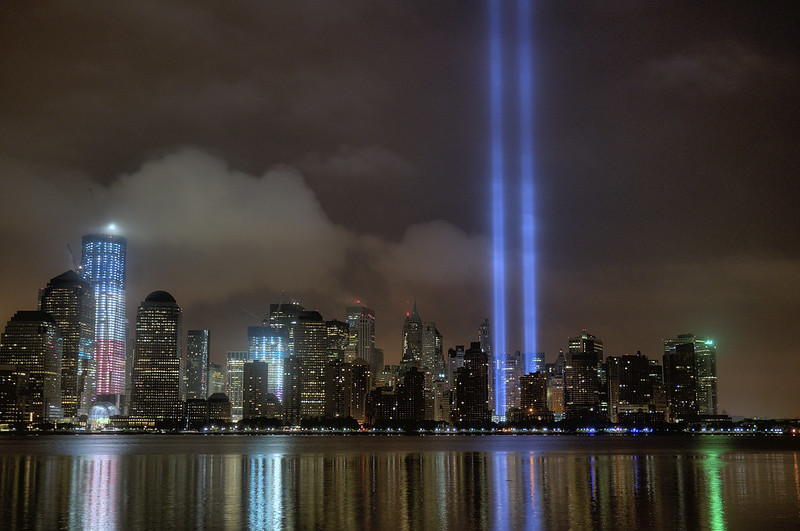
The passage of time is not a reason to assume there is no claim. It is a reason to have the medical history, exposure evidence, and deadlines reviewed carefully.
Many 9/11-related cancers are diagnosed years, sometimes decades, after exposure. The passage of time does not, by itself, rule out a connection but instead strengthens the link to 9/11. The World Trade Center Health Program’s minimum-latency policy recognizes that cancers usually take many years or several decades to become clinically apparent.
A cancer diagnosed today (or over the past two-plus decades) can still be recognized as 9/11-related. Approval depends on whether the cancer and the person’s exposure meet the requirements for certification and benefits. At Hansen & Rosasco, LLP, we help with that work so our clients can concentrate on their health.
The 9/11 Cancer Toll Is Still Growing
Twenty-five years after the attacks, cancer remains a substantial part of the Health Program’s work. In the twelve months ending June 30, 2026 (see page 24), the Program reported 10,393 cancer certifications, including 5,762 among survivors and 4,631 among responders.
These are certifications during that period, not necessarily new diagnoses. The figures describe the Program’s work; they do not measure an individual’s cancer risk or how long a particular cancer took to develop.
How Toxic Exposure Leads to Cancer Years Later
Cancer development is a process, not an immediate reaction to exposure. The Health Program’s March 31, 2025 policy revision describes changes in genes that control cell growth, followed by changes that allow a cancer to grow and progress. That sequence helps explain why an exposure can precede a diagnosis by many years.
Feeling well after the attacks does not rule out a later illness. But a cancer diagnosed long after 9/11 still requires an individual medical determination and Program certification.
What Is a Cancer Latency Period?
For the Health Program, latency is the time interval between a person’s initial 9/11 exposure and the initial cancer diagnosis. It is not the amount of time the person worked or lived in the affected area, and it is not measured from the date the Program later certifies the cancer.
The Program sets minimum latency periods, not a deadline by which a cancer must appear. Its policy does not set a maximum interval between exposure and diagnosis. A diagnosis five or twenty-five years later should not be dismissed simply because the exposure happened so long ago.
Why Latency Varies by Cancer Type
There is no single timetable for every cancer. The March 31, 2025 revision retained the existing minimum periods after reviewing additional scientific literature. The chart below shows the five categories used by the Program. These are certification minimums, not predictions of when a cancer will develop.

Figure 1 (above). Minimum intervals from initial 9/11 exposure to initial diagnosis, not expected waiting periods or filing deadlines. The policy sets no maximum; meeting a minimum does not by itself establish certification. Childhood cancers are diagnosed before age 20; blood and lymphoid cancers in children use 146 days. The 25-year comparison assumes first exposure on September 11, 2001, through September 2026; later first exposures have a shorter elapsed interval. Source: WTC Health Program minimum-latency policy, revised March 31, 2025.
Those minimums are not typical waiting periods. The policy discusses a review of 1,105 asbestos-related mesothelioma cases (see page 7)reporting a median latency of thirty-two years. Those were other asbestos-exposed populations, not the WTC population. An eleven-year minimum does not mean a cancer must develop within eleven years.
The policy also does not shorten its minimum periods merely because an exposure was intense or a person had a pre-existing condition. The medical history, diagnosis, and qualifying exposure must be assessed together.
The relevant interval ends at the initial diagnosis (see page 3). Waiting to apply does not change an earlier diagnosis date or cure a latency problem.
What Survivors Were Actually Exposed To
The scientific review underlying the 2012 cancer rule considered more than ordinary dust. It addressed exposure to substances including asbestos, benzene, formaldehyde, certain metals, and combustion byproducts. The collapse, fires, and subsequent work in contaminated areas created different exposure circumstances for different people.
The Health Program’s exposure policy also recognizes that a lack of visible dust, smoke, or chemical odors does not automatically mean contamination was absent. Someone did not have to be working on the debris pile to have an exposure that deserves review.
Symptoms Can Be Overlooked or Attributed to Other Conditions
A persistent cough, difficulty swallowing, a new lump, or unexplained weight loss may have an explanation other than cancer. But symptoms that continue or worsen deserve medical attention. Make sure your physician knows about your 9/11 exposure. Do not delay an evaluation while questions about benefits are being resolved.
Long latency and delayed recognition of an existing cancer are different issues. A diagnosis many years after exposure does not, by itself, tell you the cancer’s stage. The Health Program’s Diagnostic Essentials guidance to the VCF emphasizes confirmed diagnostic evidence, generally including tissue biopsy or a pathology report for cancer, subject to specified exceptions.
Many Survivors Did Not Realize the Programs Could Include Them
The Health Program’s term “survivor” includes eligible office workers, residents, students, teachers, and others in the affected community. It does not mean you had to escape one of the towers or be present on September 11th itself. Someone who returned to work or school afterward may still have qualifying exposure.
The Health Program and the September 11th Victim Compensation Fund (VCF) have different geographic boundaries, exposure periods, and eligibility requirements. Presence in one program’s area does not automatically satisfy the other’s requirements. Other health conditions or cancer risk factors do not, by themselves, resolve whether a cancer can be certified as 9/11-related.
The Medical Evidence and Coverage Developed Over Time
In 2012, Dr. John Howard, then Director of the National Institute for Occupational Safety and Health and Administrator of the WTC Health Program, reviewed the evidence and determined that dozens of cancers should be added to the covered conditions. The final rule published September 12, 2012, effective October 12, 2012, established a basis for cancer coverage while retaining individual medical review.
The rule addressed the difficulty created by long latency. Studies of cancer after a particular exposure can take years or decades to provide definitive answers. Dr. Howard explained that waiting for conclusive epidemiologic results would prevent treatment of responders and survivors who were already sick. The Program therefore considered additional scientific evidence rather than waiting for every question to be resolved.
The Program’s 2025 latency policy explains that, since January 18, 2023, all types of cancer are included on the list and are eligible for coverage when determined to be related to 9/11 exposure. That is not automatic approval. A Program physician must determine that exposure was substantially likely to be a significant factor in aggravating, contributing to, or causing the cancer, and the Program must certify the condition. Exposure does not have to be the only cause.
An applicant does not have to establish the scientific basis for cancer coverage all over again. The work is in supporting the particular diagnosis and qualifying exposure. Dr. Howard’s February 20, 2015 certification policy requires consideration of the location, intensity, and duration of exposure. Latency and exposure duration are different questions, and both matter.
What the 9/11 Community Should Watch for Now
Keep up with appropriate medical care even when you feel well. The Program’s cancer-screening policy explains that screening looks for cancer in people without symptoms and can help detect some cancers earlier. It also recognizes that not every cancer has an effective screening test.
Under the Administrative Manual, the Program’s routine cancer-screening benefit currently covers breast, cervical, colorectal, and lung cancers for members who meet the applicable criteria. It does not provide routine screening for every covered cancer. Your own physician may recommend other testing based on your medical history.
Diagnostic evaluation is separate. A suspicious symptom or abnormal result may warrant investigation even when the cancer is outside the routine screening benefit. Benefits also depend on membership status: an initial evaluation for a screening-eligible survivor differs from ongoing monitoring for responders and certified-eligible survivors.
A Diagnosis Years Later Does Not Mean You Have Lost Your Rights
There is no deadline to enroll in the WTC Health Program. The VCF has separate registration and claim-filing deadlines, however, and Health Program enrollment or certification does not automatically register someone with the VCF. For an illness claim, the registration period generally relates to certification or another qualifying government determination that the illness is 9/11-related, not simply the date of diagnosis.
Depending on the circumstances, an eligible person may receive medically necessary treatment for a certified cancer through Program-affiliated providers at no out-of-pocket cost. The VCF may separately provide compensation for pain and suffering, eligible lost earnings and benefits, and qualifying unreimbursed medical expenses. Eligible families may also pursue compensation following a death from a 9/11-related condition.
The passage of time is not a reason to assume there is no claim. It is a reason to have the medical history, exposure evidence, and deadlines reviewed carefully.
What 25 Years Does to the Proof
A cancer diagnosed today may require proof of where someone was twenty-five years ago. Employers may have closed or merged. Records may no longer exist. Former coworkers may be difficult to locate. Missing records do not necessarily mean the exposure cannot be established.
When records are incomplete, appropriate witness evidence can be essential. The Health Program has its own supporting-documentation requirements, and the VCF requires either primary proof, such as a record from 2001-2002, that a person was with one of the employers or organizations that have land share with the VCF a list of those present on or after 9/11, or provide two of the VCF’s prescribed witness statements. Affidavits, attestations, and witness statements are not interchangeable. A signature alone does not cure missing facts or an unexplained inconsistency.
The Program’s Administrative Manual explains that incomplete applications or insufficient supporting evidence can result in suspension while additional information is sought. A suspension is not a denial, but it can delay access to benefits. Our attorneys and staff help address those gaps before they become obstacles to approval.
How Our 9/11 Attorneys Can Help
At Hansen & Rosasco, LLP, we maintain a dedicated team focused on WTC Health Program certification. Our attorneys and staff help with enrollment, the evidence supporting certification, and separate VCF claims. The medical determination remains with the Program’s physicians. We address the documentation and administrative issues that can otherwise stand in the way.
Our goal is to keep a valid claim from being delayed, suspended, or denied because of a missing record, an inadequate witness statement, or an unexplained inconsistency that could have been addressed before filing. No attorney can guarantee approval, but careful preparation and follow-through matter.
Whether your cancer was diagnosed recently or years ago, contact Hansen & Rosasco for a free consultation about your circumstances. Let us help with the documentation and government process so you can concentrate on your health.
Join the conversation!