

Every dollar spent preparing supervisors to recognize and correct problem behavior is a dollar that won’t have to be paid out later, with interest, to the people that behavior harmed.
On October 5, Chicago’s City Council Finance Committee unanimously approved a $260.8 million settlement with 17 people whose murder convictions were vacated in cases tied to former police detective Reynaldo Guevara. If the full council signs off, it could become the largest single police misconduct settlement in U.S. history, ABC7 Chicago reported. The deal lands on top of nearly $185 million that the city, Cook County, and the state of Illinois had already paid Guevara’s exonerees, based on a WBEZ analysis cited by the Chicago Sun-Times. The Sun-Times also reported that Mayor Brandon Johnson’s projected $882 million budget shortfall includes $401 million for legal settlements. Every dollar of it will come from residents through taxes, borrowing, and city services that won’t get funded, while the officers involved pay nothing.
Chicago’s bill is extreme, but the pattern behind it shows up in cities of every size. Year after year, municipalities write checks to resolve misconduct claims, and a large share of that money traces back to a relatively small group of officers whose behavior went unchecked by the people supervising them. Understanding where the money goes, and why it keeps going there, points toward fixes that cost far less than the settlements themselves.
The Numbers Behind the Checks
The most complete national picture comes from the Washington Post’s analysis of repeated misconduct payouts, which tallied nearly 40,000 payments made by 25 of the country’s largest police and sheriff’s departments between 2010 and 2020. Those payments added up to more than $3.2 billion. New York, Chicago, and Los Angeles alone accounted for more than $2.5 billion of it. The Post found the median payment was just $17,500, which means most claims settle quietly, far from the headlines that cases like George Floyd’s draw.
The spending hasn’t slowed. New York City paid more than $117 million to resolve police misconduct lawsuits in 2025, the fourth straight year above $100 million, the Legal Aid Society found in an analysis released this March. The city’s record came in 2024, when payouts reached $206 million. The Associated Press reported that recent New York cases range from violent arrests of 2020 protesters to wrongful convictions dating back to the 1980s. The next wave of claims is already in court, too; the journalists’ First Amendment suit against the LAPD alleges officers fired less-lethal projectiles at credentialed reporters covering 2025 immigration enforcement protests.
Why Cities, Not Officers, Pay the Bill
Most of these claims are filed under 42 U.S.C. § 1983, the federal statute that lets people sue government officials for violating their constitutional rights. Individual officers are usually named as defendants, but they rarely pay anything. Cities typically indemnify their officers through union contracts, state law, or long-standing practice, and qualified immunity knocks out many claims against individual officers before they ever reach a jury. Courts set that shield aside only in egregious situations, as in the rare Supreme Court rebuke of qualified immunity that let a Texas inmate sue officers who held him for days in cells covered in human waste.
Cities also face direct liability under Monell v. Department of Social Services, the 1978 Supreme Court decision holding that local governments can be sued when an official policy or custom causes a constitutional violation. In City of Canton v. Harris (1989), the Court extended that reasoning to inadequate training when the failure reflects deliberate indifference to people’s rights. Plaintiffs’ attorneys have built on those decisions to argue failure to supervise and failure to discipline. That’s why a department’s internal records, including complaint histories and how sergeants responded to them, so often end up as exhibits in civil cases.
Insurance doesn’t change who ultimately pays. Many smaller cities carry liability coverage or join municipal risk pools, but the Post noted that even insured payouts land on taxpayers once premiums rise to reflect a department’s claims history. A University of Chicago news report has described insurers pressing departments to adopt reforms they’d long resisted, including policy rewrites and added training as conditions of coverage. For a small department, losing coverage or absorbing a steep premium increase can strain a budget as badly as a single large verdict.
Repeat Officers and the Supervision Gap
The Post’s data showed that the money concentrates. More than 7,600 officers were named in two or more claims that led to payments, and those repeat officers accounted for more than $1.5 billion, nearly half the total. Over 1,200 officers were the subject of at least five payments. In Chicago, claims involving repeat officers made up more than $380 million of the city’s roughly $528 million in payouts over the decade.
Those patterns persist partly because few cities connect settlement data to personnel decisions. Only four of the 25 jurisdictions the Post surveyed reported tracking payments by officer. Detroit’s professional standards director told the paper that the city’s law department and police department simply weren’t communicating about which officers kept generating claims. When nobody upstream is watching, the job of catching problem behavior falls almost entirely on first-line supervisors.
That’s a heavy load for sergeants, and the research shows how much their approach matters. A National Institute of Justice supervisory style study by Robin Shepard Engel, based on field observation in Indianapolis and St. Petersburg, found that a sergeant’s style shaped the officer behaviors that are hardest to monitor, including use of force and problem solving. Officers under hands-on, lead-by-example sergeants were twice as likely to use force, which shows that a supervisor’s influence cuts both ways. The report also cited earlier research linking misconduct to supervisors who shield officers from discipline. Only 51% of the 81 supervisors in the study held a four-year degree.
Education as a Risk Management Tool
If supervision drives liability, the preparation that sergeants and lieutenants bring to the job is a financial question as much as a professional one. Research on officer education points in a consistent direction. A 2010 study in Police Quarterly by Jason Rydberg and William Terrill found that college-educated officers were less likely to use force, even though education didn’t measurably change their arrest or search decisions. Coursework in constitutional law, ethics, policy analysis, and organizational management gives supervisors a framework for spotting the patterns that otherwise surface in a deposition.
Demand for those supervisors isn’t going away. The Bureau of Labor Statistics projects employment of first-line supervisors of police and detectives to grow 3% between 2024 and 2034, about as fast as the average for all occupations. Most of those roles will be filled by promoting officers already on the force. Each promotion is a chance to put someone with stronger preparation in charge of a squad, and departments that promote on tenure alone waste that opportunity.
The obstacle has always been time. Most experienced officers can’t step away from shift work for a traditional four-year program, and many already carry academy and in-service training that doesn’t count toward anything. Some universities now close that gap with a three-year criminal justice administration degree built for people with at least three years in law enforcement, corrections, or security, which cuts the requirement to 90 credits and lets students apply to have POST academy training evaluated for college credit. Courses run online in five-week blocks and cover community policing, change management, and the administrative practices that shape how a unit actually operates.
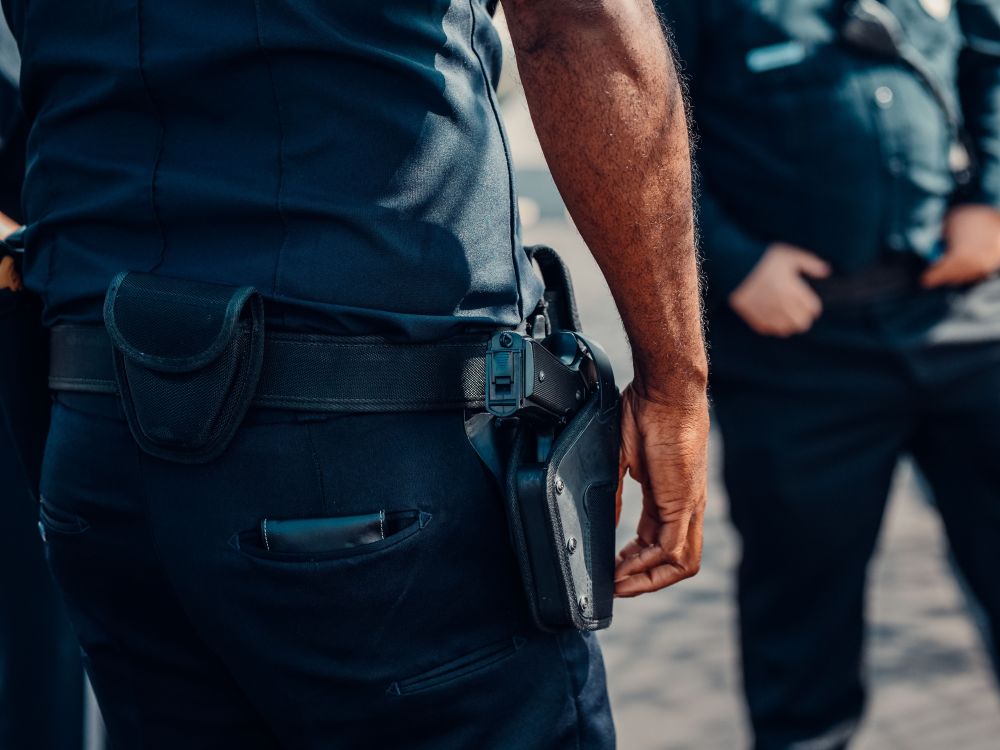
For a city, the math is straightforward. Tuition assistance for a cohort of sergeants costs a fraction of a single six-figure settlement, and the Post found that the typical payout in cases involving repeat officers ran $10,000 higher than in cases involving other officers. A department that promotes from within and invests in its supervisors’ education builds a bench that knows how to document, intervene, and discipline before a pattern turns into a lawsuit. Those credentials work best alongside accountability systems that put the data cities already collect to use.
What Taxpayers Can Push For
Residents don’t have to wait for another nine-figure settlement to push for change. City councils can require law departments to report payouts by officer name or badge number, as Minneapolis, Detroit, and Portland already do in some form. That data can feed early warning systems like the one Chicago’s consent decree requires, which WTTW News reported is designed to flag officers named in lawsuits alleging misconduct. In some cities, settlements come straight out of the police department’s operating budget, which gives leadership a direct financial reason to invest in better supervision.
Chicago’s $260.8 million vote is a reminder that misconduct costs compound for decades, long after the officers involved have retired or moved on. The cheapest point to stop that bill is at the sergeant’s desk, years before it reaches a city council agenda. Every dollar spent preparing supervisors to recognize and correct problem behavior is a dollar that won’t have to be paid out later, with interest, to the people that behavior harmed.
Join the conversation!