
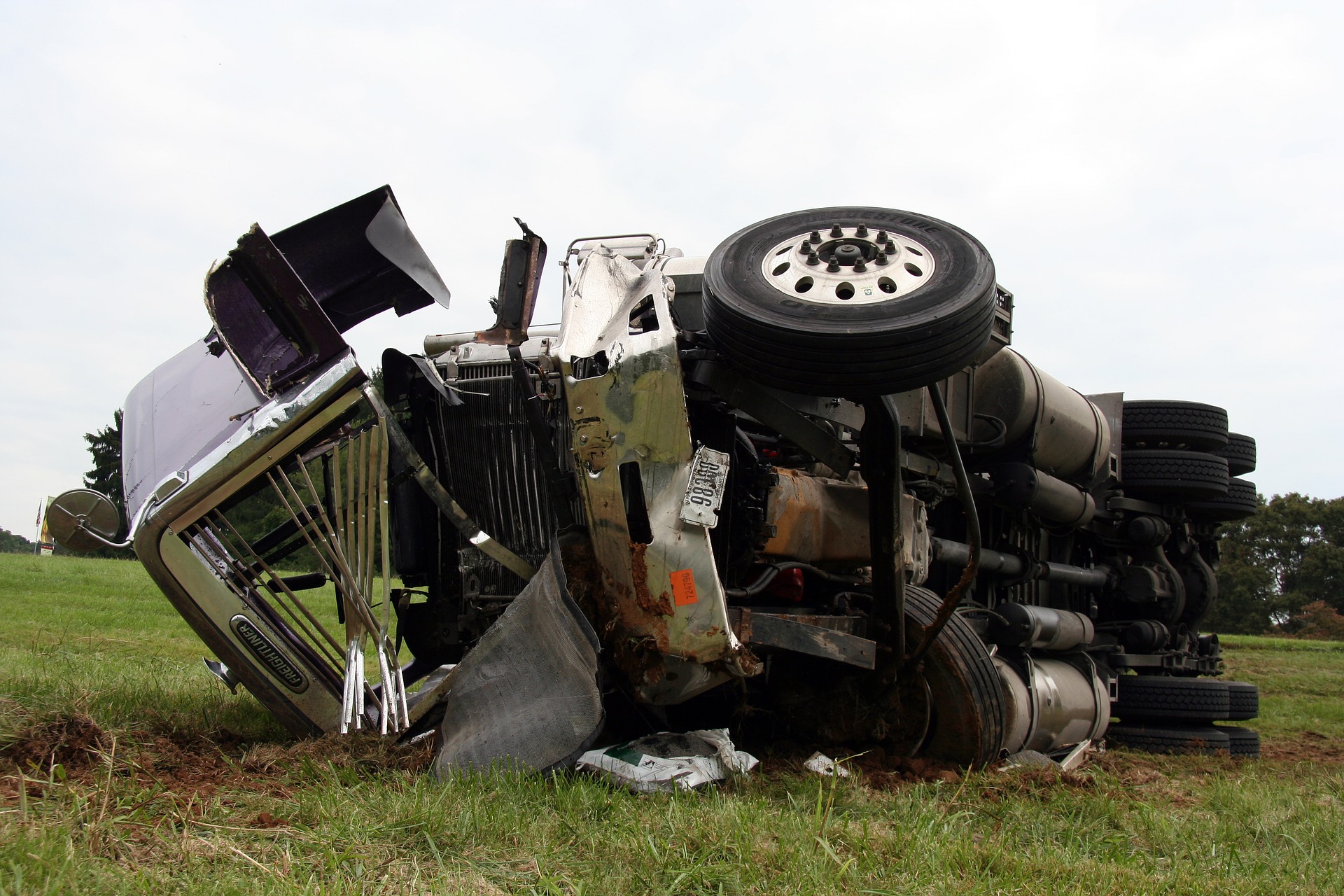
Anyone affected by a commercial truck crash is better served by knowing that the clock on these records starts at the moment of the collision, not at the moment a claim is filed.
When a passenger car and a commercial truck collide, the story of what happened usually lives in two places. One is the memory of the people involved. The other is a set of records that federal rules require trucking companies to create and keep. Memories fade and shift, but records are written in real time, and they often settle questions that witnesses cannot.
The catch is that many of those records do not last. Federal Motor Carrier Safety Administration (FMCSA) rules set minimum retention periods, and some are surprisingly short. A carrier that follows the rules to the letter may lawfully discard key documents before an injury claim is even filed.
Hours-of-Service Logs and Electronic Logging Devices
Most interstate truck drivers must track their working time under the federal hours-of-service rules in 49 CFR Part 395. For property-carrying drivers, the core limits are well known in the industry: no more than 11 hours of driving after 10 consecutive hours off duty, and no driving beyond the 14th hour after coming on duty (49 CFR 395.3).
Today, most of those records come from an electronic logging device, or ELD, connected to the truck’s engine. Under 49 CFR 395.26, each change in duty status, and each engine power up or shut down, is logged with the date, time, location, engine hours, vehicle miles, and identifiers for the driver, vehicle and carrier. While the truck is moving, the device also makes an entry when an hour has passed with no other recording. The result is a timeline of where the truck was and how long it had been on the road.
Logs are backed by supporting documents under 49 CFR 395.11, such as bills of lading, dispatch records, expense receipts, fleet messages and payroll sheets. These can be checked against the logs, and a receipt in one city while the log shows the driver resting in another raises questions.
How long they are kept: a carrier must retain records of duty status and supporting documents for at least six months from the date of receipt (49 CFR 395.8(k)(1)). The driver only has to carry the current day and the previous seven days (49 CFR 395.8(k)(2)).
Driver Qualification Files
Every motor carrier must keep a driver qualification file for each driver it employs. Under 49 CFR 391.51, that file includes the driver’s employment application, motor vehicle records from the licensing state, a road test certificate or accepted equivalent, the annual review of the driving record, and the medical examiner’s certificate, among other items.

Logs show what a driver did on a given day. The qualification file shows what the carrier knew, or should have known, before putting that driver behind the wheel. A history of violations or a lapsed medical certificate can shift attention from the driver to the company’s hiring and supervision decisions.
How long they are kept: the file must be retained for as long as the driver works for the carrier and for three years after that (49 CFR 391.51(c)). Some items, such as annual driving record reviews and medical certificates, may be removed three years after they were executed (49 CFR 391.51(d)).
Inspection, Repair and Maintenance Records
Brakes, tires, lights and coupling devices fail for reasons, and maintenance records are often where those reasons are found. Under 49 CFR 396.3(b), carriers must keep records for each vehicle they have controlled for 30 consecutive days, including identifying information for the vehicle, a schedule showing the nature and due dates of inspection and maintenance, and a record of the inspections, repairs and maintenance actually performed.
Under 49 CFR 396.11, a driver must prepare a written inspection report at the end of the day if a defect is found or reported, and the carrier must certify that it was repaired, or that repair was unnecessary, before the vehicle runs again. A report of soft brakes with no record of a fix can be significant.
How long they are kept: maintenance records must be retained for one year where the vehicle is housed or maintained, and for six months after the vehicle leaves the carrier’s control (49 CFR 396.3(c)). Driver vehicle inspection reports, repair certifications and the driver’s review of them only need to be kept for three months from the date the report was prepared (49 CFR 396.11(a)(4)).
Drug and Alcohol Testing Records
Commercial drivers are subject to the testing program in 49 CFR Part 382. Under 49 CFR 382.303, the carrier must test the driver after any crash involving a fatality, and after crashes where the driver is cited for a moving violation and someone is treated for injuries away from the scene or a vehicle is towed with disabling damage. Alcohol testing should happen within two hours; after eight hours the carrier must stop trying and record why. The limit for a drug test is 32 hours.
How long they are kept: retention under 49 CFR 382.401 depends on the result. Alcohol results of 0.02 or greater, verified positive drug results and refusals are kept for five years. Negative drug results and alcohol results below 0.02 are kept for only one year. Records of the collection process are kept for two years.
The Gap Between Retention Rules and Legal Deadlines
Put those periods side by side and a problem appears. Inspection reports may be gone in three months, and hours-of-service logs in six. Injury claims rarely move that quickly. People are still in treatment, insurers are still investigating, and in Arizona the general deadline to file a personal injury lawsuit is two years (A.R.S. 12-542). A carrier can be fully compliant with federal rules and still have discarded the records that would have answered the central question in a case.
Some useful data falls outside these rules entirely. Many trucks have an engine control module that can capture speed and braking around a sudden event, and dash cameras or telematics platforms may hold video or GPS trails. The retention periods above do not address this data, and some systems overwrite older information as new data comes in.
Preservation Letters and Spoliation
The usual tool for closing that gap is a preservation letter, sometimes called a spoliation letter. It is a written notice to the carrier, and often its insurer, identifying the crash and asking that specific evidence be kept: ELD data and supporting documents, the driver qualification file, maintenance and inspection records, testing records, onboard data and video.
Spoliation is the legal term for destroying or failing to preserve evidence that is relevant to a claim. Courts generally take it seriously once a party knows or should know that litigation is likely, and consequences can include an instruction letting a jury assume the missing evidence was unfavorable. Standards vary by jurisdiction, but the practical point is simple: a clear, early written request makes it far harder for anyone to say they did not know the records mattered.
People sorting through these issues after a crash on the Phoenix area’s interstates often start by reading how local practitioners approach early evidence work. Resources such as the page for Valley Accident Law’s truck accident lawyers in Scottsdale describe that process in plain terms, including why preservation requests tend to go out early.
What This Means in Practice
These records can show how long a driver had been on duty, whether the carrier knew about a troubling driving history, whether a reported defect was repaired, and whether required testing took place. None of that helps if the documents no longer exist. Anyone affected by a commercial truck crash is better served by knowing that the clock on these records starts at the moment of the collision, not at the moment a claim is filed.
Join the conversation!