
Accident claims that result from blizzards are a very specific type of personal injury litigation, one that requires lawyers who are completely familiar with the specifics of Massachusetts auto insurance law and comparative fault.
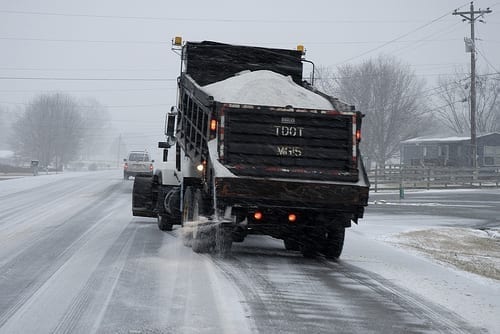
Whiteout conditions and ice-slicked pavement can turn a routine commute into a nightmare in seconds. As a violent February blizzard swept across the state, traffic was transformed into a panicked, free-for-all through a frigid jumble. Troopers reported 733 vehicles stuck on the roads of Massachusetts and 131 automobile collisions, one of which was fatal.
After the snowplows clear your roads and the initial panic of the collision subsides, you are left with an infuriating obstacle: the insurance adjuster who has every reason in the world to find you at fault. Multi-vehicle crashes are common in winter, which complicates liability considerably.
Under the rules in the Commonwealth of Massachusetts, who gets compensated for property damage and bodily injury is determined entirely by the share of fault for which each party is deemed responsible. Familiarity with the principles of comparative negligence is not just helpful in this type of accident; it is imperative for your financial well-being.
Who is at fault when the weather turns nasty?
Severe weather is inherently much more dangerous to travel in and greatly increases the probability of chain reactions. Only weeks ago, a ramp crash on the Danvers was caused by ice on the road, and 10 or more cars were piled up on one another. The conditions continued to deteriorate, with 3 counties (Bristol, Plymouth and Barnstable) put under travel bans restricting travel unless necessary.
This may shock you: Massachusetts has a 0.56 fatality rate per 100 million miles traveled in 2023 – lower than any other state in the United States. But severe winter weather spikes the risk of non-fatal collisions that are still financially devastating. And also, never believe the idea of “bad weather” as an acceptable excuse in law to cause an accident. Drivers are expected to adjust speed and following distance to current conditions, which means liability still lands on human error, not the weather.
There are also medical bills, ER costs, lost time on the job–seriously, winter car crashes aren’t funny money-wise either! The total economic cost of U.S. crashes hit an estimated $1.8 trillion in 2024. Just one family with a hospitalization that was unexpected, and their car totaled out, could end up bankrupt if they do not reach an equitable settlement for this matter.
The 51 Percent Bar: How Your Settlement Gets Calculated
Massachusetts follows what’s known as a modified comparative fault rule, which essentially means you can only claim damages if you are 50 percent or less at fault for the accident. Even then, any award you get will be reduced by whatever percentage of fault assigned to you.
For example, if you are 20% at fault for driving a little too fast in the snow, your recovery is reduced by 20%. Knowing how these percentages get weighed during everyday disputes is key to gauging the real strength of your claim.
Get tagged with 51 percent or more responsibility? You can’t recover one dime from the other party at all.
Insurance Adjusters: How They Work and What They Do
An insurance adjuster is not there to protect you. They work for the insurance company, and their entire goal is to minimize or deny payouts. When your accident occurs in the middle of the wintry pile-up, they will aggressively work to push your percentage of blame higher.
One way is to suggest that you were driving too fast for conditions. From their perspective, there is statistical evidence that this is a good approach: 11,775 deaths in 2023 were due to speed-related crashes, representing 29 percent of all traffic fatalities. Adjusters love citing numbers like that to cast doubt on your decisions behind the wheel.
What evidence can you get to bolster your case? These are the critical types of documentation accident reconstructionists utilize to make sense of collisions:
- Dashcam footage: An unbiased video demonstrating actual road conditions, speed of vehicles involved, and the order of impact before the snow blanketed everything.
- Police collision reports: Formal reports filled out by the officers at the scene, detailing traffic citations, present tire marks, and vehicles’ final positions.
- Weather data: Confirmed storm chronologies establishing the exact time the rain turned to freezing rain or blizzard warnings were issued by the relevant agencies.
- Electronic data recorder (black box): On-board computer information concerning whether or not a driver braked, held the speed constant, or maneuvered prior to impact.
Do you need legal counsel?
Accident claims that result from blizzards are a very specific type of personal injury litigation, one that requires lawyers who are completely familiar with the specifics of Massachusetts auto insurance law and comparative fault. For that reason, it’s in your best interest to obtain representation from a Boston motor vehicle accident law firm such as Ballin Law. With over 300 five-star reviews and results that include a $7.5 million settlement for an injured passenger, their track record speaks for itself.
Adjusters’ findings of fault are not necessarily final. Moreover, if they offer a quick settlement, it will almost definitely be lower than you need. Chances are it won’t even cover immediate medical care costs, let alone long-term care and other necessary expenses.
Lawyers are expensive, true, but you may not have to pay any professional fees upfront. Some law firms, such as Ballin Law, provide free, no-obligation consultations and charge only for results. You can leave the tricky negotiations to pros while you focus on getting back to your life.
Protect Your Rights Before Evidence Melts Away
The snow in those historic blizzards has long since melted, but the battle for accountability and compensation for your losses has just begun. Your insurance company relies on your disorientation and lack of action to minimize the insurance settlement or flatly deny your claim. Any admission or sharing of blame, however slight, or accepting the initial settlement would have the potential to put hundreds of thousands of dollars beyond your reach for years of future medical treatment and lost earnings.
If you were injured in a 2026 winter weather car accident, don’t let the insurance adjuster dictate your degree of fault. Find a lawyer right to understand what your rights are and what compensation you’re entitled to.
This article contains general information only, and is not intended to constitute legal advice, nor should it be construed as such.
Join the conversation!