
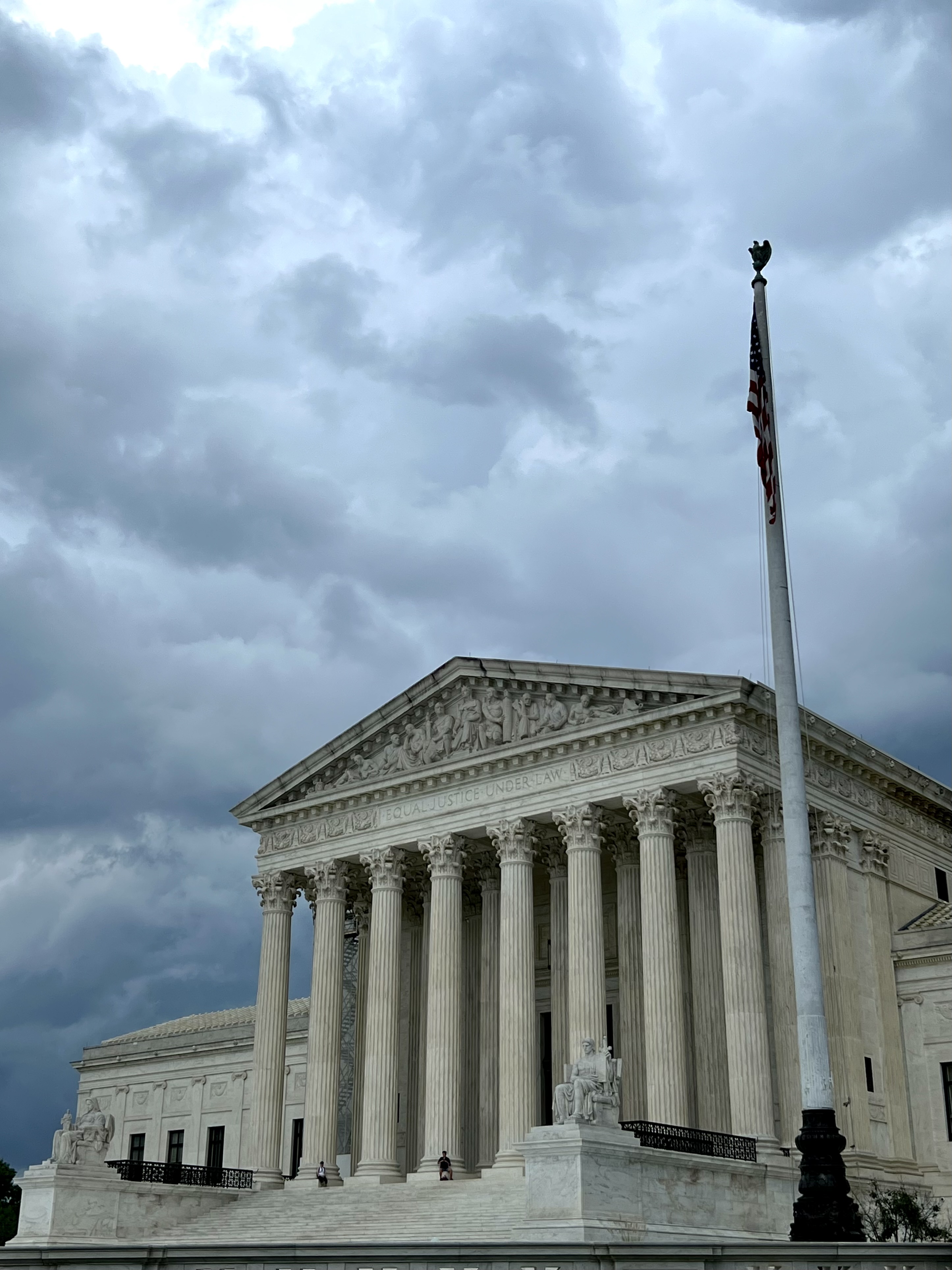
The U.S. Supreme Court declined to grant certiorari on Emigrant’s appeal, ending a more than decade-long effort by Emigrant to escape accountability for predatory loans targeting homeowners of color. Homeowners will now receive $722,000 (plus post-judgment interest) in compensatory damages previously awarded at trial by a jury in the Eastern District of New York.
NEW YORK, NY –The U.S. Supreme Court refused to hear an appeal from New York-based Emigrant Bank and Emigrant Mortgage Company following a $722,000 jury award and nominal damages to eight homeowners targeted by Emigrant’s predatory mortgage lending practices, which was affirmed last year by the U.S. Court of Appeals for the Second Circuit. The Supreme Court’s rejection of Emigrant’s petition ends a nearly fifteen-year-long legal battle over Emigrant’s discriminatory practice of targeting Black and Latino homeowners with predatory loans designed to force borrowers into default and claim homeowners’ substantial equity in their homes for the bank—the very definition of reverse redlining.
The 2016 liability verdict awarding damages was the first case in which a jury held a bank accountable for reverse redlining practices that contributed to the country’s 2008 financial collapse. Legal Services NYC and Relman Colfax PLLC represented the homeowners.
“My dad never gave up fighting for justice,” said Felipe Howell, Jr, the son of a plaintiff who passed away during the case. “He was dedicated to this fight for all of the plaintiffs, and for every homeowner who got one of these terrible loans and never had the chance to see Emigrant in court.”
“This case has been important to me,” said Jeanette Small, a plaintiff in the case. “We lost our home to Emigrant’s loan in 2008. My daughter and I have been waiting so long for justice.”
“Through the persistence of our Plaintiffs and their bravery to stand up against a major New York lender for what is right, justice is finally being served,” said Tara Ramchandani, Co-Managing Partner at Relman Colfax. “While we are saddened that some of the victims fighting for fairness are no longer with us after this nearly fifteen-year-long David vs. Goliath battle, we honor their legacy, knowing they had a critical part to play in ensuring injustice was exposed and history has been made.”
“This court victory is a testament to the bravery and clarity of the eight plaintiffs in this case, who saw an injustice, courageously stood up to tell their stories, and brought Emigrant’s pernicious lending practices to justice,” said Rachel Geballe of Legal Services NYC’s Brooklyn office. “Through the efforts of these individual Plaintiffs, Emigrant has finally been held accountable for some of the most toxic lending practices of the 2000s, practices that ravaged New York City’s communities of color. We hope this case sends a message loud and clear to lenders that, no matter how long it takes, they will be held accountable for discriminatory practices and predatory lending.”
Between 1999 and 2008, Emigrant issued mortgage refinance loans under its STAR NINA program, which was designed exclusively for borrowers who had poor credit but significant equity in their homes. The bank purposely did not consider the borrower’s ability to repay the loan, and instead lent the money only to borrowers with poor credit ratings who had significant equity in their homes. Then, if a borrower fell behind on even a single payment, Emigrant imposed an automatic 18 percent default interest rate, forcing many borrowers to sell their homes or face foreclosure. These grossly unfavorable terms were buried in fine print and never explained to borrowers.

Emigrant aggressively marketed STAR NINA loans to Black and Latino homeowners with poor credit in New York City, resulting in a massive loss of equity and financial disaster for the plaintiffs, their families, and the communities Emigrant targeted. Evidence presented at both trials demonstrated that Emigrant was aware of the high rates of delinquency, foreclosures, and equity losses that its program created, but, given its profitability, nevertheless grew the program until the very end of 2008, when regulators finally forced it to abandon the 18 percent default interest rate.
Each of the eight clients represented had been victimized with such destined-to-fail refinance loans and, predictably, went into default, allowing Emigrant to strip their home equity from them. When the case was initially filed, four of the plaintiffs had already lost their homes through a forced sale or foreclosure, while the other four remained in foreclosure, living with the daily fear of losing their homes.
One plaintiff, Felipe Howell, a retired homeowner who owned his Jamaica, Queens home free and clear, was persuaded in 2008 to take out a refinance loan from Emigrant Bank despite having no income. Emigrant approved a high-cost loan with an 18 percent default rate that was not clearly explained to him, knowing he could not afford the payments, and ignored his pleas for help when he fell behind. Within a year, Emigrant foreclosed and bought his $430,000 home at auction for $1,000, leaving Mr. Howell without his home or his decades of equity.
Another two plaintiffs, Jeanette and Beverley Small, mother and daughter, owned their home in the Flatlands neighborhood of Brooklyn. They were steered by a broker acting for Emigrant Bank into an unaffordable mortgage refinance in 2006. The loan contained a hidden 18% default rate that was not explained to them, and after they missed one payment, the astronomical payments were impossible to meet and they fell further and further behind. After years of financial struggle, they had to sell their home in 2008, with most of the proceeds going to Emigrant.
Beyond delivering justice to the eight homeowners targeted by Emigrant, the decision marks a major victory against predatory lending and a clear warning to financial institutions. It establishes critical precedents for proving systemic discrimination under the Equal Credit Opportunity Act, the Fair Housing Act, and the New York City Human Rights Law, including the use of equitable tolling to extend civil rights statutes of limitation. The ruling makes clear that discrimination is not limited to denying credit (redlining), but also includes targeting protected communities with harmful loan products—and that claims may arise when borrowers uncover the discriminatory nature of those loans, not just at origination. In doing so, the case strengthens the ability of civil rights laws to hold lenders accountable for intentionally targeting Black and Brown communities.
Join the conversation!